The Pre-Conception Panic
Early in the pandemic, when we were suddenly at home all day and everything felt uncertain, I realised how quickly normal habits can start to feel questionable.
Nothing was wrong. We were trying to conceive without pressure or rushing. My husband was perfectly happy enjoying the unexpected slowdown—planning barbecues, having a couple of beers or a glass of wine (because you can’t really have a BBQ without them), and assuming everything would work itself out.
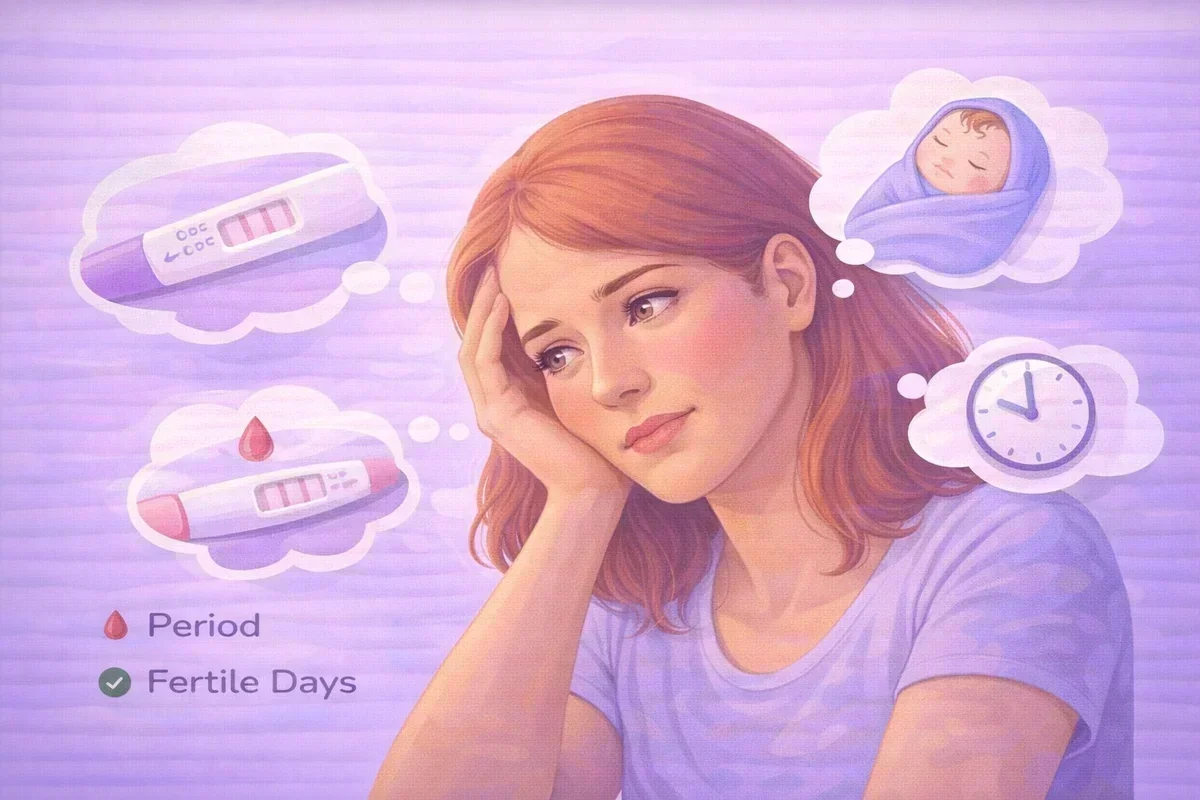
I wasn’t worried exactly—but with too much time and too much information, I started scrutinising small things. Coffee. Wine. Everyday routines I’d never thought twice about before.
A few searches later, I was deep into conflicting advice. Some sources insisted alcohol should be avoided completely when trying to conceive. Others said moderation was fine. Caffeine guidance was just as confusing—some studies showed no effect, others warned against even one cup.
That contrast—between normal, relaxed life and alarmist advice—made something obvious: the research on alcohol and caffeine when trying to conceive is genuinely mixed, nuanced, and often oversimplified online.
So rather than chasing rigid rules, let’s look calmly at what the evidence actually says—and what makes sense in real life, for both partners.
Caffeine When TTC: The Evidence Is All Over the Place
What Official Guidelines Say
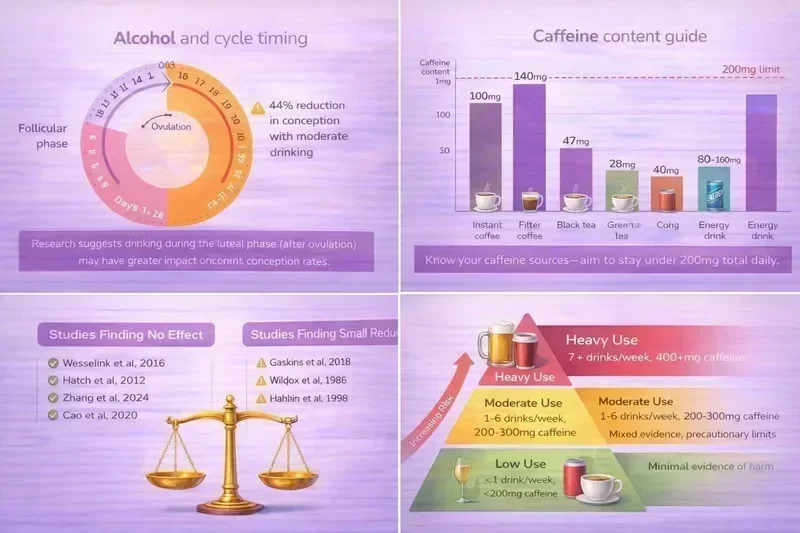
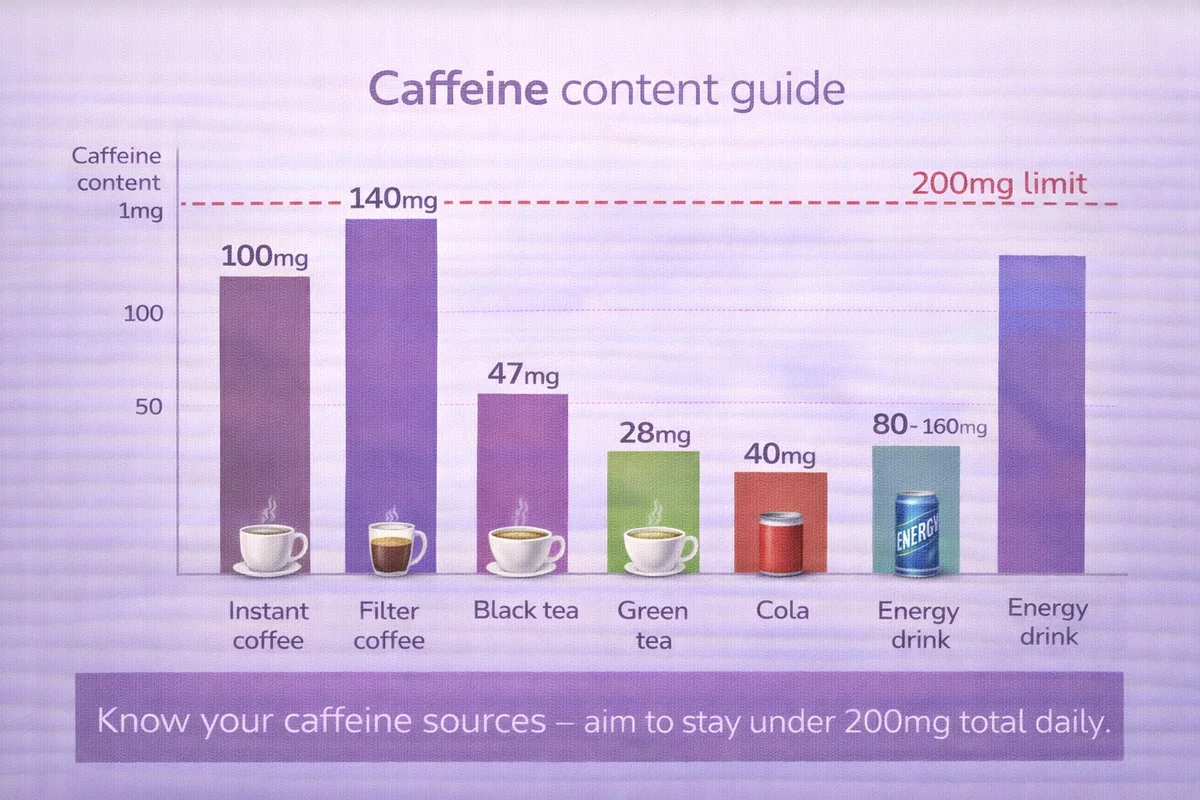
Most health organizations recommend limiting caffeine to 200mg per day when trying to conceive.
UK NHS, WHO, and European Food Safety Authority all agree on this threshold (roughly 2 cups of instant coffee).
But here's the thing: this recommendation is based on the precautionary principle, not overwhelming evidence of harm.
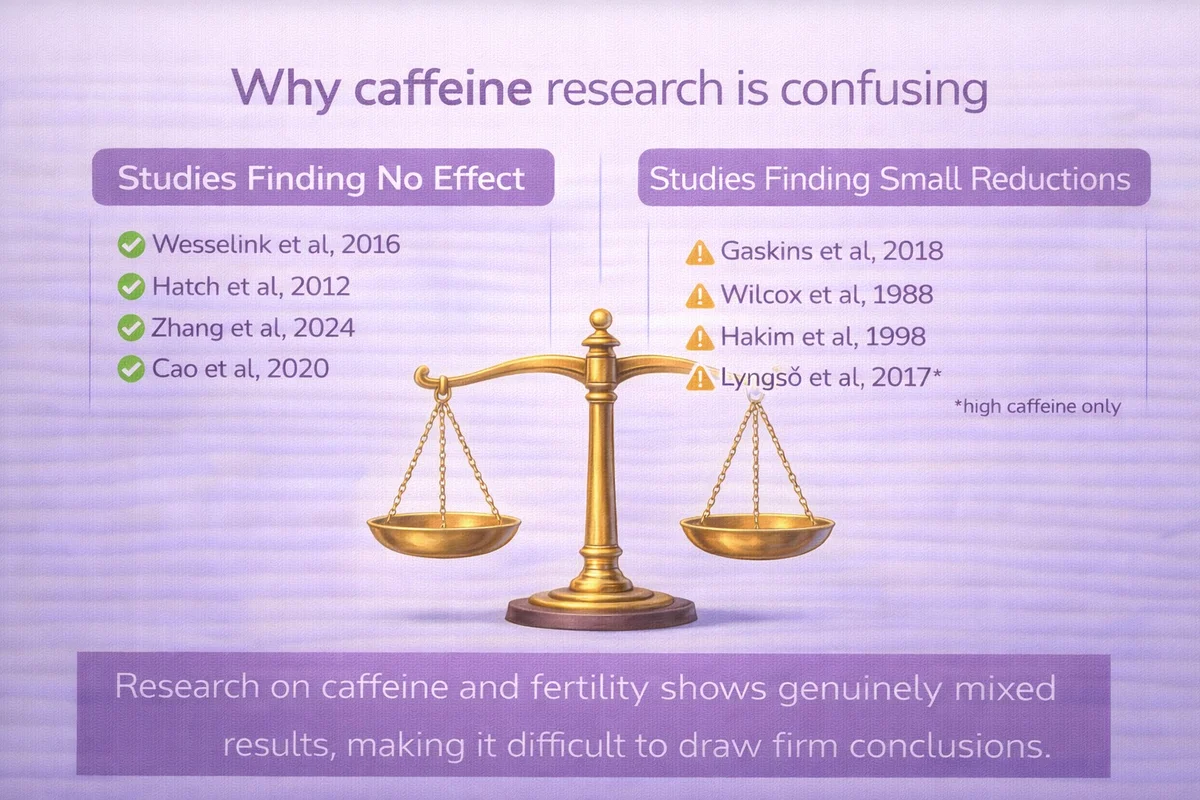
What Studies Actually Show: It's Complicated
The research on caffeine and fertility is genuinely inconsistent.
Studies showing NO effect:
A 2018 Danish cohort study of 7,574 women found no association between coffee or tea consumption and infertility.
A 2024 cross-sectional study found:
- No significant association between coffee consumption and female infertility
- No significant association between overall caffeine consumption and infertility
A prospective cohort study found coffee intake had little association with fecundability in either sex.
Studies showing SOME effect:
A systematic review and meta-analysis found increased risk of spontaneous abortion with increasing coffee/caffeine consumption during early pregnancy—but no clear association with achieving pregnancy in the first place.
The same review suggested the 200-300mg limit "may be too high" based on pregnancy loss data.
Another study found women who drink large amounts of caffeine may take longer to become pregnant and have slightly higher risk of miscarriage.
The Tea Twist
Here's where it gets really confusing.
One study found:
- Tea consumption (up to 2 cups/day) was associated with better fecundability in women
- BUT higher tea consumption showed no effect
- Tea consumption increased fecundability in men
So tea might actually help? Or not. The evidence is unclear.
What About Different Sources?
- Coffee: Generally minimal to no effect on fertility
- Tea: Some studies suggest beneficial effects (especially in men)
- Energy drinks: Associated with lower fecundability in men
- Caffeinated soda: Associated with reduced fecundability in both sexes
Bottom line: The source of caffeine might matter more than the caffeine itself (likely due to other ingredients in sodas/energy drinks).
The Male Factor
Studies on male fertility and caffeine are equally unclear.
What we know:
- Some research suggests high doses might affect sperm quality
- One prospective study found male caffeine intake over 300mg/day was associated with reduced fecundability
- Energy drinks were specifically associated with lower fecundability in males
- Other studies found no association
The caffeine source matters for men:
- Energy drinks: Clear negative association with male fertility
- Caffeinated soda: Associated with reduced sperm quality
- Tea: Some evidence it might improve male fecundability
- Coffee: Generally minimal effect
Male partners should:
- Avoid energy drinks completely
- Limit caffeinated sodas
- Keep total caffeine under 300mg/day (some evidence suggests 300mg+ reduces fecundability)
- Tea appears to be the safest caffeinated option for men
Remember: Male factor contributes to 50% of fertility issues. Your partner's caffeine intake matters too.
So What Should You Actually Do About Caffeine?
Given the mixed evidence, here's a practical approach for both partners:
Women: Limit to 200mg per day (the precautionary threshold)
- This is roughly 2 mugs of instant coffee or 2-3 cups of tea
- Track ALL sources (coffee, tea, chocolate, sodas)
Men: Limit to 300mg per day
- Some evidence suggests 300mg+ reduces male fecundability
- Avoid energy drinks completely (clear negative association)
- Tea appears to be beneficial—consider switching from coffee to tea
Both partners: Avoid energy drinks and caffeinated sodas
- These show more consistent negative associations
- Likely due to sugar/other ingredients as much as caffeine
Don't stress about moderate coffee/tea
- Most evidence suggests 1-2 cups daily is fine for women
- Tea might even be beneficial for both sexes
- Coffee shows minimal effect in most studies
If you're a heavy caffeine user (400mg+/day), cut back
- Gradual reduction prevents withdrawal headaches
- Women: aim for 200mg or below
- Men: aim for 300mg or below
Remember: Caffeine is far less concerning than smoking, heavy alcohol, obesity, or age when it comes to fertility factors. But male factor matters in 50% of cases, so both partners should moderate intake.
Alcohol When TTC: Also Complicated (But More Concerning)
What Official Guidelines Say
UK NHS: If you're trying to conceive, you should drink no alcohol or limit intake to as little as possible.
Australian health authorities (2020): The safest option for women trying to conceive is to drink no alcohol at all.
This guidance is primarily driven by pregnancy safety (alcohol harms babies even in early pregnancy when you don't know you're pregnant), not just fertility.
What Studies Show: The Research IS More Consistent Here
Unlike caffeine, there's stronger evidence that alcohol affects fertility—especially at higher levels.
Heavy Drinking Clearly Harmful:
A Danish cohort study found:
- Women consuming 1-5 drinks/week: 39% reduced odds of conception
- Women consuming 10+ drinks/week: 66% reduced odds of conception
- The effect increased with increasing alcohol intake
A 2017 meta-analysis of 98,657 women found alcohol consumption was associated with reduced fecundability (combined RR 0.87).
A 2022 study of women undergoing fertility treatment found:
- Women drinking 7+ drinks/week: 7% less likely to conceive
- Male partners drinking 7+ drinks/week: 9% reduction in live birth rates
Moderate Drinking: The Evidence Is Mixed
Here's where it gets confusing.
A Boston University study of 6,120 Danish women found:
- Women drinking fewer than 14 drinks/week (1-13 glasses of wine) were no less likely to conceive than those who abstained completely
- Heavier drinking (14+ drinks/week) was associated with 18% decrease in fecundity
An 8-year cohort study of 18,555 women found no relationship between alcohol consumption and ovulatory dysfunction.
But other studies contradict this—finding even light-moderate drinking (3-6 drinks/week) reduces conception rates.
The Timing Factor: When You Drink Matters
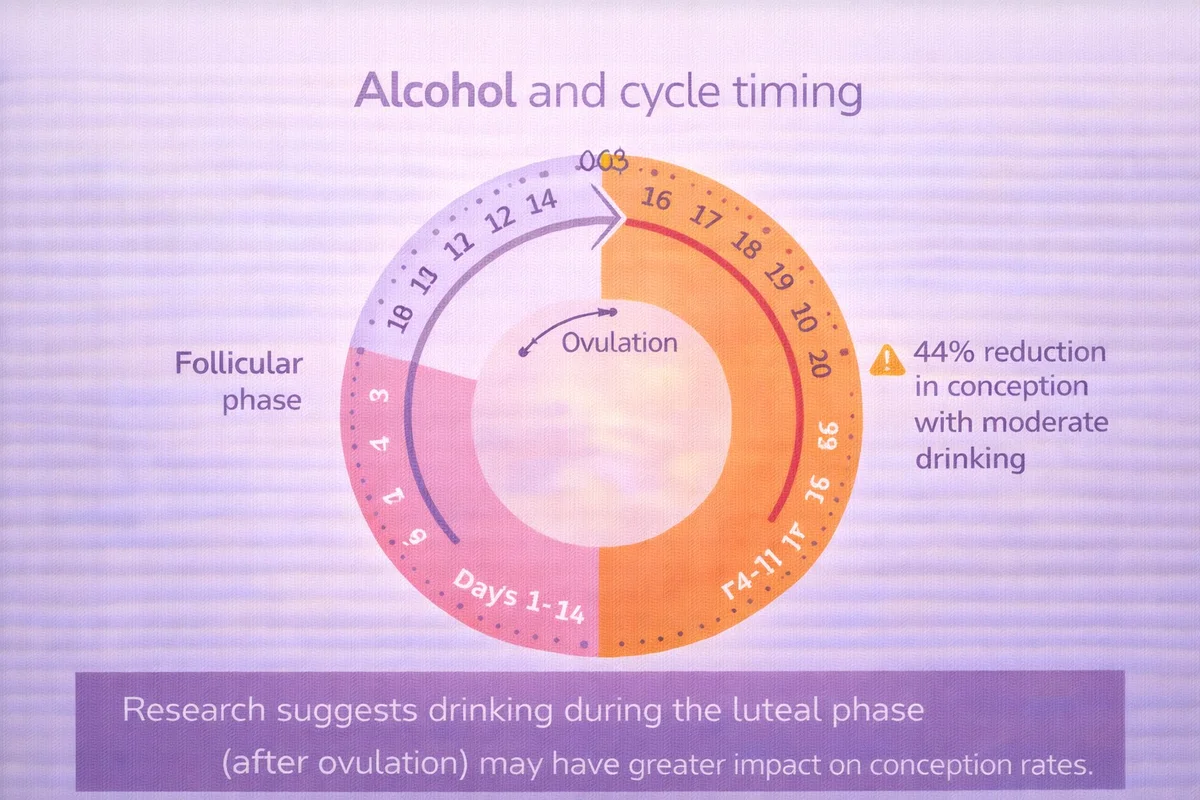
A University of Louisville study was the first to investigate timing:
- Heavy drinking reduced conception likelihood at all points in the cycle
- Moderate drinking (3-6 drinks/week) during the luteal phase (second half of cycle, after ovulation): 44% reduction in chance of conceiving
- Drinking during other cycle phases showed less impact
This suggests the post-ovulation period is particularly vulnerable to alcohol's effects.
Male Fertility and Alcohol
Male factor causes 50% of fertility issues—your partner's drinking matters just as much as yours.
Research shows alcohol affects male fertility significantly:
How alcohol harms male fertility:
- Disrupts normal hormone balance
- Reduces testosterone levels (especially with heavy drinking)
- Impairs sperm production (spermatogenesis)
- Reduces sperm count
- Decreases sperm motility (how well sperm swim)
- Damages sperm DNA
The research:
A Danish study of 1,221 men found:
- Sperm quality decreased in men drinking 5+ units/week (around 3 small beers)
- Decrease became much more pronounced in men drinking 25+ units/week (around 10 pints)
A 2022 study of fertility treatment outcomes found:
- When male partners drank 7+ drinks/week: 9% reduction in live birth rates
- This was independent of female partner's drinking
Critical point: Even if you're not drinking, if your partner is drinking heavily, it affects your chances of conceiving AND carrying to live birth.
Recommendations for men:
- Keep drinking under 7 drinks/week (ideally under 5)
- Avoid binge drinking (3+ drinks in one session)
- Consider reducing during the months you're actively trying
- Remember: Sperm takes about 3 months to mature—what your partner drinks now affects sperm quality 3 months later
Both partners should limit alcohol when trying to conceive.
So What Should You Actually Do About Alcohol?
The safest approach for both partners: Abstain or minimize.
Women - If you choose to drink:
- Keep it to under 7 drinks per week (ideally under 5)
- Avoid drinking during the two-week wait (luteal phase)
- Be especially cautious during the fertile window and after ovulation
- Remember: You might be pregnant and not know for weeks
Men - If you choose to drink:
- Keep it to under 7 drinks per week (ideally under 5)
- Avoid binge drinking (3+ drinks in one session)
- Remember: Sperm takes 3 months to mature—your drinking now affects fertility for the next 3 months
- Male drinking affects live birth rates even if your partner doesn't drink
If you're undergoing fertility treatment (IVF/IUI):
- Evidence suggests 7+ drinks/week reduces success rates for both partners
- Women drinking 7+ weekly: 7% less likely to conceive
- Men drinking 7+ weekly: 9% reduction in live birth rates
- Consider both partners abstaining completely during treatment cycles
Remember why abstinence is recommended for women:
- You might conceive and not know for 2-4 weeks
- Alcohol harms fetal development from the moment of conception
- There's no "safe" level of alcohol during pregnancy
- The precautionary approach protects a potential pregnancy
Remember why limiting is important for men:
- Male factor causes 50% of fertility issues
- Alcohol reduces sperm count, motility, and quality
- Effects on sperm persist for 3 months after drinking
- Your partner's live birth chances are affected by your drinking
What We Actually Did
After reading all the research, here's the approach my partner and I took:
Caffeine:
- Me: Kept drinking 1-2 cups of coffee per day (under 200mg)
- My partner: Switched from 3-4 coffees daily to 2 cups of tea (better for male fertility)
- Both: Switched from Diet Coke to sparkling water
- Neither: Stressed about the occasional chocolate bar
Alcohol:
- Me: Cut down significantly from my pre-TTC drinking
- Stopped drinking entirely during the two-week wait (luteal phase)
- Allowed myself 1-2 glasses of wine per week during the first half of my cycle
- My partner: Also cut back to 3-5 drinks per week maximum
- Stopped binge drinking on weekends
- Switched from pints to smaller measures
Both of us took it seriously—because male factor matters in 50% of cases.
Did this "fertility-friendly" drinking pattern get us pregnant? Who knows. We conceived on month 6—which is completely normal regardless of alcohol intake.
But here's what we DO know: Neither of us spent months stressed about every single coffee or glass of wine. We made informed choices together, reduced our intake to levels the research suggests are reasonable, and didn't drive ourselves mad with restrictions.
The key: We both made changes. Fertility isn't just a "woman's responsibility."
The Myths vs Reality
Let's address common myths directly:
Myth #1: "You must quit caffeine completely when TTC" Reality: Most research suggests 200mg/day or less (1-2 cups coffee) doesn't harm fertility. The evidence is genuinely mixed on whether moderate caffeine affects conception rates.
Myth #2: "One glass of wine will ruin your fertility" Reality: Some large studies found no effect from moderate drinking (<14 drinks/week), while others found reduced fertility even at low-moderate levels (1-5 drinks/week). The evidence is inconsistent, but heavy drinking (7+ drinks/week) clearly reduces fertility.
Myth #3: "Only women need to worry about alcohol and caffeine" Reality: FALSE. Male fertility is also affected. Energy drinks and heavy alcohol consumption in men are associated with reduced fertility and worse fertility treatment outcomes. Male partners drinking 7+ drinks/week showed 9% reduction in live birth rates. Both partners should moderate intake.
Myth #4: "Green tea is better than coffee for fertility" Reality: Some studies suggest tea (including green and black) might be beneficial for fertility, but the evidence is limited. Coffee in moderate amounts shows minimal to no negative effect in most studies.
Myth #5: "If you drink during the two-week wait, you've ruined your chances" Reality: One study found moderate drinking during the luteal phase reduced conception by 44%, but other studies found no effect of moderate drinking on fertility. The evidence is mixed, but the luteal phase may be particularly sensitive.
Myth #6: "Caffeine during early pregnancy causes miscarriage" Reality: High caffeine intake is associated with increased miscarriage risk in some studies, which is why limiting to 200mg/day is recommended. But moderate intake (<200mg) hasn't been clearly linked to pregnancy loss in most research.
The Real Story: It's About Risk Reduction, Not Perfection
After months of research and reading conflicting studies, here's my conclusion:
There's no perfect answer. The research genuinely contradicts itself. Some studies find no effect from moderate consumption; others find small but significant reductions in fertility.
What we DO know:
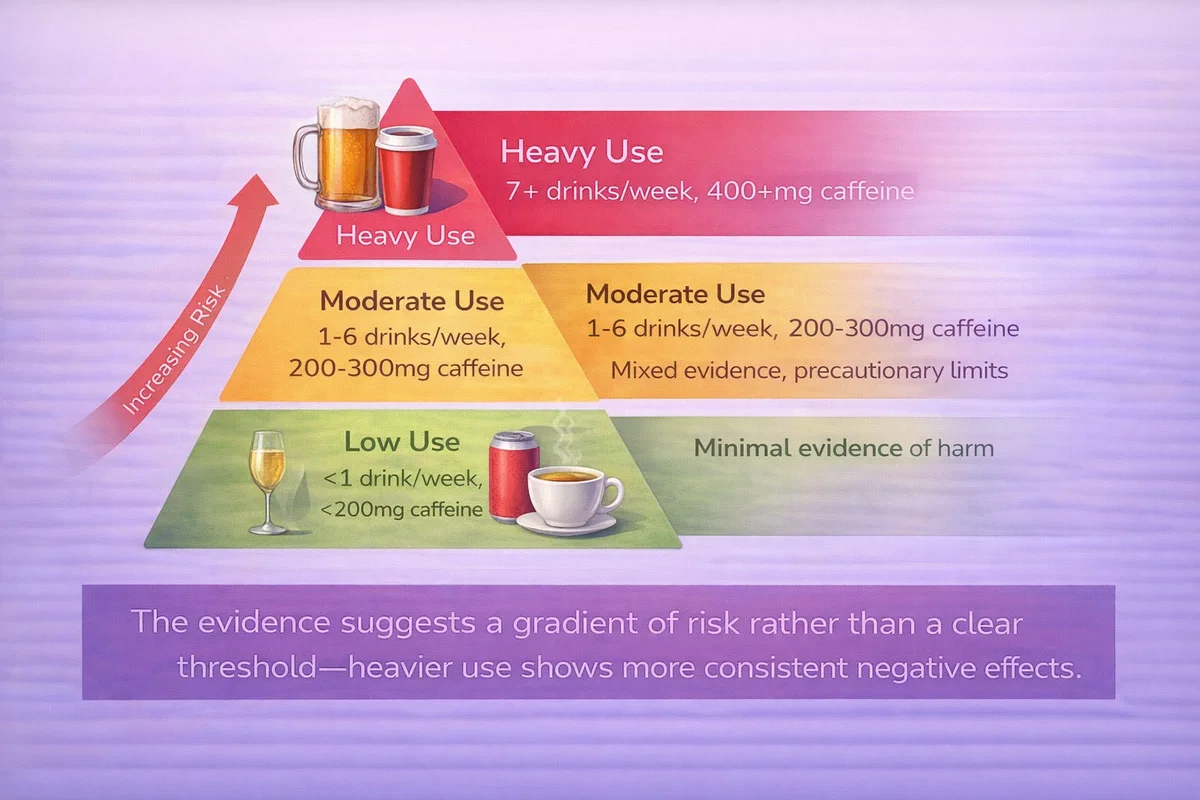
- Heavy consumption is harmful (7+ drinks/week, 400+ mg caffeine/day)
- Moderate consumption shows mixed results (1-6 drinks/week, 200-300mg caffeine)
- Low consumption appears relatively safe (<1 drink/week, <200mg caffeine)
The recommended limits (200mg caffeine, minimal alcohol) are based on the precautionary principle: they err on the side of caution given the mixed evidence.
A Framework for Decision-Making
If you want to be most cautious (both partners):
- Eliminate alcohol completely
- Women: Limit caffeine to 200mg/day (2 cups tea/coffee max)
- Men: Limit caffeine to 300mg/day, avoid energy drinks
If you want a moderate approach (both partners):
- Women: Keep alcohol under 7 drinks/week (preferably under 5)
- Men: Keep alcohol under 7 drinks/week, avoid binge drinking
- Women: Avoid alcohol during luteal phase/two-week wait
- Women: Keep caffeine under 200mg/day
- Men: Keep caffeine under 300mg/day, avoid energy drinks
- Both partners follow these guidelines
If you want minimal restrictions:
- Both partners: Avoid heavy drinking (7+ drinks/week)
- Men: Avoid energy drinks and binge drinking
- Women: Keep caffeine under 300mg/day
- Men: Keep caffeine under 400mg/day
- Women: Abstain completely once you know you're pregnant
Remember: Male factor causes 50% of fertility issues. Both partners should make changes.
What Actually Matters More
While you're worrying about that second cup of coffee, remember these have MUCH bigger impacts on fertility:
Far more important factors:
- Age (especially after 35)
- Smoking (major fertility harm for both sexes)
- Obesity (BMI over 30)
- Being underweight (BMI under 18.5)
- Irregular ovulation (get checked if cycles are irregular)
- Male factor (50% of fertility issues)
- Timing intercourse (most important!)
Don't let caffeine and alcohol stress overshadow these bigger factors.
When to Seek Help
See your GP if:
- You've been trying for 12 months without success (under 35)
- You've been trying for 6 months without success (35+)
- You have irregular periods or signs of ovulation problems
- Your partner has potential sperm quality issues
Real fertility issues require medical help—not just cutting out coffee.
The Bottom Line
Caffeine (Women):
- Research is genuinely mixed
- 200mg/day appears safe for most people based on available evidence
- Avoid energy drinks and excessive caffeinated sodas
- Don't stress about 1-2 cups of coffee or tea
Caffeine (Men):
- Limit to 300mg/day based on some evidence of reduced fecundability above this level
- Avoid energy drinks completely (clear negative association)
- Tea appears beneficial—consider switching from coffee
- Caffeinated sodas also show negative associations
Alcohol (Women):
- Heavier drinking (7+ drinks/week) consistently shows reduced fertility
- Moderate drinking (<7 drinks/week) shows mixed results
- The safest approach is to abstain or minimize
- Avoid drinking during the two-week wait/luteal phase
Alcohol (Men):
- 7+ drinks/week reduces sperm quality and live birth rates (9% reduction)
- 5+ units/week shows decreased sperm quality
- Heavy drinking (25+ units/week) severely impairs sperm parameters
- Effects persist for 3 months (how long sperm takes to mature)
Critical point: Both partners should make changes. Male factor causes 50% of fertility issues.
The real issue isn't perfection—it's informed risk reduction for BOTH partners.
Make choices that make sense for you, your lifestyle, and your comfort level with the (admittedly mixed) evidence. Don't drive yourself mad trying to optimize every single factor.
And remember: My partner and I both moderated our intake (1-2 coffees daily for me, switched to tea for him; minimal alcohol for both, none during two-week wait for me). We conceived on month 6, perfectly normal timing. The obsessive restriction probably would have stressed us out more than it helped.
But we BOTH made changes—because fertility is a couple's journey, not just the woman's responsibility.
Disclaimer: This information is based on peer-reviewed studies and medical guidance, but isn't medical advice. For personalized recommendations when TTC, speak to your GP.