
My sister-in-law announced her second pregnancy at Sunday lunch. Within minutes, my mother-in-law turned to me.
"So when are you two going to give us grandchildren?"
I laughed it off. But on the drive home, my partner said quietly, "You know, maybe we should start thinking about it."
That night, I lay awake, my mind racing. Was I ready? Did I even want a baby? Or was I just feeling the weight of everyone else's expectations pressing down on me?
The next morning, I did what any confused millennial does: I Googled "am I ready to have a baby?" I found quizzes with questions like "Do you have a stable job?" and "Can you afford childcare?" But none of them addressed the real question churning in my gut: How do I know if I actually want this, or if I'm just caving to pressure?
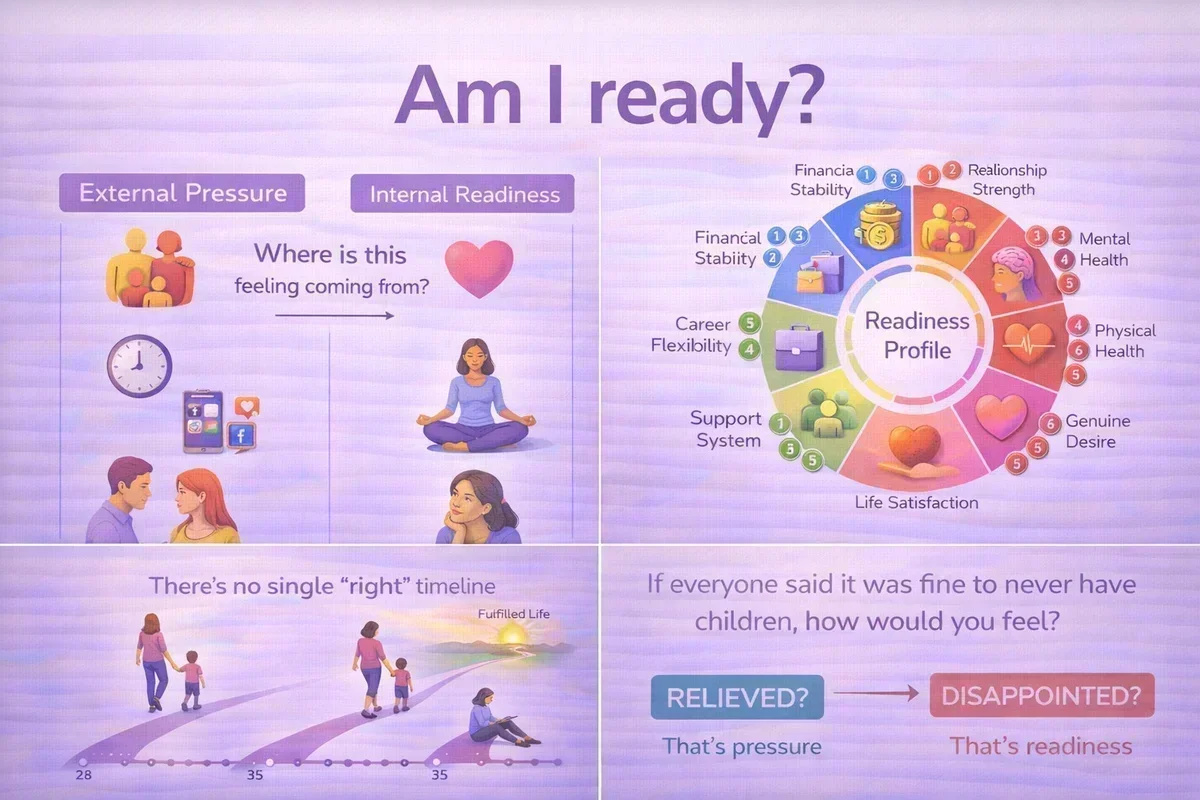
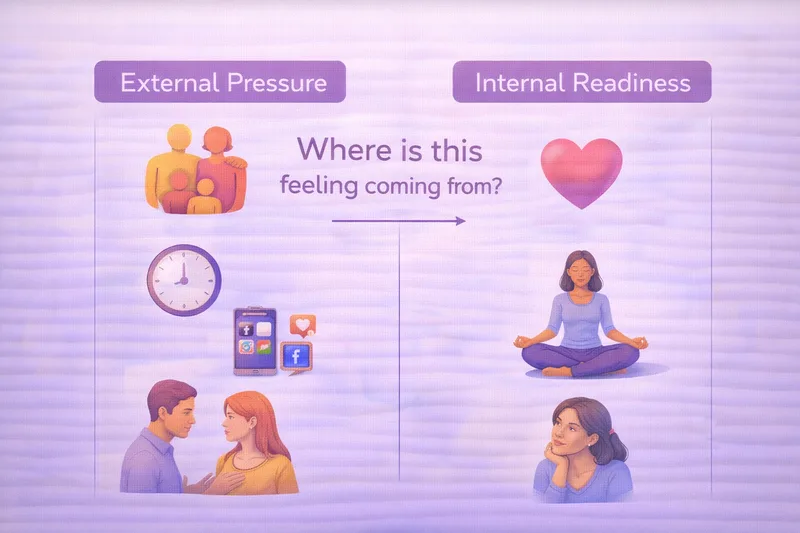
Here's what I learned after months of soul-searching, therapy, and research: External pressure and genuine readiness feel remarkably similar at first—but they're fundamentally different.
Let's figure out which one you're experiencing.
The Many Faces of "Baby Pressure"
Before we can distinguish pressure from readiness, we need to acknowledge where the pressure actually comes from. It's rarely just one source—it's usually a perfect storm.
1. Family Pressure: "When Are You Going to Make Me a Grandparent?" This was my biggest pressure point. My in-laws weren't subtle. Every family gathering included comments about "the clock ticking" or "not waiting too long." My own parents were gentler but still asked regularly if we'd "thought about it."
Research shows family pressure to have children is incredibly common—and it affects our decision-making more than we'd like to admit. A widely cited study published in the American Sociological Review found that fertility decisions are actually "contagious."
The researchers discovered that we are significantly more likely to have a baby shortly after a close friend or sibling does. Why? Because seeing others do it normalizes the timing and increases the subtle pressure to "keep up" or join the club.
The guilt is real. You don't want to disappoint your parents. You see how much joy your siblings' children bring them. You worry you're being "selfish" by waiting.
But here's the thing: Your parents already had their chance to decide when (and if) to have children. This decision is yours.
2. Societal Pressure: The "Biological Clock" Panic
Society loves to remind women that fertility declines with age. Magazine headlines scream about fertility "plummeting" after 35. Friends casually mention "leaving it too late." Even well-meaning doctors ask if you've "thought about your timeline."
The biological clock narrative is based on real science—fertility does decline with age, particularly after 35. But the panic-inducing headlines often exaggerate the speed of decline.
Here's the reality:
- At 30, you have about a 20% chance of conceiving each cycle
- At 35, it's about 15% per cycle
- At 40, it's about 5% per cycle
Yes, fertility decreases. But the narrative that you'll be "too late" if you wait another year or two is largely fear-mongering—especially for women in their early 30s.
The pressure isn't just about biology, though. It's about societal expectations of what a woman "should" want. The assumption that all women want children, and want them now, is pervasive and exhausting.
3. Partner Pressure: "I'm Ready Even If You're Not" This is perhaps the most difficult pressure to navigate. When your partner says they're ready for a baby and you're not sure, the guilt can be overwhelming. You worry:
- Am I holding us back?
- What if they resent me for waiting?
- What if I lose them because I'm not ready?
- What if I never feel ready—does that mean I'm broken?
Research from both sides of the Atlantic confirms that being on the same page is critical. A major report by the UK charity Relate warns that becoming parents is one of the life events most likely to reduce relationship quality, with "distressed" relationships significantly higher among parents of young children.
This is backed up by US research. A comprehensive study published in the journal Social Forces analysed couples' fertility intentions and found that "disagreed-upon" pregnancies—where one partner wanted a baby and the other didn't—significantly increased the risk of the relationship ending compared to couples who were both ready.
The global consensus is clear: couples who wait until they have a shared desire for a child have far better stability. Having a baby to "save" your relationship or avoid conflict rarely works. If anything, it amplifies existing problems.
4. Friend Pressure: The FOMO Effect
When all your friends start having babies, suddenly you're the odd one out. Group chats shift from dinner plans to nap schedules. Weekend drinks become soft play meetups. You feel left behind.
The Fear of Missing Out (FOMO) on motherhood is real. You see your friends' Instagram posts—the tiny shoes, the first smiles, the "best thing I ever did" captions—and wonder if you're making a mistake by waiting.
But here's what Instagram doesn't show:
- The sleep deprivation
- The relationship strain
- The career sacrifices
- The moments of overwhelming doubt
I'm not saying your friends are lying—many genuinely love parenthood. But social media shows a curated version of reality. Don't make a life-changing decision based on highlight reels.
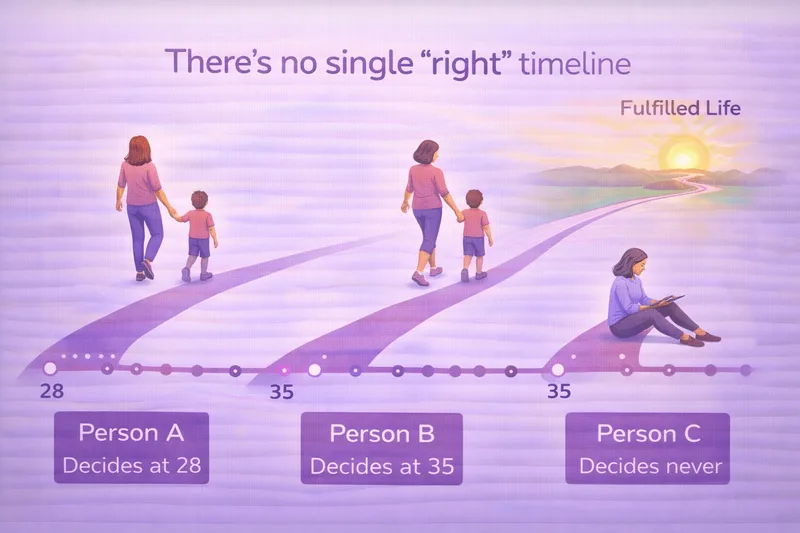
5. Internal Pressure: "Shouldn't I Want This By Now?" Sometimes the pressure comes from within. You're 32 (or 28, or 35) and think, "I should want a baby by now. What's wrong with me?" There's nothing wrong with you. The idea that there's a "right" age to suddenly feel ready for parenthood is a myth. Some people know they want children from age 20. Others don't feel ready until 40. Some never want children at all—and that's equally valid.
Research backs this up. A landmark study published in the journal Demography analyzed the happiness trajectories of thousands of parents. They found that while young or unprepared parents often experienced a decline in happiness after birth, those who waited until they were older and felt ready experienced a "sustained increase" in life satisfaction.
Your timeline doesn't have to match anyone else's. Waiting until you are ready isn't just okay—it's actually statistically better for your future happiness.
What Genuine Readiness Actually Feels Like
Now for the harder question: If all that is pressure, what does readiness actually feel like?
Here's the frustrating truth: Readiness doesn't feel like unwavering certainty.
I spent months waiting for a lightning bolt of clarity—a moment where I'd know I was ready. It never came.
Instead, readiness felt more like:
- Quiet excitement rather than panic
- Curiosity about what parenthood might be like
- A willingness to make sacrifices without resentment
- Confidence that I could handle the hard parts
- Feeling like adding a child would enhance my life rather than fix something missing
Let's break down the key differences:
Pressure Says: "I Should Want This"
Readiness Says: "I Do Want This"
Pressure comes from external expectations. You feel like you're supposed to want a baby because:
- Your friends have babies
- Your family expects it
- Society says it's time
- Your partner is ready
Readiness comes from internal desire. You want a baby because:
- You're curious about who they'll become
- You want to experience parenthood
- You feel emotionally prepared for the challenge
- The idea excites you more than it terrifies you
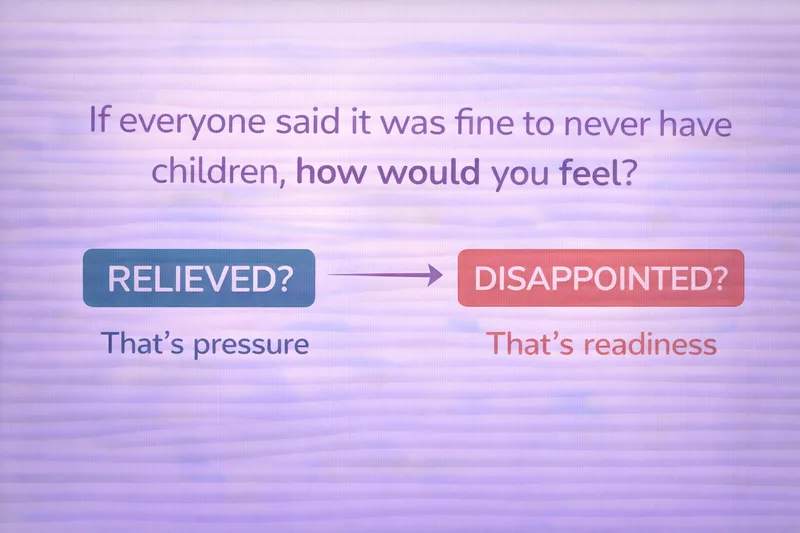
The test: Imagine everyone in your life said, "It's fine if you never have children. We support whatever you choose." How do you feel?
- Relieved? That's pressure.
- Disappointed? That's readiness.
Pressure Says: "If I Don't Do It Now, I'll Regret It"
Readiness Says: "I'm Willing to Accept Whatever Comes"
Fear-based decisions rarely end well. If your primary motivation is avoiding future regret, that's pressure talking.
Readiness acknowledges uncertainty but accepts it. You don't know if you'll be a "good" parent. You don't know if you'll love every moment. But you're willing to take that risk because the potential reward feels worth it.
Pressure Says: "A Baby Will Make Everything Better"
Readiness Says: "A Baby Will Make Everything Different"
If you're hoping a baby will:
- Fix your relationship
- Give your life purpose
- Make you feel less lonely
- Prove you're an adult
That's pressure—and it's setting you up for disappointment.
Babies don't fix problems. They amplify them. If your relationship is rocky, a baby will make it rockier. If you're unfulfilled in your career, a baby won't suddenly make you fulfilled—though it might distract you temporarily.
Readiness means understanding that a baby will fundamentally change your life—and being okay with that change even when it's hard.
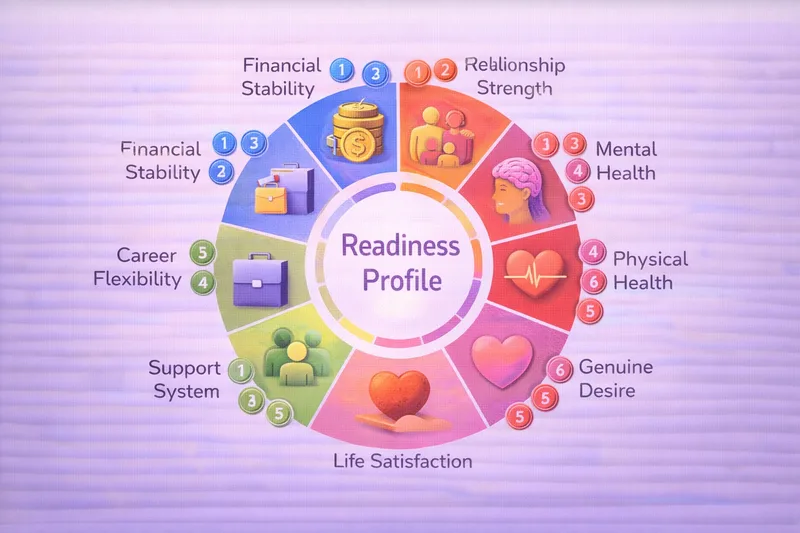
The Self-Assessment: Questions to Ask Yourself
Here are the questions I wish I'd asked myself earlier. Be brutally honest—no one needs to see your answers.
The "Why" Questions:
- If I could never have children, how would I feel?
- Devastated? → Suggests genuine desire
- Relieved? → Suggests pressure
- Neutral/uncertain? → Not ready yet
- Am I thinking about having a baby to make someone else happy?
- Parents, partner, friends, society?
- If yes: whose happiness matters more—theirs or yours?
- Do I want a baby, or do I want the idea of a baby?
- Instagram-worthy moments vs 3am nappy changes
- Cute baby clothes vs actual daily reality
- What am I hoping a baby will give me?
- Purpose? Love? Identity? Status?
- Can I find those things elsewhere first?
The "Reality Check" Questions:
- Can I afford a baby without resentment?
- Not just "Can I afford it?" but "Will I resent the sacrifices?"
- Holidays, career progression, personal spending
- Is my relationship strong enough to handle the strain?
- Do we communicate well during stress?
- Do we share household responsibilities fairly now?
- How do we handle sleep deprivation?
- Am I mentally and physically healthy enough?
- Untreated mental health issues?
- Physical health concerns?
- Energy levels?
- What will I have to give up, and am I okay with that?
- Career flexibility? Social life? Hobbies?
- Sleep? Spontaneity? Financial freedom?
The "Gut Check" Questions:
- When I imagine my life in 10 years, is there a child in it?
- Not "should there be" but "is there"?
- What does that vision feel like?
- If my partner wanted to wait another two years, how would I feel?
- Disappointed but okay? → Flexible readiness
- Devastated? → Strong desire
- Relieved? → Not ready
What If You're Still Not Sure?
Here's the truth no one tells you: It's okay not to be sure. Ambivalence is normal. A significant study in the Journal of Marriage and Family found that fertility is rarely a simple "yes/no" decision. The researchers described how it is common for people to "hedge" their plans or remain in a state of flexibility because 100% certainty is often impossible to achieve.
The goal isn't to reach 100% certainty. The goal is to figure out if you're at a "yes, I'm ready," "not yet," or "maybe never."
If You Think It's Pressure: Give yourself permission to say "not yet."
- Tell your family: "We'll have children when we're ready. Please respect that."
- Tell your partner: "I need more time to figure out what I want. Can we revisit this in six months?"
- Tell yourself: "I don't have to want what everyone else wants."
If You Think It's Genuine Readiness:
Give yourself permission to be scared.
Feeling ready doesn't mean feeling confident. It means:
- The desire outweighs the fear
- You're willing to take the leap despite uncertainty
- You can imagine yourself as a parent and it feels right
There's No Perfect Time—But There Is Your Time
I eventually had my baby. Not because my in-laws pressured me. Not because the biological clock terrified me. Not because my friends all had children.
I had a baby because, somewhere along the way, my answer shifted from "I should want this" to "I do want this."
It wasn't a lightning bolt. It was a slow, quiet realisation that parenthood felt right for me—not for anyone else.
And here's what I learned: The right time is when you're making the decision for yourself, not for anyone else.
If that's now, brilliant. If that's in five years, brilliant. If that's never, also brilliant.
Your life. Your choice. Your timeline.
Disclaimer: This article is for informational and educational purposes only and does not constitute professional psychological or relationship advice. While the information is based on research and personal experience, every individual’s situation is unique. If you are struggling with anxiety, depression, or severe relationship conflict, please consult a qualified mental health professional or relationship counsellor.