
The two pink lines had barely appeared on the test when I started frantically googling "4 weeks pregnant symptoms." My body didn't feel any different yet, but I was convinced something should be happening. Two weeks later, I couldn't keep toast down and was falling asleep at my desk by 2pm. Be careful what you wish for.
This guide walks you through the first 12 weeks of pregnancy — what's actually happening inside your body, what you might feel (and when), and what needs to happen practically in terms of NHS care. It's based on peer-reviewed evidence rather than guesswork, because that's what you deserve at 3am when you're awake wondering if what you're feeling is normal.
Before We Start: How Pregnancy Weeks Actually Work
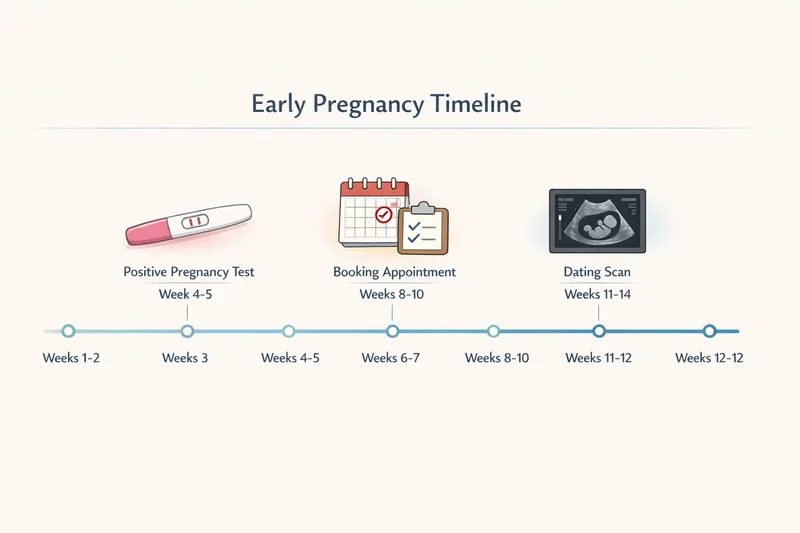
This confuses almost everyone. Pregnancy is dated from the first day of your last menstrual period (LMP), not from when you actually conceived. That means:
Weeks 1–2: You're not actually pregnant yet. These weeks cover the start of your menstrual cycle through to ovulation and conception.
Week 3: Fertilisation likely occurs. The sperm meets the egg, usually in the fallopian tube.
Week 4: Implantation happens. The embryo embeds in the uterine lining, and hCG starts to rise.
So when someone says "I found out at 4 weeks pregnant," they really mean about 2 weeks after conception. This is why the first few weeks feel like nothing is happening — because biologically, very little has happened yet.
Weeks 1–3: Before You Know
What's happening: Technically, you're not pregnant during weeks 1–2. Your body is going through a normal menstrual cycle — building up the uterine lining, releasing an egg at ovulation (usually around day 14 of a 28-day cycle), and then either conceiving or not.
If sperm meets egg during week 3, fertilisation occurs. The fertilised egg (now called a zygote) begins dividing as it travels down the fallopian tube toward the uterus. By the end of week 3, it has become a ball of around 100 cells called a blastocyst.
What you feel: Nothing pregnancy-related. Your body has no idea yet whether conception has occurred.
What to do: If you're trying to conceive, you should already be taking 400 micrograms of folic acid daily — ideally from before conception. See our Prenatal Vitamins UK guide for the full breakdown.
Week 4: Implantation and the Earliest Signs
What's happening: The blastocyst implants into the uterine lining — typically 6–12 days after ovulation. This is the true biological start of pregnancy. Cells that will become the placenta begin producing hCG, the hormone that pregnancy tests detect (NCBI StatPearls: hCG).
What you might feel:
Implantation bleeding — Around 25–30% of women experience light spotting, usually pink or brown, lasting hours to a day or two. It's easily mistaken for an early period.
Mild cramping — Similar to pre-period cramps as the embryo embeds.
Nothing at all — Many women feel completely normal at this stage. That's fine too.
The test: Most home pregnancy tests become reliable from the first day of your missed period — which falls around the end of week 4 for women with a 28-day cycle. The NHS recommends testing from this point. If you test earlier, you may get a false negative simply because hCG hasn't risen high enough. See our guide: Am I Pregnant or Is My Period Just Late?
Weeks 5–6: Symptoms Start to Arrive
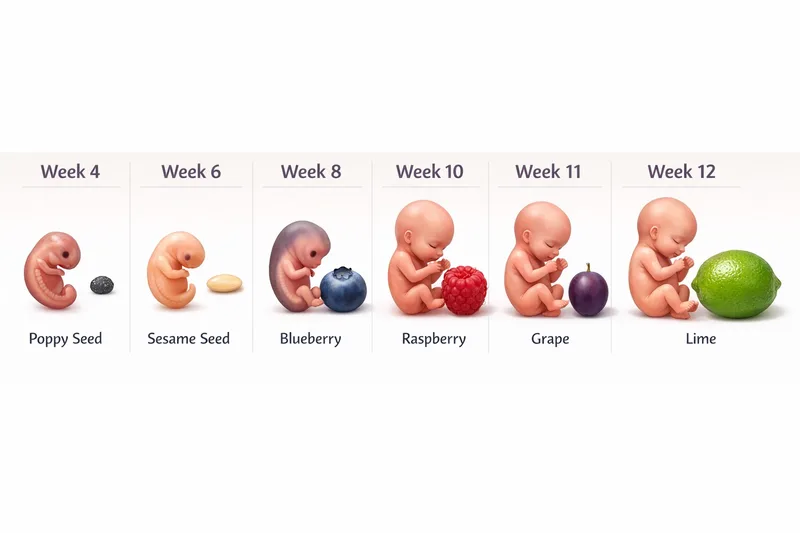
What's happening: The embryo is now about the size of a sesame seed. The neural tube (which becomes the brain and spinal cord) is forming. The heart begins to develop and may start beating by the end of week 6 — though it's too early to detect on a standard scan.
hCG levels are rising rapidly, roughly doubling every 48–72 hours (NCBI StatPearls: hCG). This hormonal surge is what triggers most early pregnancy symptoms.
What you might feel:
Nausea — This is when "morning sickness" typically begins. A large prospective study found that nausea and vomiting usually starts between weeks 4 and 7, with half of all women experiencing symptoms by day 36 LMP (roughly 5 weeks) (Sayle et al., 2002). Despite the name, it can happen at any time of day — only about 2% of women experience it exclusively in the morning (PMC: NVP).
Breast tenderness — Often one of the earliest symptoms. Breasts may feel swollen, heavy, and sore to touch, driven by rising progesterone and oestrogen.
Fatigue — Bone-deep tiredness is extremely common from week 5 onwards. Progesterone has a sedating effect, and your body is also increasing blood volume.
Frequent urination — Your kidneys are processing more blood, and the growing uterus puts early pressure on the bladder.
Heightened sense of smell — Many women notice this before anything else. Suddenly your partner's aftershave or the kitchen bin makes you retch.
What to do:
Self-refer for NHS maternity care. You don't need to see your GP first. In most areas, you can self-refer to your local midwifery service online. Do this as soon as you get a positive test — they'll book your initial appointment for around 8–10 weeks.
Start or continue folic acid (400 micrograms daily).
Avoid alcohol, smoking, and recreational drugs. There is no known safe level of alcohol in pregnancy (NHS guidance).
Review medications with your GP or pharmacist — some are not safe during pregnancy.
Weeks 7–8: Peak Hormone Surge
What's happening: The embryo is now around 10–13mm long — about the size of a blueberry to a raspberry. Arms and legs are beginning to form as tiny buds. Facial features are developing. The brain is growing rapidly.
hCG levels are climbing toward their peak, which occurs around weeks 8–11 (NCBI StatPearls: hCG).
What you might feel:
Nausea intensifying — For most women, this is when morning sickness gets worse. A prospective study of 363 women found that nausea peaked around week 9 (day 63 LMP), with a median total of 56 hours of nausea across the entire pregnancy for symptomatic women (Gadsby et al., 1993).
Food aversions and cravings — Previously loved foods may suddenly become repulsive. Strong aversions to coffee, meat, and eggs are particularly common.
Increased saliva — Known as ptyalism, some women produce noticeably more saliva, particularly alongside nausea.
Constipation — Progesterone slows digestion, and this becomes more noticeable from weeks 7–8 onwards.
Mood swings — Hormonal fluctuations combined with fatigue and nausea can make emotional regulation harder. You may feel tearful, irritable, or anxious with little provocation. This is normal.
Booking appointment (weeks 8–10): Your first midwife appointment should happen around now. The NHS recommends having this before 10 weeks where possible. This appointment usually lasts about an hour and covers your medical history, lifestyle, blood tests (including screening for HIV, hepatitis B, syphilis, sickle cell, and thalassaemia), blood pressure, BMI, and discussion of screening options for your baby. You'll receive your maternity notes.
Weeks 9–10: Embryo Becomes Fetus
What's happening: At the end of week 8, the embryo is officially reclassified as a fetus. All major organs and structures are now present in basic form — the remaining weeks of pregnancy are about growth and maturation. By week 10, the fetus is about 30mm long (roughly the size of a prune). Fingers and toes are separating. The skeleton is beginning to harden from cartilage to bone.
What you might feel:
Nausea may be at its worst — Symptoms typically peak between weeks 7 and 12, with the worst point often around week 9 (NCBI MotherToBaby; AAFP, 2014).
Visible changes — Your waistband may feel tighter even though you're not visibly "showing" yet. Bloating contributes to this as much as actual uterine growth at this stage.
Veins becoming more visible — Increased blood volume (which rises by about 50% during pregnancy) can make veins in your breasts and abdomen more prominent.
Vivid dreams — Many women report unusually intense or strange dreams during the first trimester, likely related to hormonal changes and disrupted sleep.
A note on absent symptoms: By the end of week 8, approximately 89% of women with successful pregnancies will have experienced at least some symptoms (Sayle et al., 2002). But the remaining 11% feel essentially nothing — and that's also normal. Lack of symptoms does not mean something is wrong.
Weeks 11–12: Turning the Corner
What's happening: The fetus is now about 50–60mm long and weighs around 14 grams. External genitalia are beginning to differentiate, though they won't be visible on a scan for several more weeks. The fetus can move, though you won't feel it yet — it's far too small.
hCG levels begin to plateau and then gradually decline after their peak. This is why many women start to feel better as the first trimester ends.
What you might feel:
Nausea beginning to ease — For about 60% of women, morning sickness resolves by the end of the first trimester (around week 12–13). An estimated 87% will be symptom-free by week 20 (AAFP, 2014). If your nausea continues beyond 12 weeks, that's still within normal range — but speak to your midwife if it's affecting your ability to eat or drink.
Fatigue may start to lift — Many women describe a noticeable energy boost entering the second trimester.
Skin changes — Some women develop the "pregnancy glow" (increased oil production and blood flow), while others experience acne breakouts. Both are hormonally driven and temporary.
Reduced urination frequency — As the uterus rises out of the pelvis (around week 12), pressure on the bladder temporarily decreases. It'll come back later as the baby grows.
Dating scan (weeks 11–14): This is a major milestone. The NHS offers an ultrasound scan between 11 and 14 weeks to estimate your due date, check the baby's development, and offer screening for Down's syndrome, Edwards' syndrome, and Patau's syndrome (combined screening involves both the ultrasound and a blood test) (NHS: Antenatal appointments). For many couples, this is the first time they see their baby — and it's the moment most people feel comfortable sharing the news.
When Symptoms Are a Red Flag
Most first-trimester symptoms are normal and harmless, even when they're miserable. But some require urgent attention:
Contact your GP, midwife, or early pregnancy unit immediately if you experience:
Heavy bleeding — Soaking through a pad in an hour, passing clots, or bleeding that's bright red and increasing. Light spotting is common and usually harmless, but heavy bleeding needs assessment. See our upcoming guide: Bleeding in Early Pregnancy: When to Worry.
Severe abdominal pain — Particularly if it's one-sided, sharp, or accompanied by bleeding or shoulder-tip pain. This can indicate an ectopic pregnancy, which is a medical emergency.
Severe vomiting — If you can't keep any fluids down for 24 hours, or you're losing weight, feeling dizzy, or producing very dark urine, you may have hyperemesis gravidarum — a condition affecting up to 3% of pregnancies that requires medical treatment (NCBI MotherToBaby).
Fever above 38°C — High temperature in early pregnancy needs investigation, as some infections can affect the baby.
Pain or burning when urinating — Urinary tract infections are more common in pregnancy and should be treated promptly with antibiotics.
The "No Symptoms" Worry
One of the most common anxieties in early pregnancy is the absence of symptoms — or the sudden disappearance of symptoms you'd been experiencing. Here's the evidence:
A prospective study found that 89% of women delivering live infants experienced symptoms by the end of week 8 — which means 11% did not and went on to have perfectly healthy pregnancies (Sayle et al., 2002).
However, the same study found that pregnancies that ended in miscarriage tended to have later onset or less prominent symptoms. It's also true that a sudden, complete disappearance of symptoms (particularly nausea and breast tenderness) before week 10 can sometimes indicate that hCG levels are dropping, which may signal a pregnancy loss.
The practical advice: Don't panic over a single good day. Symptoms fluctuate naturally. But if you had significant symptoms that completely and suddenly vanish before 10 weeks, and you're concerned, contact your midwife or early pregnancy unit for reassurance — they can check hCG levels or offer an early scan.
Interestingly, a meta-analysis also found that nausea and vomiting in pregnancy is associated with a decreased risk of miscarriage (odds ratio 0.36), providing some reassurance for women suffering through morning sickness (Weigel & Weigel, 1989).
Your First Trimester NHS Checklist
Here's what should happen during weeks 1–12 in terms of NHS care:
As soon as you get a positive test:
Take folic acid 400mcg daily (5mg if higher risk — ask your GP)
Self-refer to your local midwifery service
Stop smoking and alcohol
Review medications with your GP
Weeks 8–10: Booking appointment
Medical history, blood pressure, BMI, urine test
Blood tests: blood group, rhesus status, iron levels, HIV, hepatitis B, syphilis, sickle cell, thalassaemia
Discussion of screening options
Maternity notes issued
Weeks 11–14: Dating scan
Confirms due date and viability
Measures nuchal translucency (part of combined Down's syndrome screening if you opt in)
First chance to see your baby
Frequently Asked Questions
Is it normal to have no morning sickness at all?
Yes. Around 20% of women experience no nausea during pregnancy (Gadsby et al., 1993). It's not a sign that anything is wrong. Symptom severity varies enormously between women and even between pregnancies in the same woman.
When should I tell people I'm pregnant?
There's no rule. Many couples wait until after the dating scan (11–14 weeks) because the risk of miscarriage drops significantly after a heartbeat is confirmed. But some people tell close family and friends earlier, particularly if they'd want support in the event of a loss. It's entirely your choice.
I feel terrible — does this mean the pregnancy is healthy?
Feeling awful is actually mildly reassuring. Morning sickness is associated with lower miscarriage risk (Weigel & Weigel, 1989). That said, don't suffer in silence — if symptoms are severe, your midwife or GP can help with safe treatments.
Can I exercise in the first trimester?
Yes. The NHS and RCOG recommend continuing your usual exercise routine unless you have specific complications. Moderate exercise is safe and beneficial. Avoid contact sports and activities with a high fall risk. See our guide: Pregnancy Exercise Myths.
I'm spotting — should I worry?
Light spotting in the first trimester is very common and usually harmless. However, if bleeding is heavy, increasing, bright red, or accompanied by pain, contact your midwife or early pregnancy unit.
When will I start showing?
Most first-time mothers don't visibly show until weeks 12–16, though bloating can make your clothes feel tighter earlier. Second and subsequent pregnancies tend to show earlier because the abdominal muscles have already been stretched.
My symptoms suddenly disappeared at week 8 — is that bad?
Not necessarily. Symptoms fluctuate day to day. A single day without nausea doesn't indicate a problem. However, if all symptoms vanish suddenly and completely before week 10, contact your midwife for reassurance — they can check things are progressing normally.
The First Trimester in Perspective
The first 12 weeks are biologically extraordinary — a single fertilised cell becomes a fully formed fetus with a beating heart, developing brain, and tiny fingers and toes. They're also, frankly, often the hardest weeks of pregnancy. You feel awful, you can't tell anyone why, and you're carrying the weight of anxiety about whether everything is developing normally.
If that's where you are right now: it gets better. For most women, the second trimester brings genuine relief — the nausea lifts, the energy returns, and the dating scan provides the reassurance you've been waiting for.
In the meantime, eat what you can, sleep when you can, and don't beat yourself up for not being one of those women who "loved every minute." The first trimester is survival mode. That's enough.
Medical disclaimer: This article is for informational purposes only and does not constitute medical advice. If you have any concerns about your pregnancy, contact your midwife, GP, or local early pregnancy unit.
Last reviewed: March 2026 | Next review: September 2026
Related articles:
- Am I Pregnant or Is My Period Just Late?
- Prenatal Vitamins UK: What You Need When Trying to Conceive
- Pregnancy Exercise Myths: Can You Really Harm Your Baby Working Out?
- When to See a Fertility Doctor UK