
I spent the week before my booking appointment convinced they were going to give me some kind of test and I'd fail it. Fail at being pregnant. Ridiculous in hindsight, but nobody had told me what actually happens — so my brain filled in the gaps with anxiety.
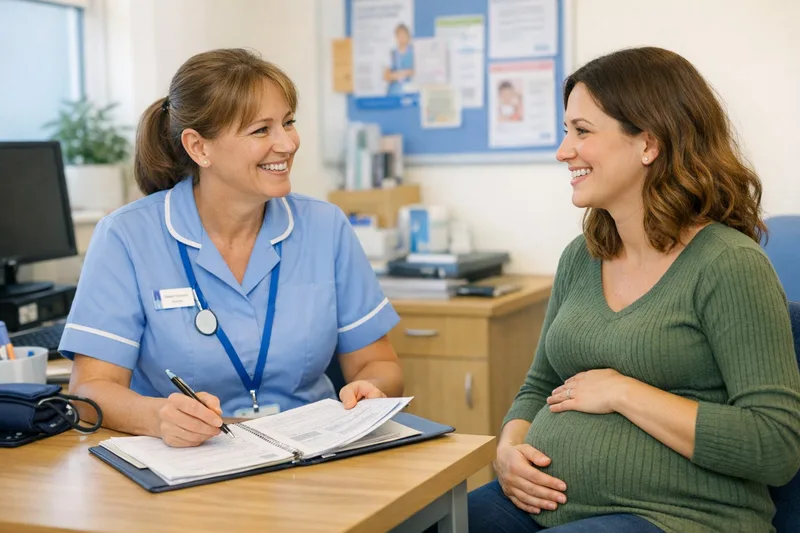
In reality, it was an hour-long chat with a lovely midwife who asked me a lot of questions, took some blood, checked my blood pressure, and handed me a folder of notes that I then carried around in my bag for the next seven months. That's it. No test. No grade. No judgement.
Here's everything you need to know so you walk in prepared and walk out reassured.
When Does It Happen?
Your first midwife appointment — officially called the booking appointment — should take place before you're 10 weeks pregnant where possible (NHS: Your first midwife appointment). Most areas aim to see you between weeks 8 and 10.
If you're already past 10 weeks, don't panic — just self-refer as soon as possible. You'll still get your appointment and start your care.
How to get it booked
In most parts of England, you self-refer directly to your local midwifery service — usually through an online form on your local NHS trust's website. You don't need to see your GP first, though you can if you prefer. Your GP will be notified of your pregnancy after your booking appointment anyway.
In Scotland, you can contact your GP surgery or local midwife directly. In Wales and Northern Ireland, the process varies by health board.
Tip: Do this as soon as you get a positive pregnancy test. Some areas have long referral-to-appointment waits, so the earlier you're in the system, the better.
What to Bring
Your midwife will need quite a lot of information from you, so it helps to have this ready:
Essential:
Your NHS number (on your medical card or available from your GP)
The date of the first day of your last menstrual period (LMP) — this is how they'll estimate your due date initially
A urine sample (some trusts ask you to bring one; others will give you a pot on arrival — check your appointment letter)
A list of any medications you're currently taking
Helpful but not essential:
Your partner's medical history (they'll ask about the biological father's health)
Details of any previous pregnancies, including miscarriages or terminations
Family medical history — both sides — particularly conditions like diabetes, pre-eclampsia, genetic disorders, or mental health conditions
A list of questions you want to ask
What They'll Ask You
The booking appointment is essentially a detailed health and social care assessment. Expect it to last around one hour. Your midwife will ask about:
Your medical history
Current medications, allergies, and any chronic conditions. Previous surgeries, particularly gynaecological. Mental health history — including any current or previous depression, anxiety, or other conditions. Whether you've had any vaccinations recently.
Your pregnancy history
Previous pregnancies, births, miscarriages, terminations, or ectopic pregnancies. Any complications in previous pregnancies (pre-eclampsia, gestational diabetes, premature birth). How your previous deliveries went — vaginal, caesarean, any difficulties.
Your family history
Whether anyone in your family or the baby's father's family has a history of genetic conditions (sickle cell disease, thalassaemia, cystic fibrosis), blood clotting disorders, diabetes, pre-eclampsia, or twins.
Your lifestyle
Whether you smoke, drink alcohol, or use recreational drugs. Your diet and exercise habits. Your occupation and working conditions. Whether you feel safe at home — midwives are trained to sensitively ask about domestic abuse, and this is routine, not because they suspect anything.
Your ethnic background
This is relevant because certain conditions are more common in particular ethnic groups. For example, sickle cell disease is more common in people with African, Caribbean, Middle Eastern, or South Asian heritage. The NHS recommends screening for sickle cell and thalassaemia before 10 weeks so you can be fully informed about all your options.
Be honest. Your midwife has heard everything before. They're not there to judge you — they're there to make sure you and your baby get the right care. If you smoke, they can connect you with stop smoking services. If you're drinking, they can support you to stop. If you're in an unsafe situation, they can help.
What They'll Do
Physical checks
Blood pressure — Measured at every appointment going forward. A baseline reading is taken now so they can spot any changes later (high blood pressure in pregnancy can indicate pre-eclampsia).
Height and weight — Used to calculate your BMI. If your BMI is over 30 or under 18.5, you may be offered additional monitoring or referred for specialist input.
Urine test — Checks for protein (which can indicate kidney issues or infection), glucose (which can indicate diabetes), and signs of urinary tract infection.
Blood tests
You'll be offered several blood tests, either at this appointment or at a separate one shortly after (NHS: Your first midwife appointment; Tommy's):
Blood group and Rhesus (Rh) status — If you're Rhesus negative (about 15% of the population), you'll be offered anti-D injections later in pregnancy to prevent complications in future pregnancies.
Full blood count — Checks for anaemia (low iron), which is common in pregnancy and easily treated with supplements.
HIV, syphilis, and hepatitis B screening — These are routine and strongly recommended. All three can be passed to your baby during pregnancy or birth, but early detection allows treatment that dramatically reduces the risk. You can opt out, but you'll be advised not to.
Sickle cell and thalassaemia screening — Offered based on your ethnic background and family history. Should ideally be done before 10 weeks.
Blood sugar — If you have risk factors for gestational diabetes (BMI over 30, previous gestational diabetes, family history of diabetes, certain ethnic backgrounds), you may be offered a glucose tolerance test later in pregnancy.
What You'll Be Given
Maternity notes
You'll receive your maternity notes — either as a physical folder/booklet or through a digital app (increasingly common). These are your pregnancy record, containing all your test results, appointment notes, and care plans.
Carry these with you at all times until you've had your baby. If you need emergency care, healthcare staff will need to see them.
Maternity exemption certificate
Your midwife will complete a form that entitles you to free NHS prescriptions and free NHS dental care throughout your pregnancy and for 12 months after your baby is born. In England, this is often done digitally now. Keep the certificate or confirmation email — your pharmacist and dentist will need to see it.
Information about screening
You'll be given information about the screening tests offered during pregnancy, including the combined screening for Down's syndrome, Edwards' syndrome, and Patau's syndrome (offered at the 11–14 week dating scan). You don't have to decide at the booking appointment — but read the information so you're prepared.
Scan appointment
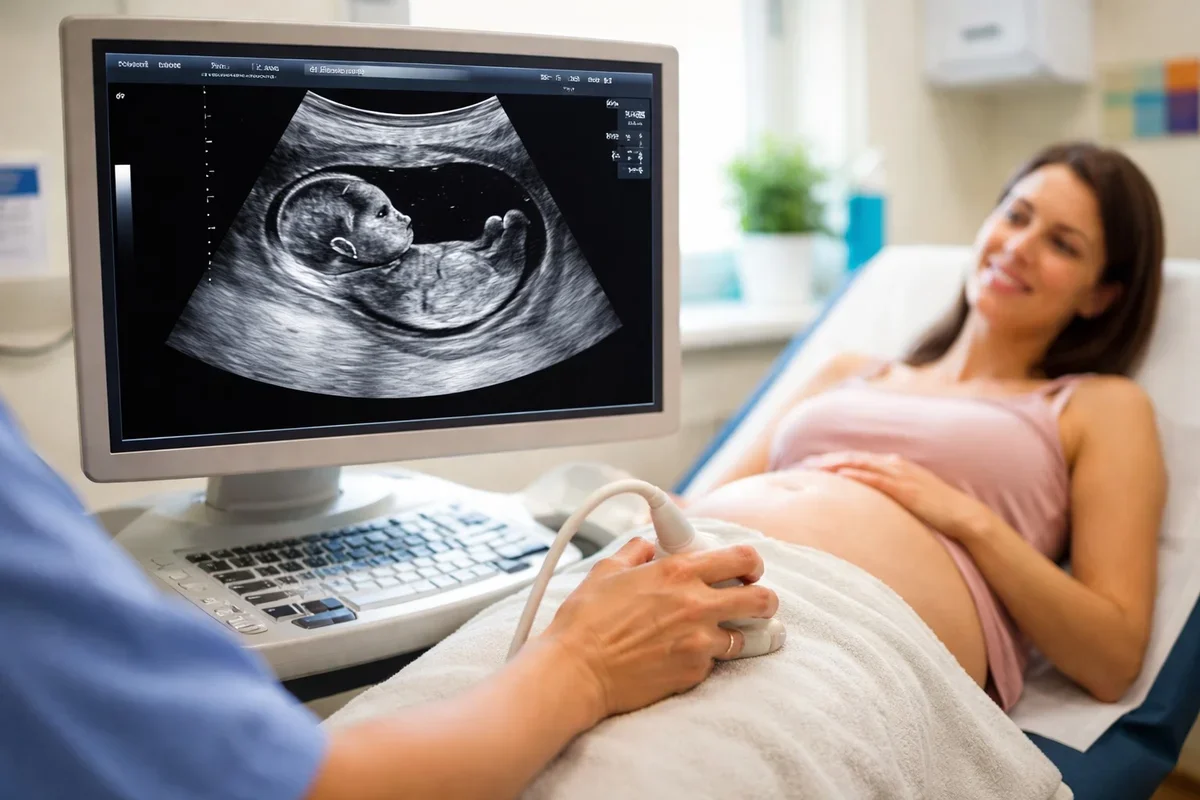
Your dating scan (11–14 weeks) will usually be booked at or shortly after this appointment. This is the first ultrasound where you'll see your baby.
What They Won't Do
A few things that people expect but don't usually happen at the booking appointment:
No physical examination — Your midwife won't examine your abdomen or do an internal examination at this stage.
No scan — The dating scan is a separate appointment, usually at 11–14 weeks. Some areas offer a combined booking + scan appointment, but this isn't standard.
No listening to the heartbeat — It's too early at 8–10 weeks for a standard Doppler to reliably pick up a heartbeat. Don't worry — the dating scan will confirm everything.
What If You Have Concerns?
The booking appointment is the right time to raise anything that's worrying you. This includes:
Physical concerns — Bleeding, severe nausea, pain, or any symptoms that are troubling you. See our guide: Bleeding in Early Pregnancy: When to Worry.
Mental health — If you have a history of depression, anxiety, OCD, PTSD, or any other mental health condition, tell your midwife. Pregnancy can trigger or worsen mental health conditions, and there are specialist perinatal mental health services that can support you.
Previous trauma — If you've experienced birth trauma, pregnancy loss, sexual abuse, or FGM, your midwife needs to know so they can plan your care appropriately and sensitively.
Domestic abuse — Your midwife will ask you about this routinely. If you're in an unsafe situation, they can connect you with support services confidentially.
Practical worries — Financial concerns, housing issues, immigration status, language barriers. Midwives can signpost you to relevant support services.
Care Pathways: What Happens Next
Based on the information gathered at your booking appointment, your midwife will assign you to one of two care pathways:
Midwife-led care — If you're healthy with no significant risk factors, your pregnancy care will be led by your community midwife. This is the standard pathway for most women.
Consultant-led care — If you have medical conditions (diabetes, epilepsy, heart conditions), complications in a previous pregnancy (pre-eclampsia, premature birth, caesarean section), a high BMI, or other risk factors, you'll be referred for shared care between your midwife and a hospital consultant obstetrician.
Being on the consultant-led pathway doesn't mean something is wrong — it means you'll have additional monitoring to catch any complications early.
Your First Trimester Appointment Timeline
Here's what the first 14 weeks look like in terms of NHS care:
Before 10 weeks — Self-refer to midwifery service
Weeks 8–10 — Booking appointment with midwife (this article)
Weeks 11–14 — Dating scan (ultrasound to confirm due date, check baby's development, and offer combined screening for Down's, Edwards', and Patau's syndromes)
Weeks 14–16 — Next midwife appointment (review blood test results, discuss screening results, check blood pressure and urine)
If this is your first baby, you'll have approximately 10 antenatal appointments throughout your pregnancy. If you've had a straightforward pregnancy before, you'll have around 7 (Tommy's).
Frequently Asked Questions
Can my partner come to the booking appointment?
Yes, and it's encouraged — particularly because the midwife will ask about the biological father's medical history. Your partner can also ask their own questions and start feeling involved in the pregnancy journey.
What if I don't have a GP?
You can still access NHS maternity care. Many areas allow you to self-refer to midwifery services without being registered with a GP. If you're struggling, contact your local hospital's maternity unit directly.
I'm more than 12 weeks — have I missed the boat?
No. Self-refer as soon as possible. You'll have your booking appointment and dating scan arranged promptly. Some screening tests are time-sensitive (sickle cell/thalassaemia should be done before 10 weeks, combined screening for Down's syndrome needs to happen between 11 and 14 weeks), but your team will work with whatever timeline they have.
Do I need to tell my employer?
Not at this stage unless you want to. By law, you must tell your employer by the 15th week before your due date (around 25 weeks), but most women tell their employer after the dating scan at 12 weeks. You have the right to paid time off for all antenatal appointments.
Will the midwife judge me for my weight/smoking/drinking?
No. Midwives are trained to be supportive, not judgemental. They ask about these things because they affect your care plan, not because they're grading your lifestyle. If you need support to stop smoking or drinking, they'll connect you with services — it's part of their job.
What if I don't click with my midwife?
It's worth giving it a couple of appointments, but if you're genuinely uncomfortable, you can request a different midwife. The relationship between you and your midwife matters — you'll be sharing a lot of personal information and trusting them during one of the most important experiences of your life.
The Bottom Line
The booking appointment is not a test — it's the start of your pregnancy care. It's a conversation, some routine blood tests, and a lot of information. Your midwife is on your side, and their only goal is to make sure you and your baby get the best possible care.
Go in with your questions, be honest about your history and your lifestyle, and leave with the reassurance that you're now in the system and being looked after.
And yes, you can absolutely cry during it. Most of us did.
Medical disclaimer: This article is for informational purposes only and does not constitute medical advice. If you have concerns about your pregnancy care, speak to your midwife, GP, or local maternity services.
Related articles: