Waiting for your 20-week scan can feel like a lifetime. In the meantime, everyone from your mother-in-law to the lady at the supermarket probably has an opinion on whether you're having a boy or a girl.
While most "gender prediction methods" are just a bit of fun, believe it or not, a few old wives' tales actually have some scientific backing. We've separated the folklore from the facts to see which predictions hold up—and which ones you should take with a very large pinch of salt.
1. The Heartburn Prediction
MYTH: If you have severe heartburn during pregnancy, your baby will be born with a full head of hair.
FACT: Surprisingly, this one is TRUE.
The Details: For years, doctors dismissed this as folklore, but a 2006 study published in Birth journal by researchers at Johns Hopkins Hospital actually found a correlation. Out of 64 pregnant women studied, 82% of those who reported moderate to severe heartburn gave birth to babies with average or above-average amounts of hair.
The science behind it? The same pregnancy hormones (particularly oestrogen and progesterone) that relax the muscle at the bottom of your oesophagus—causing that burning sensation—are also responsible for modulating fetal hair growth. These hormones don't just affect your digestive system; they influence multiple aspects of fetal development.
The NHS acknowledges that up to 45% of women experience significant heartburn during pregnancy due to hormonal changes, regardless of their baby's hair situation. So while there's a link, it's not a guarantee—you might have terrible heartburn and still give birth to a bald baby, or vice versa.
If you are finding yourself reaching for the Gaviscon after every meal, you might want to pack a baby hairbrush in your hospital bag!
2. The "Bump Shape" Theory
MYTH: If you're "carrying low," it's a boy. If you're "carrying high" or "wide," it's a girl.
FACT: This is FALSE.
The Details: This is probably the most common myth in the UK, and it's been studied extensively. Researcher Janet DiPietro at Johns Hopkins University investigated this old wives' tale and found absolutely no correlation between the shape of a woman's bump and the gender of the baby developing inside.
In fact, when pregnant women and investigators were asked independently to classify bump shapes, they couldn't even agree on what category each bump should fall into. The "high vs low" distinction is far more subjective than people realize.
So what actually determines your bump shape? It comes down to:
- Your muscle tone: Strong abdominal muscles (or if it's your first pregnancy) mean you're more likely to carry high and compact
- Your body type: Your height, weight, and torso length all play a role
- Baby's position: How your baby is lying in the womb changes the bump's appearance
- Number of pregnancies: Second or third babies often sit lower as abdominal muscles are more relaxed
It's strictly mechanics, not gender! The NHS confirms that bump shape varies enormously between women and has nothing to do with whether you're carrying a boy or girl.
3. Morning Sickness Severity
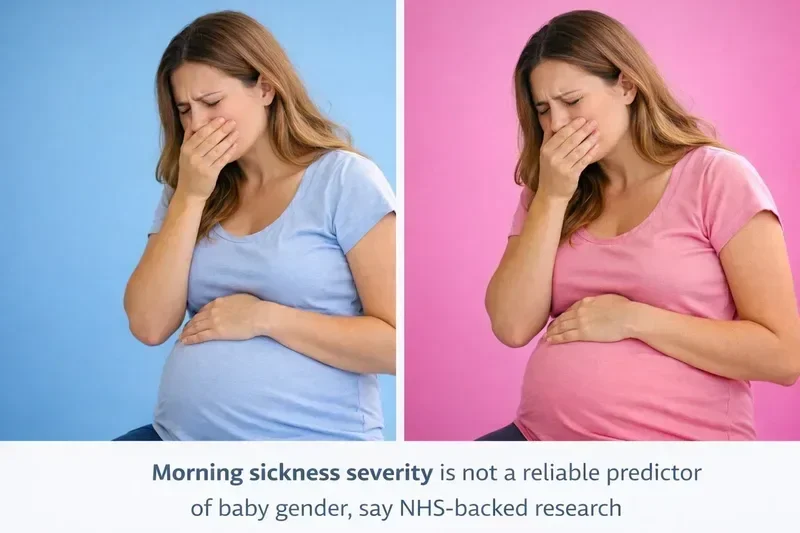
MYTH: Extreme morning sickness means you're carrying a girl.
FACT: There is SOME TRUTH to this.
The Details: While plenty of boy-mums spend the first trimester with their head in the toilet, studies have shown a statistical link between severe nausea and baby girls. A 2004 study published in The Lancet found that women hospitalized for hyperemesis gravidarum (severe pregnancy sickness requiring medical intervention) were approximately 50% more likely to be carrying girls.
Research suggests that women carrying girls may have higher levels of the hormone hCG (human chorionic gonadotropin), which is the primary trigger for nausea and vomiting in pregnancy. This hormone is what pregnancy tests detect, and levels vary significantly between individuals.
However—and this is important—the correlation only really holds for the most severe cases. The NHS notes that around 80% of pregnant women experience some degree of morning sickness, regardless of their baby's gender. Mild to moderate nausea isn't a reliable predictor at all.
So don't paint the nursery pink just because you feel queasy! It's far from a guarantee, and millions of women carrying boys experience terrible morning sickness too.
4. Sweet vs. Salty Cravings
MYTH: Craving sweets and chocolate means a girl; craving salty crisps and meats means a boy.
FACT: This is FALSE.
The Details: Cravings are very real during pregnancy—studies show that 50-90% of pregnant women experience them—but they're usually a sign of what your body needs (or just wants!) rather than the baby's gender.
If you're craving salty foods, you might be slightly dehydrated or your body is signalling a need for electrolytes, particularly if you've been experiencing morning sickness. If you want sweets, it's likely the fatigue kicking in and your body demanding a quick energy fix. Pregnancy increases your calorie needs, and simple carbohydrates provide fast energy.
There is no biological link between the baby's sex and your desire for a bag of Pick 'n' Mix or a packet of salt and vinegar crisps. In fact, studies that have examined food cravings during pregnancy found no correlation whatsoever with fetal gender.
The NHS recommends focusing on balanced nutrition rather than reading into your cravings. Though if you're craving non-food items like chalk or soil (a condition called pica), speak to your midwife as this can indicate nutritional deficiencies.
5. The Heart Rate Test
MYTH: If your baby's heart rate is under 140 beats per minute, it's a boy. Over 140 bpm means a girl.
FACT: This is FALSE.
The Details: This myth is surprisingly persistent, and you'll even hear some midwives mention it during appointments. However, a 2006 study that examined fetal heart rates throughout pregnancy found no correlation between heart rate and gender.
A baby's heart rate varies enormously depending on:
- Gestational age: Earlier in pregnancy, all babies have faster heart rates
- Activity level: An active baby will have a higher heart rate
- Time of day: Fetal heart rates fluctuate naturally
- Mother's activity: What you're doing affects baby's heart rate too
The normal range for fetal heart rate is 110-160 bpm, and both boys and girls fall across this entire spectrum. At your anatomy scan, the sonographer might tell you the heart rate, but it won't give any clues about gender—you'll have to wait for them to actually look at the relevant anatomy!
6. The Skin Changes & Acne Theory
MYTH: Breaking out with pregnancy acne means you're having a girl because she's "stealing your beauty."
FACT: This is FALSE (and a bit insulting!).
The Details: Around 50% of pregnant women experience acne during pregnancy, particularly in the first and second trimesters, and it has absolutely nothing to do with the baby's gender.
The real culprit? Hormones—specifically androgens, which increase during pregnancy and stimulate your skin's oil glands. This excess oil can clog pores and lead to breakouts. Some women's skin clears up beautifully during pregnancy, while others struggle with spots for the first time since their teenage years.
The NHS recommends gentle skincare and avoiding harsh acne treatments during pregnancy (particularly those containing retinoids). But whether you're glowing or breaking out, it tells you nothing about whether you're carrying a boy or girl.
7. The Wedding Ring Test
MYTH: Tie your wedding ring to a piece of string and hold it over your bump. If it swings in a circle, it's a girl. If it swings back and forth like a pendulum, it's a boy.
FACT: This is FALSE (but fun!).
The Details: This is purely the "ideomotor effect"—a psychological phenomenon where you make tiny, unconscious muscle movements that cause the ring to swing. These micro-movements are influenced by your expectations, which is why the ring often "predicts" what you're secretly hoping for.
It's a great party trick for a baby shower, and completely harmless fun. But it has the exact same accuracy rate as flipping a coin: 50/50. Scientists have tested this repeatedly under controlled conditions, and the ring swings randomly with no correlation to actual baby gender.
8. The Chinese Gender Chart
MYTH: An ancient Chinese calendar can predict your baby's gender based on your age and the month of conception.
FACT: This is FALSE.
The Details: The Chinese Gender Prediction Chart claims to be over 700 years old and supposedly has a 90% accuracy rate. In reality, studies have found it's accurate about 50% of the time—exactly what you'd expect from random chance.
A 2010 study published in the journal Paediatric and Perinatal Epidemiology tested the chart on over 2.8 million Swedish births. The result? It correctly predicted gender 50.2% of the time—no better than guessing.
The chart remains hugely popular (it's one of the most searched gender prediction methods), but it has no scientific basis whatsoever. It's fun to try, but don't use it to plan your nursery colour scheme!
What Actually Determines Your Baby's Gender?
Before we wrap up, let's talk about what actually determines whether you're having a boy or girl—because it's decided long before any of these symptoms appear.
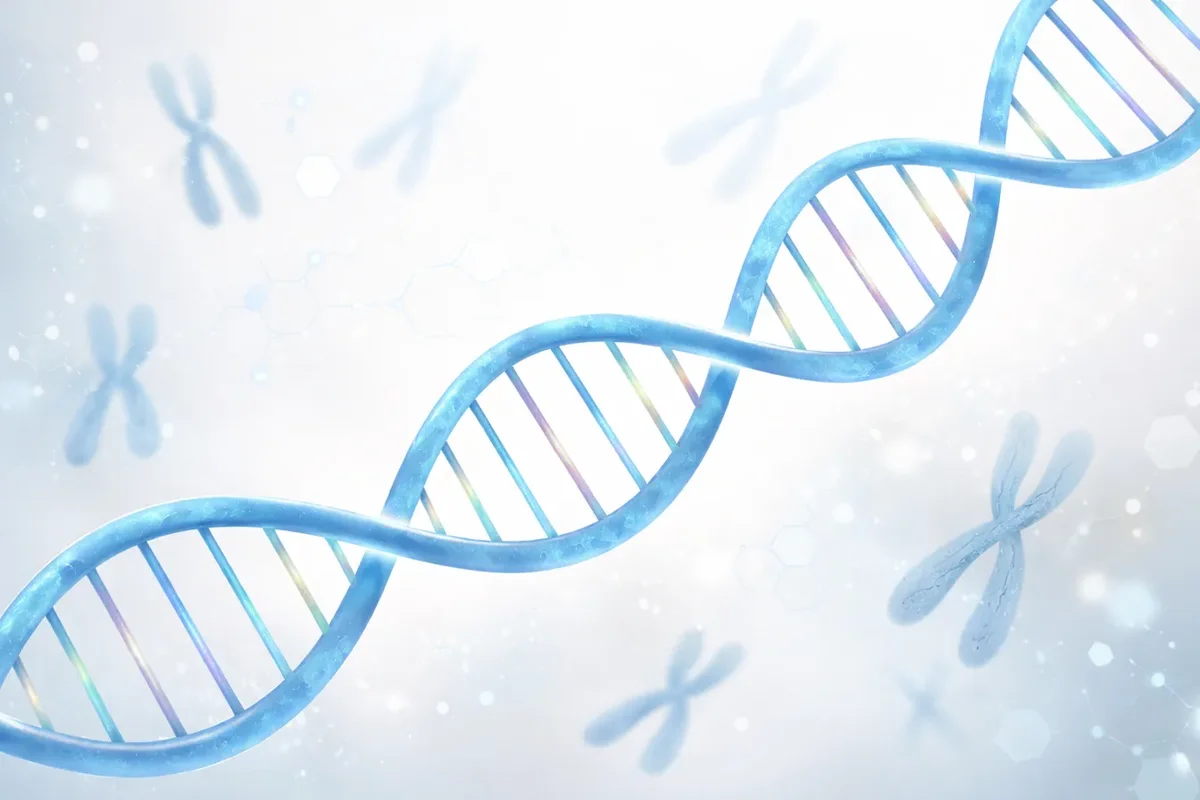
Gender is determined at the moment of conception by the chromosomes in your partner's sperm. Every egg contains an X chromosome, while sperm can carry either an X or a Y chromosome:
- X sperm + egg = XX = girl
- Y sperm + egg = XY = boy
Once conception happens, your baby's genetic gender is fixed. Nothing you do during pregnancy—no diet, exercise, position, or symptom—can change it. The developing baby's gender influences hormone levels in your body (which explains the morning sickness correlation), but external factors don't influence the baby's gender.
The Verdict?
While it's fun to guess and speculate during those long months before your scan, most gender prediction myths are exactly that—myths. The heartburn connection is the one old wives' tale with genuine scientific backing, while severe morning sickness shows a slight statistical correlation.
Everything else? Pure folklore and coincidence.
The only way to know for sure is:
- Anatomy scan (usually between 18 and 21 weeks) - Free on the NHS
- NIPT blood test (from 10 weeks) - Can be done privately or sometimes offered on the NHS for medical reasons
- Waiting until birth - The ultimate surprise!
Until then, enjoy the guessing games, have fun with the ring test at your baby shower, and if you have heartburn, get ready for a hairy baby—that's the one myth that might actually be right!
Want more myth-busting? Check out our other articles on pregnancy myths, including whether diet can influence your baby's gender and the truth about foods to avoid during pregnancy.