I was researching content for the blog when a headline stopped me cold: "Laptops Are Destroying Male Fertility."
I'll be honest—we were lucky. Conceiving came naturally and relatively quickly for us. But I have friends who've been trying for ages, and I've watched them spiral over every possible factor. Should he switch to boxers? Stop using his laptop on the sofa? Avoid saunas? Keep his phone out of his pocket?
The conflicting advice out there is overwhelming. Within an hour of research, I'd found articles claiming tight underwear causes infertility, mobile phones destroy sperm, and hot tubs will ruin your chances. Some sources said these were serious fertility threats. Others dismissed them as complete myths.
So I did what I always do: I went looking for the actual research.
But here's the thing: up to 50% of infertility cases involve male factor issues, so understanding what actually affects sperm quality matters. The question is, are these everyday activities genuinely destroying male fertility—or are we panicking over myths?
Let's look at what the research actually says about laptops, underwear choices, heat exposure, and whether your mobile phone is sabotaging your chances of becoming a dad.
Myth #1: "Laptops on Your Lap Will Make You Infertile"
The Claim: Using a laptop on your lap generates heat and electromagnetic radiation that destroys sperm.
What the Research Shows:
The laptop-fertility connection has two components: heat and electromagnetic radiation (from WiFi).
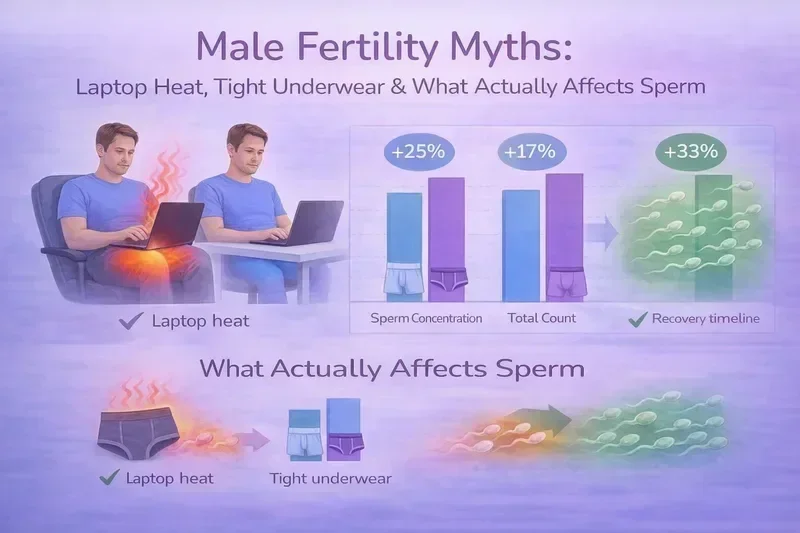
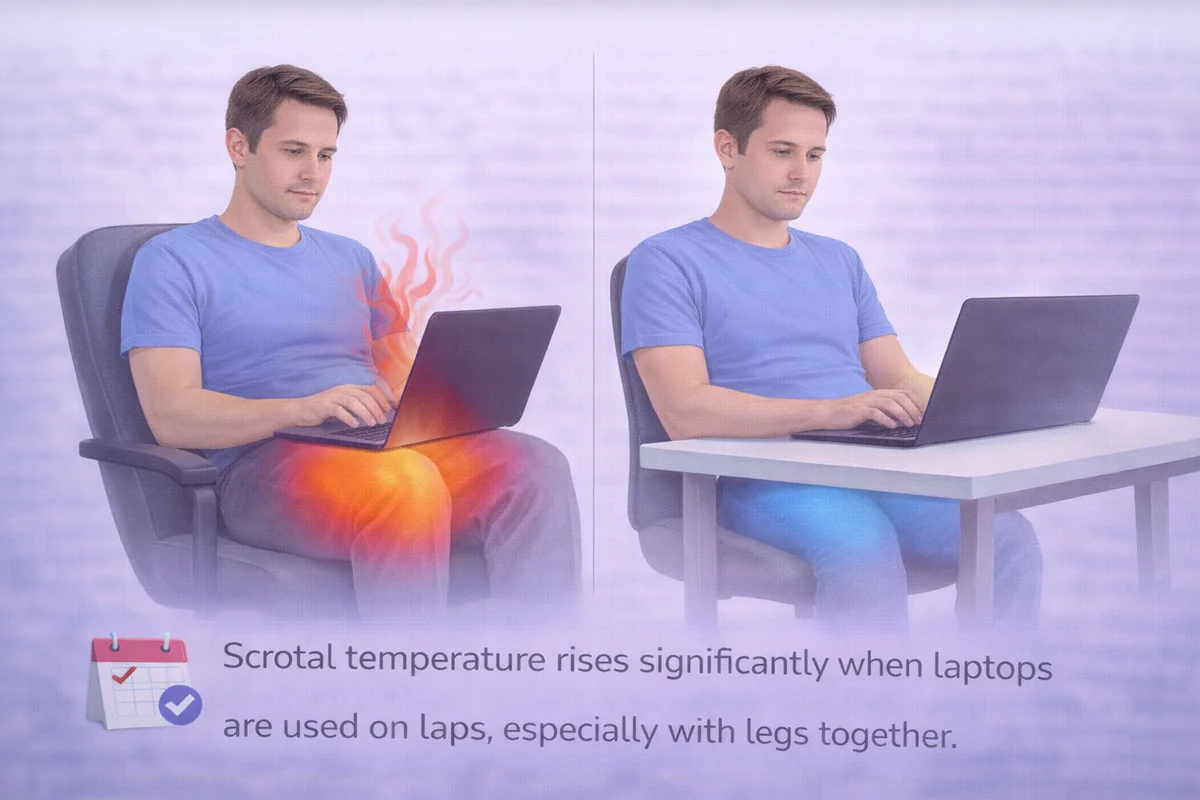
A 2005 study published in Human Reproduction measured scrotal temperature in 29 men using laptops on their laps. After just 28 minutes, scrotal temperature increased by nearly 2°C (about 3.6°F)—and this was enough to potentially affect sperm production. Sitting with knees together trapped even more heat, with temperatures rising up to 5°C after an hour.
But here's the catch: most of that heat (75-80%) came from sitting with your thighs together, not the laptop itself. Even laptop cooling pads didn't solve the problem because the real issue was leg position.
The WiFi question is trickier. A 2011 study in Fertility and Sterility exposed sperm samples to WiFi-connected laptops for 4 hours. The results? Decreased sperm motility (ability to swim) and increased DNA fragmentation. Importantly, the temperature was controlled to rule out heat effects—suggesting WiFi radiation itself might affect sperm.
However, a major 2024 review of 41 studies concluded that "a definitive understanding of the impact remains elusive due to contradicting data in the medical literature." Some studies found effects, others didn't.
The Bottom Line:
Laptop heat does elevate scrotal temperature, which can temporarily affect sperm production. WiFi radiation might have an additional effect, but the evidence is mixed. If you're actively trying to conceive, using your laptop on a desk instead of your lap is a simple precaution.
Myth #2: "Tight Underwear Causes Infertility"
The Claim: Briefs trap heat against your testicles, destroying sperm. Real men who want kids wear boxers.
What the Research Shows:
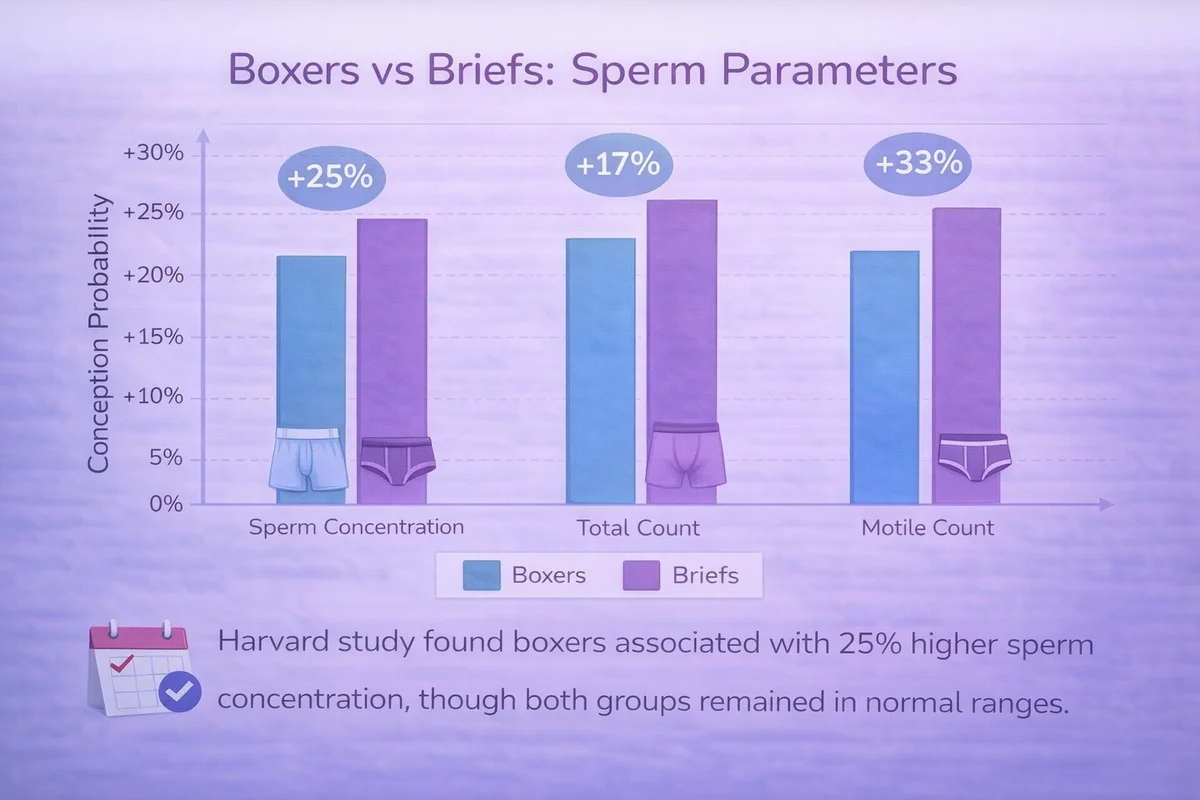
The "boxers vs briefs" debate finally got proper scientific attention in 2018 when Harvard researchers published a study of 656 men attending a fertility clinic.
Men who wore boxers had:
- 25% higher sperm concentration
- 17% higher total sperm count
- 33% higher total motile sperm count (sperm that can actually swim)
The biggest differences were between men who wore boxers and those who wore briefs or jockeys (the tightest options).
Interestingly, men in tight underwear also had 14% higher levels of FSH (follicle-stimulating hormone). FSH stimulates sperm production, so higher levels suggest the body was trying to compensate for heat-related impairment by ramping up hormone signals.
But Here's the Crucial Detail:
Even though tight underwear was associated with lower sperm counts, those counts were still within the normal, healthy range. As study author Dr. Jorge Chavarro explained: "For most men, it probably doesn't make a lot of difference. The men who are most likely to benefit are the men who are on the border—who have relatively low sperm count."
A competing 2016 study of 473 men found absolutely no difference in how long it took couples to get pregnant, whether men wore briefs or boxers.
The Bottom Line:
Boxers do appear to support slightly better sperm parameters, but the difference is modest. If you're struggling with fertility and already have borderline sperm counts, switching to boxers is an easy change to try. If your sperm count is normal, your underwear choice probably isn't making or breaking your fertility.
Also worth noting: it takes about 3 months for new sperm to develop, so any underwear switch won't show effects immediately.
Myth #3: "Hot Tubs and Saunas Will Ruin Your Sperm Forever"
The Claim: Regular hot tub or sauna use permanently damages sperm production.
What the Research Shows:
Unlike laptops and underwear, the evidence on heat from hot tubs and saunas is remarkably consistent: they do affect sperm, but the effects are reversible.
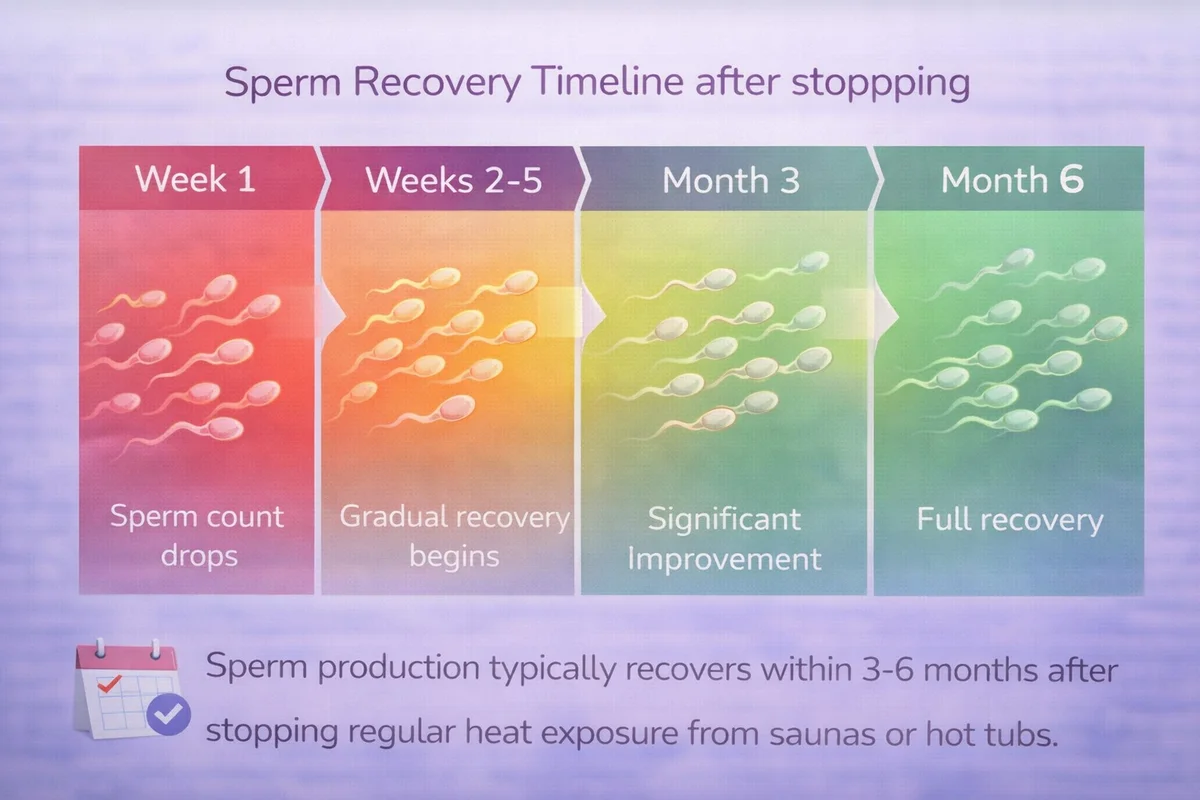
A Finnish study followed 10 men who used saunas at 80-90°C for 15 minutes, twice a week, for 3 months. The results showed significant decreases in sperm count, motility, and mitochondrial function. But within 3-6 months after stopping sauna use, sperm parameters returned to normal.
Even a single 20-minute sauna session at 86°C can temporarily affect sperm. One study found sperm count fell within one week and took five weeks to recover.
The most compelling evidence comes from a 2007 UCSF study of 11 infertile men who regularly used hot tubs or took hot baths for at least 30 minutes per week. After stopping heat exposure for 3 months:
- 5 of the 11 men (45%) had a mean increase in total motile sperm counts of 491%
- Sperm motility jumped from 12% at baseline to 34% after stopping heat exposure
A more recent 2022 study of 3,041 couples found hot bath/tub use ≥3 times per month was associated with reduced fecundability (ability to conceive), though the effect was small.
Why Does Heat Affect Sperm?
Your testicles hang outside your body because they need to be about 2-3°C cooler than core body temperature for optimal sperm production. Heat disrupts this, damaging the Sertoli cells that nurture developing sperm and causing cell death in developing sperm.
The Bottom Line:
If you're actively trying to conceive, skip the hot tubs, saunas, and very hot baths for at least 3 months (the time it takes for a full sperm production cycle). The effects are reversible—men who stop heat exposure typically see improvements within 45-60 days, with full recovery in 3-6 months.
If you're not trying for a baby right now, occasional sauna use is fine and offers other health benefits.
Myth #4: "Mobile Phones in Your Pocket Destroy Your Sperm"
The Claim: Radiofrequency radiation from mobile phones carried in trouser pockets damages sperm and causes infertility.
What the Research Shows:
This one's complicated because studies have produced conflicting results.
A 2014 meta-analysis of 10 studies (1,492 samples) found that mobile phone exposure was associated with:
- 8.1% reduction in sperm motility
- 9.1% reduction in viability
- Mixed effects on concentration
A 2022 Korean study concluded that cell phone use is linked to lower overall sperm quality, especially in men with "high" usage.
However, more recent research has been less conclusive. A 2024 systematic review noted that "despite some studies suggesting a possible negative influence, a definitive understanding of the impact remains elusive due to contradicting data."
The proposed mechanisms are:
- Heat: Phones in pockets can increase scrotal temperature
- Radiofrequency radiation: May cause oxidative stress and DNA damage
But here's the problem: most studies have been in vitro (exposing sperm samples to phones in labs) rather than real-world exposure. Lab conditions don't accurately reflect how people actually use phones.
A 2023 Swiss study of young men found higher self-reported phone use was associated with lower sperm concentration, but the study couldn't separate phone use from other factors like overall lifestyle, stress, or other heat exposures.
The Bottom Line:
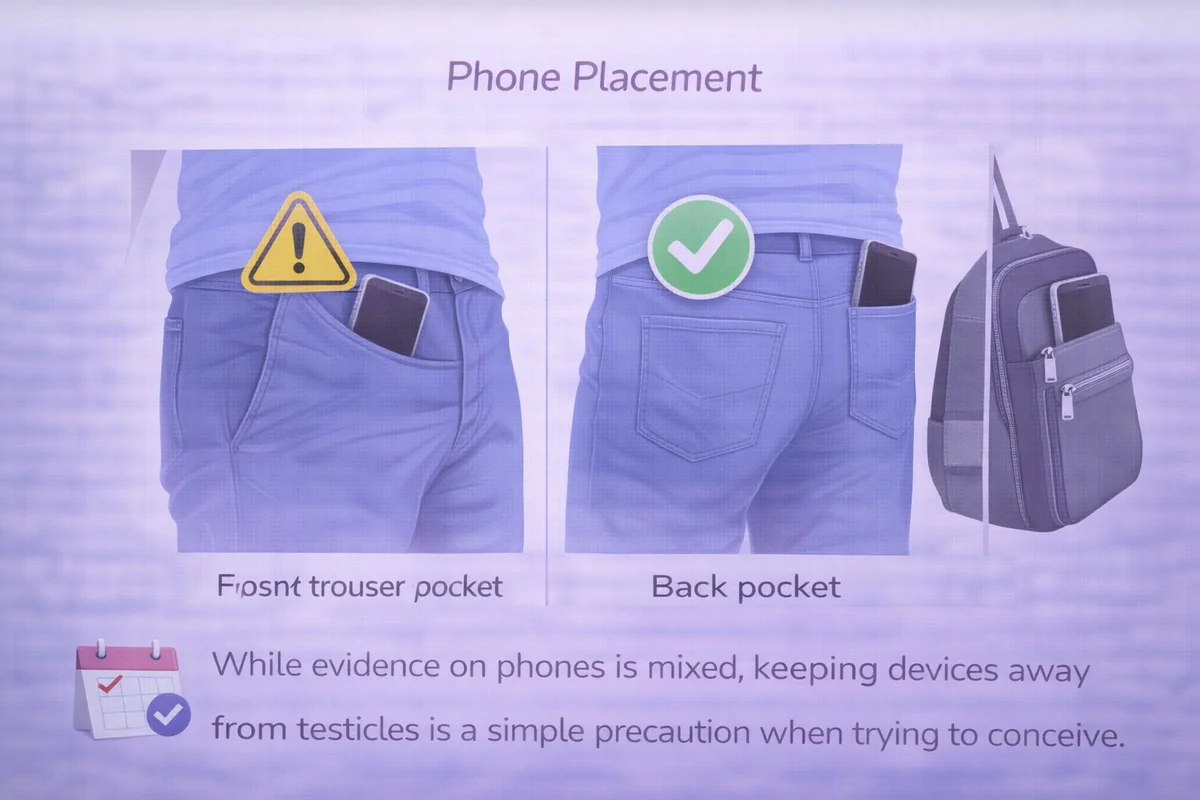
The evidence is genuinely mixed. Some studies suggest effects, others don't. If you're concerned about fertility, keeping your phone in a bag or back pocket instead of your front trouser pocket is an easy precaution. But it's not the fertility death sentence some headlines suggest.
What Actually Matters for Male Fertility?
With all this talk about laptops and underwear, here's what fertility specialists actually care about:
Proven Male Fertility Factors:
- Smoking: Significantly reduces sperm count and quality
- Excessive alcohol: Lowers testosterone and impairs sperm production
- Obesity: BMI over 30 is associated with lower sperm quality
- Varicocele: Enlarged veins in the scrotum (treatable)
- Age: Male fertility declines with age, particularly after 40
- Certain medications: Antidepressants, blood pressure meds, some antibiotics
- Anabolic steroids: Severely impair sperm production
- STIs: Untreated infections can cause infertility
- Occupational heat exposure: Bakers, welders, furnace workers have documented fertility issues
What the NHS Recommends:
If you've been trying to conceive for:
- 1 year (if your partner is under 36)
- 6 months (if your partner is 36+)
It's time to see your GP. Male factor issues are involved in up to 50% of infertility cases, so it's crucial that both partners get evaluated.
A semen analysis is the first step—it's simple, non-invasive, and gives clear data on sperm count, motility, and morphology.
The Reality Check
When you're trying to conceive, you want answers. Clear, actionable answers. Not "maybe" and "the evidence is mixed" and "more research is needed."
After sifting through the studies, here's what became clear: most lifestyle factors affecting male fertility are much more straightforward than laptops and underwear.
The biggest wins? Don't smoke. Drink moderately. Maintain a healthy weight. Avoid prolonged heat exposure when actively trying to conceive. Get treated for any underlying health conditions.
As for laptops and boxers? They're not going to make or break your fertility, but if you're already struggling and looking for things to optimise, they're easy changes that might help—especially if sperm parameters are borderline.
I've watched friends spend months worrying about whether work laptops or tight trousers were sabotaging their chances, when what they really needed was proper testing and medical guidance. The mental load of TTC is exhausting enough without adding unnecessary worries about things that probably aren't the problem.
The bottom line: actual data beats internet headlines every time. If you're concerned about male fertility, push for a semen analysis. You'll get real answers instead of spiralling over whether his work setup is the issue.
Disclaimer: This information is based on peer-reviewed studies and NHS guidance, but isn't medical advice. Male fertility involves many factors, and if you've been trying to conceive for over a year (6 months if your partner is 36+), speak to your GP for proper evaluation and testing.