"You're so sick, it must be a girl!"
I heard this about a hundred times during my first pregnancy. I was throwing up daily, couldn't keep toast down, and spent most of my first trimester with my head in a bucket. Everyone—my mum, the ladies at work, even strangers in Tesco—insisted all that misery meant I was having a daughter.
Spoiler: I had a boy.
Second pregnancy? Milder symptoms. "Definitely a boy this time," the neighbours said knowingly.
Another boy.
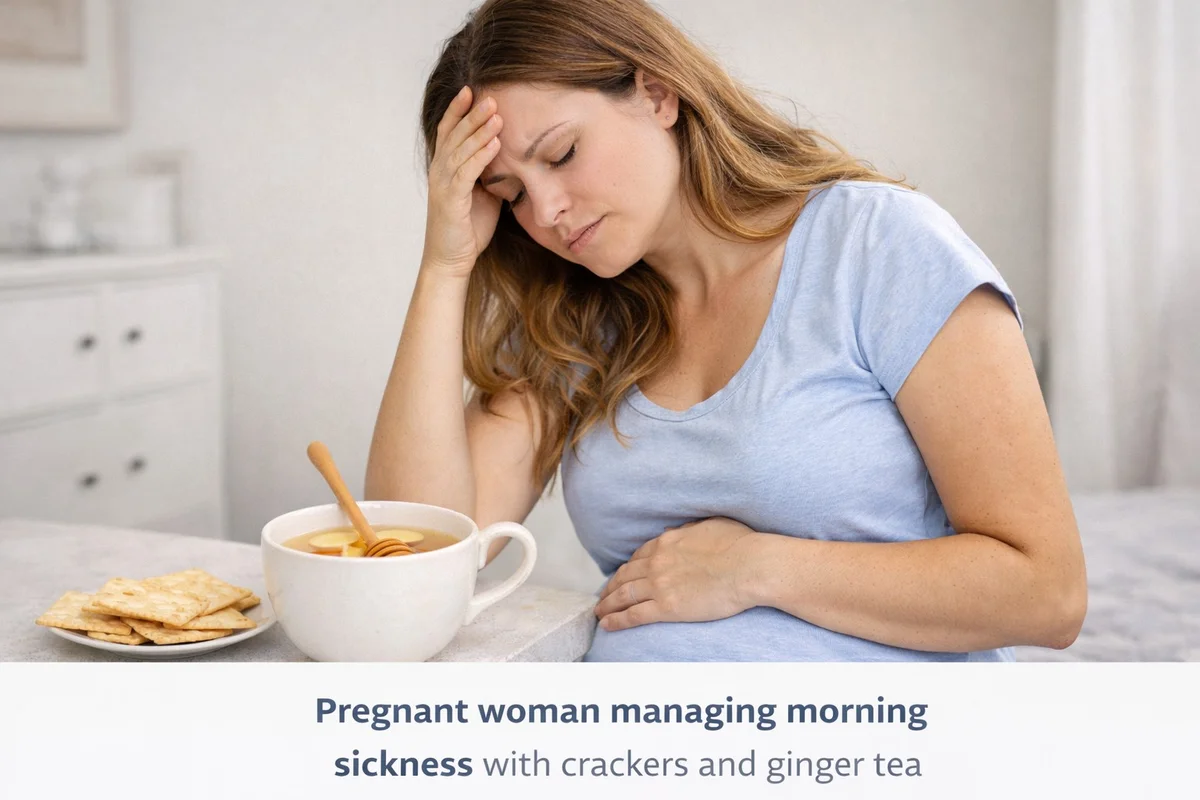
So what's the actual truth behind the "morning sickness means girl" myth? I did a deep dive into the NHS guidance and scientific research (because I'm that parent), and here's what I found.
Does Morning Sickness Predict Baby Gender? The Short Answer
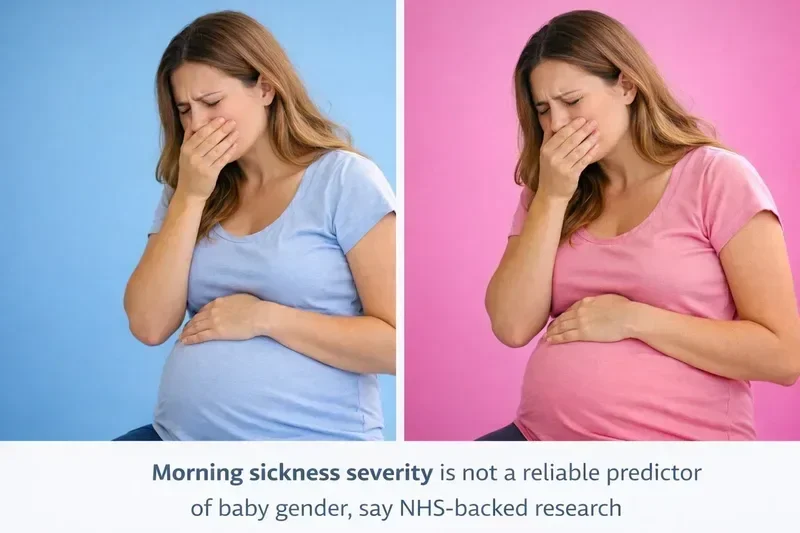
Here's the thing—there IS a connection between severe morning sickness and having a girl, but it's much weaker than most people think.
Multiple studies have found a small statistical link. For example:
- Women hospitalised with severe sickness (hyperemesis gravidarum) are slightly more likely to have girls
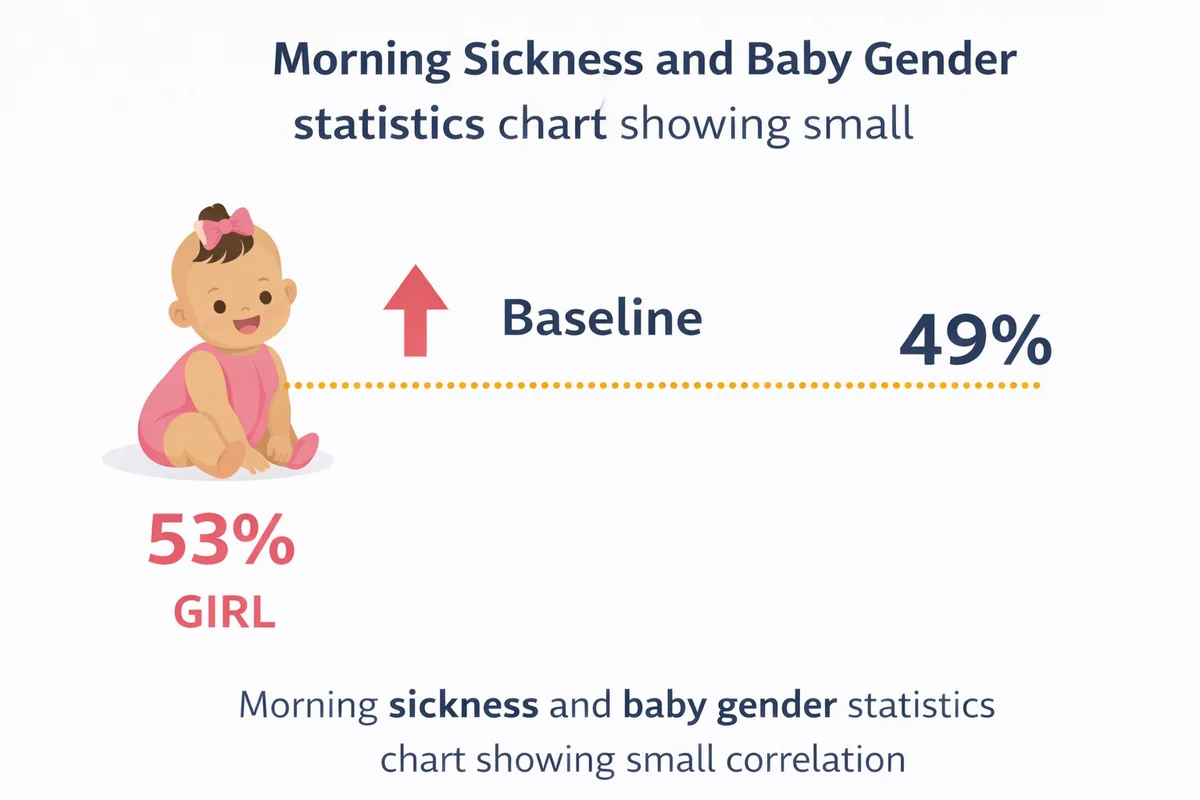
- But we're talking 53-55% girls instead of the normal 49%
- That's barely better than a coin flip
So yes, technically there's a correlation. But it's nowhere near reliable enough to start buying pink clothes.
What Morning Sickness Actually Is
Let's get the basics sorted first.
Normal morning sickness:
- Affects up to 80% of pregnancies (so most of us get it regardless of baby's gender!)
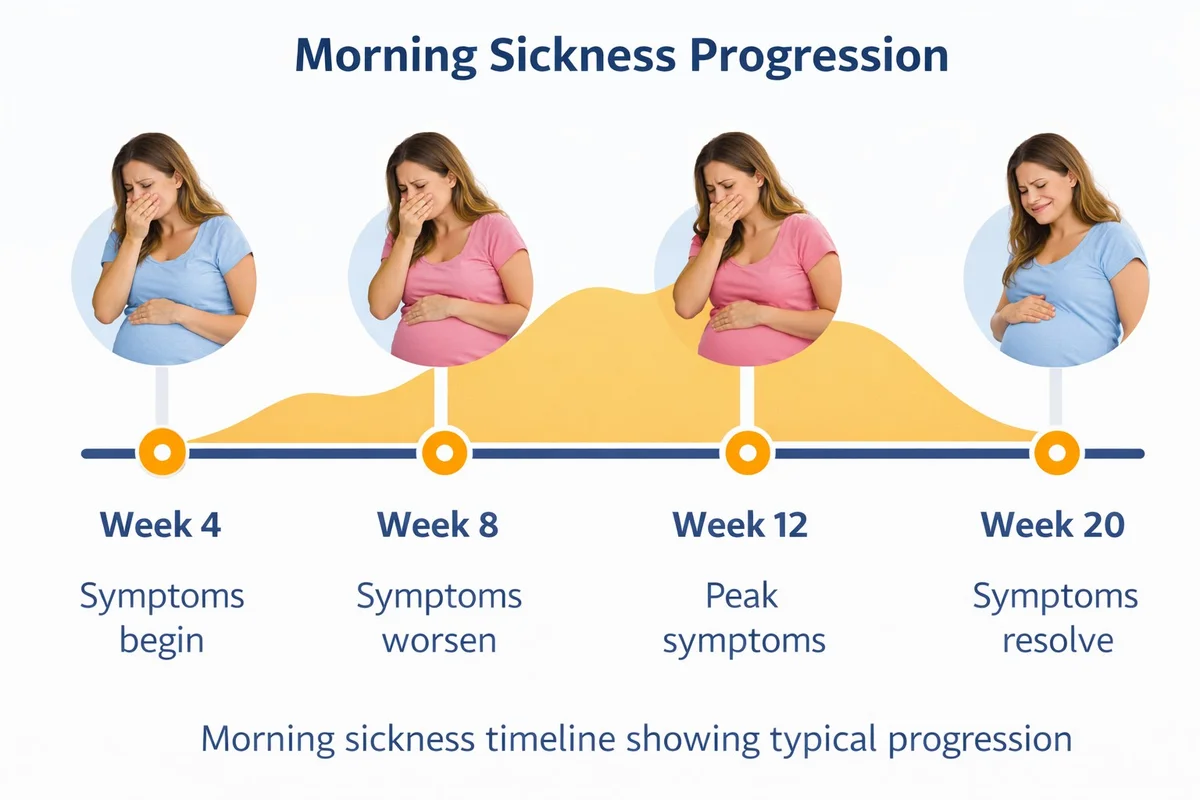
- Usually starts around weeks 4-7
- Peaks at week 9
- Typically eases by weeks 16-20
- Can happen ANY time of day (whoever called it "morning" sickness was having a laugh)
Severe morning sickness (Hyperemesis Gravidarum or HG):
- Affects about 1-3% of pregnancies
- You literally can't keep food or water down
- Lose more than 5% of your body weight
- Need hospital treatment with IV fluids
- This is what Kate Middleton had with all three pregnancies
The NHS is very clear: normal morning sickness doesn't harm your baby. HG is miserable, but with proper treatment most women go on to have healthy babies. Getting help early reduces the risk of complications.
What Causes Morning Sickness? (And Why It's Not About Gender)
Scientists have only recently figured this out. It's caused by a hormone called GDF15 that your placenta produces. Groundbreaking research in 2024 found that:
- How sensitive you are to this hormone determines how sick you feel
- Women who had lower exposure to it before pregnancy get sicker
- In a fascinating discovery, women in Sri Lanka with a rare blood condition (causing chronically high GDF15) had virtually NO pregnancy nausea
So it's not "all in your head" or something you can just power through. It's a real hormonal response, and everyone's body handles it differently.
The Science: Does Severe Morning Sickness Mean You're Having a Girl?
Alright, let's break down what the research actually shows:
Studies on severe sickness (HG):
- A 2012 study of nearly 10,000 deliveries found women with HG were more likely to have girls
- A 2013 Israeli study found women carrying girls needed more hospital admissions for HG
- But again—we're talking small percentage differences, not certainty
Studies on normal morning sickness:
- A 2020 Harvard study of over 4,000 pregnancies found women carrying girls reported slightly higher nausea levels
- The difference? 6.35 vs 6.04 on a 1-9 scale. Hardly life-changing
- Women with NO morning sickness were actually more likely to be carrying boys
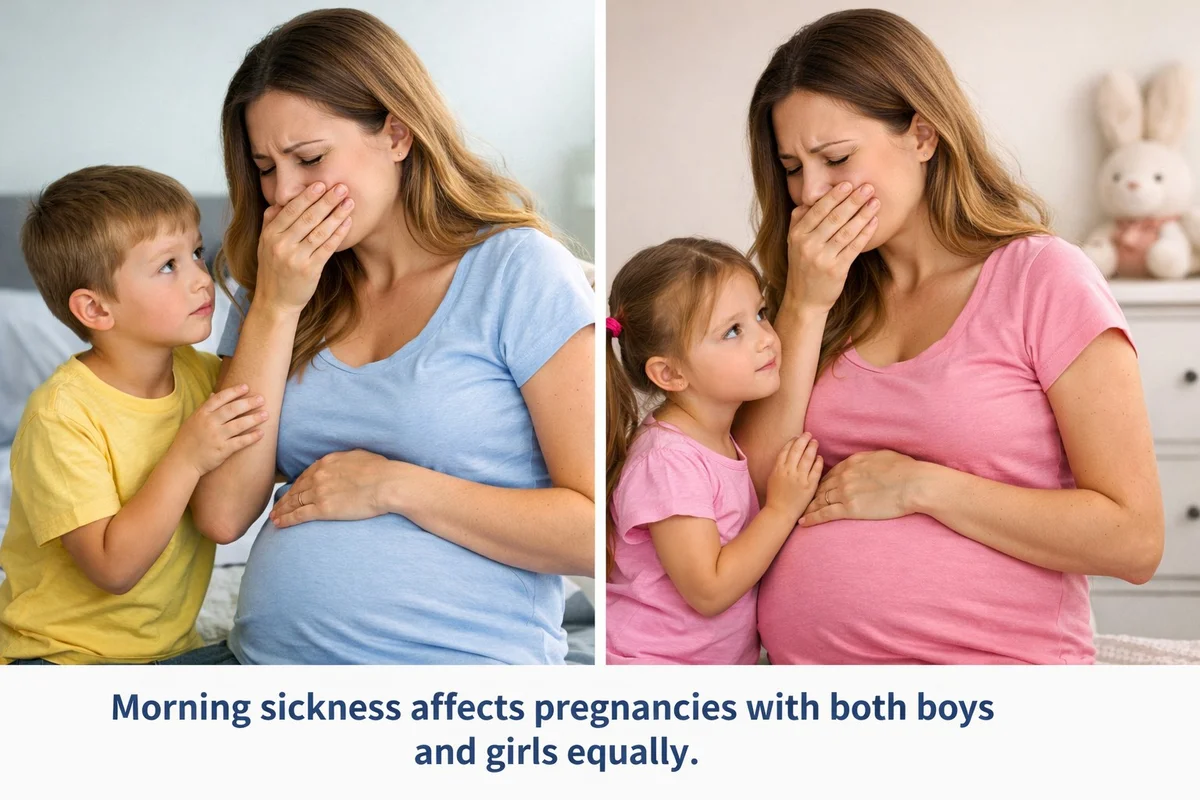
The bottom line: If you have severe, hospital-level sickness, you're slightly more likely to be having a girl. But plenty of women with terrible symptoms have boys (like me!), and plenty with easy pregnancies have girls.
It's not a predictor. It's just a weak statistical pattern.
Common Morning Sickness Myths (Busted)
Before we get to what actually helps, let me save you some time and money:
❌ "Eating for two" - No. You only need about 300 extra calories in the 2nd/3rd trimester, and none during the first when sickness is worst.
❌ "Ginger cures everything" - Ginger helps some people, but it's not magic. More on this below.
❌ "It's all in your head" - Absolutely not. This is a real, hormone-driven condition.
❌ "Just eat more" - Actually, small frequent meals work better than large ones.
❌ "Morning sickness means a healthy pregnancy" - The NHS states clearly that having NO sickness doesn't mean anything's wrong.
What Actually Helps (According to the NHS and Research)
Start with Simple Changes
The NHS recommends trying these first:
Food strategies:
- Eat small amounts every 1-2 hours (think snack-sized portions)
- Choose bland carbs: toast, crackers, rice, pasta
- Keep plain biscuits by your bed—eat one BEFORE getting up
- Cold foods often work better than hot if smells trigger you
- Sip water frequently rather than drinking big glasses
Lifestyle tips:
- Rest as much as you can (tiredness makes it worse)
- Get up slowly in the mornings
- Avoid your trigger smells (mine was coffee)
Ginger: Does It Work?
Short answer: Maybe, for some people.
Multiple studies have tested ginger, and the results are encouraging but not miraculous:
- About 1000mg daily (split into doses) seems to help reduce nausea
- Works about as well as vitamin B6
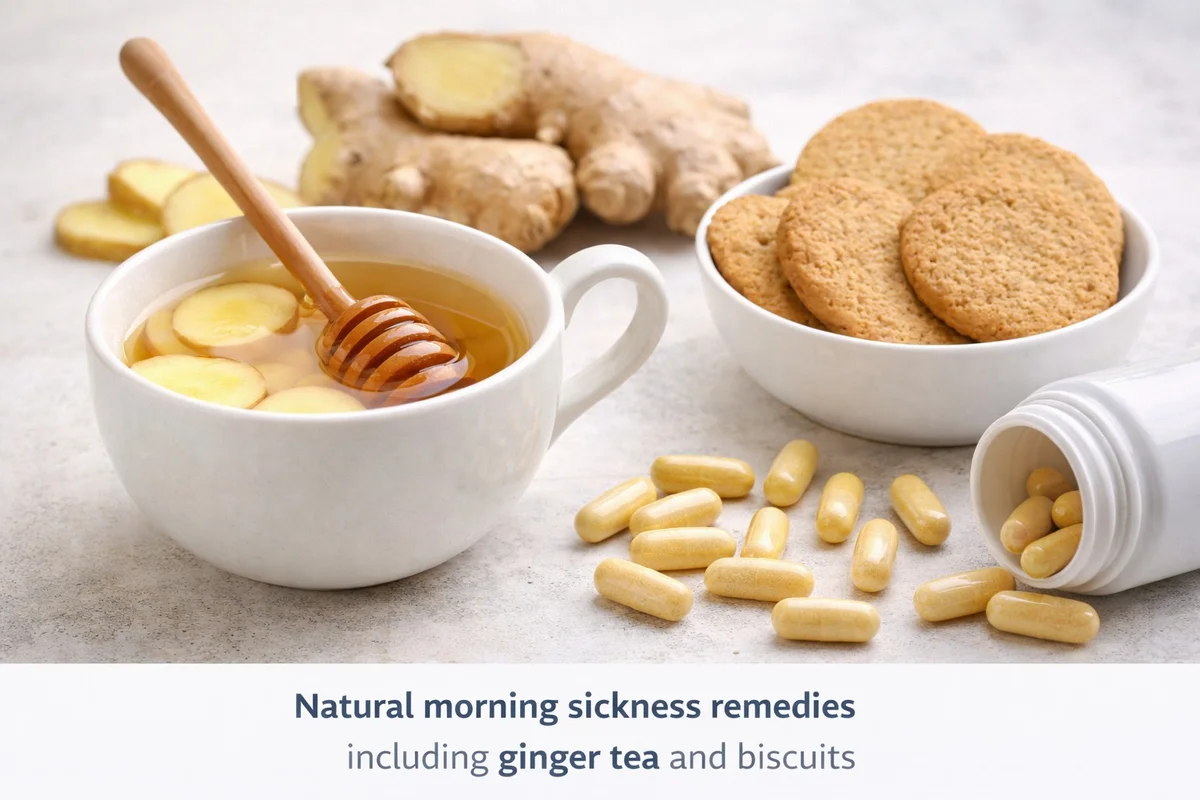
- NHS mentions ginger tea, ginger biscuits, and ginger ale as options
My experience: Ginger biscuits by the bed helped me. Whether it was the ginger or just having something in my stomach before moving, I honestly don't know. But they were better than nothing.
Vitamin B6: First-Line Medical Treatment
If lifestyle changes don't cut it, vitamin B6 is the NHS's first recommendation:
- Typical dose: 40mg twice daily
- Available over the counter
- Proven effective in multiple studies
- Safe for pregnancy
Acupressure Wristbands (Sea-Bands)
These elastic bands press on a specific point on your wrist (the P6 point). The evidence is... mixed.
Some studies show they help, others show no difference from placebo. But they're:
- Cheap (about £5-10)
- Safe
- No side effects
- Worth a try if you're desperate
I wore them during the worst weeks. Did they work or was it placebo? Honestly, I didn't care—I just wanted relief.
When You Need Proper Medical Help
See your GP or midwife if:
- You can't keep any food or fluids down
- You're losing weight
- Your wee is very dark
- You feel dizzy or extremely weak
- It's seriously affecting your daily life
They can prescribe anti-emetic medications (anti-sickness drugs) that are safe for pregnancy. The most common first-line medication is Cyclizine.
For severe HG, you might need:
- Hospital admission
- IV fluids
- Anti-sickness medication through injection
- Vitamin supplements
The NHS states that HG usually improves by 20 weeks, though some women struggle throughout pregnancy.
Don't suffer in silence. Medical help is available and effective.
My Real Experience
Here's what genuinely helped me through two pregnancies of varying awfulness:
Pregnancy #1 (the really sick one):
- Ginger biscuits before getting out of bed ✓
- Eating every 2 hours even when I didn't want to ✓
- Ice lollies when I couldn't keep water down ✓
- Sea-Bands during weeks 8-12 ✓
- Avoiding coffee smell at all costs ✓
Pregnancy #2 (the easier one):
- Same strategies
- Less severe symptoms
- Still had a boy despite everyone's predictions
The biggest lesson? Morning sickness is individual, unpredictable, and only weakly linked to your baby's gender.
The Real Bottom Line
Can morning sickness predict your baby's gender? Not reliably. There's a tiny statistical correlation with severe cases, but it's about as useful as guessing based on which side of the bed you sleep on.
What you should actually focus on:
- Managing your symptoms with NHS-recommended strategies
- Getting medical help if you need it (don't be a hero)
- Remembering it's temporary
- Ignoring everyone who claims to "just know" what you're having
Most importantly: Morning sickness—whether mild or severe—is common, normal, and doesn't harm your baby when managed properly. And it affects 80% of pregnancies regardless of whether you're having a boy or girl.
Save the gender predictions for the 20-week scan. Trust me on this one.
Quick Reference
When to call your midwife or GP:
- Can't keep fluids down for 24 hours
- Very dark urine
- Losing weight
- Symptoms start after 10 weeks (unusual)
What usually helps:
- Small, frequent meals of bland food
- Ginger (tea, biscuits, or supplements)
- Vitamin B6 (speak to pharmacist about dose)
- Rest
- Avoiding trigger smells
NHS Resources:
- Morning sickness guidance
- NHS 111 for urgent advice
- Pregnancy Sickness Support charity helpline: 024 7638 2020
Frequently Asked Questions About Morning Sickness and Baby Gender
Is severe morning sickness a sign of a girl? Research shows women with severe morning sickness (hyperemesis gravidarum) are slightly more likely to have girls—about 53-55% compared to 49% normally. However, this is only a weak statistical link, not a reliable predictor.
Can you predict baby gender from morning sickness symptoms? No. While studies show a small correlation between severe sickness and female babies, the difference is too small to predict gender accurately. Many women with terrible morning sickness have boys, and vice versa.
Does having no morning sickness mean I'm having a boy? Not necessarily. Research suggests women with no morning sickness are slightly more likely to carry boys, but 20% of women have no morning sickness regardless of baby gender.
What causes morning sickness during pregnancy? Morning sickness is caused by the GDF15 hormone produced by your placenta. Your sensitivity to this hormone determines how sick you feel, not your baby's gender.
When should I worry about morning sickness? Contact your midwife or GP if you can't keep fluids down, are losing weight, have very dark urine, or symptoms are severely affecting your daily life. You may need medical treatment.
This article is based on NHS guidelines and published research. For personalised medical advice about your pregnancy, always consult your GP or midwife.