Pregnancy Exercise Myths: The Outdated Advice You Can Safely Ignore
March 2020. COVID lockdown. I'd been stuck at home for weeks and was convinced I was piling on lockdown weight. So naturally, I started running laps around my living room and doing burpees in the hallway like a madwoman.
Week six of my "get fit" campaign, I took a pregnancy test on a whim.
Positive.
I'd been unknowingly exercising through the first six weeks of pregnancy, running around my house thinking I was getting fat. Turns out, I was growing a human.
When I finally made it to the gym (post-lockdown), I mentioned to the instructor that I was pregnant. She looked horrified. "You can't do burpees! Your heart rate will go too high! You'll harm the baby!"
I left feeling terrified. Had I already damaged my baby with all that running around? Was I supposed to stop everything now?
Spoiler: My baby was absolutely fine. I was fine. And the instructor's advice was based on 1985 medical guidelines that were withdrawn decades ago.
Turns out, a lot of the "advice" floating around about pregnancy exercise is either outdated, misunderstood, or just plain wrong. Some of it is medical guidance from nearly 40 years ago that somehow persists like zombie myths that won't die.
So let's tackle the biggest pregnancy exercise myths, separate fact from fiction, and work out what's actually safe (spoiler: probably more than you think).
The Biggest Myth: "Don't Let Your Heart Rate Go Above 140 BPM"
The Myth: Pregnant women should keep their heart rate below 140 beats per minute during exercise, or risk harming the baby.
The Reality: This guideline was removed in 1994—thirty years ago—yet it's still being repeated.
Where Did This Myth Come From?
In 1985, the American College of Obstetricians and Gynecologists (ACOG) published guidelines recommending pregnant women keep their heart rate below 140 bpm during exercise. The guideline was removed in 1994 because research showed heart rate isn't a reliable indicator of exercise intensity during pregnancy.
Why? Because pregnancy changes everything about how your cardiovascular system works:
- Your resting heart rate increases by 10-20 bpm
- Your blood volume increases by almost 50%
- Your heart rate response to exercise becomes unpredictable
- Maximum heart rate can be blunted or exaggerated
A 2010 study found that 64% of doctors and midwives still believed in the 140 bpm limit—sixteen years after it was withdrawn. That's why this myth persists.
What's Actually Recommended Now?
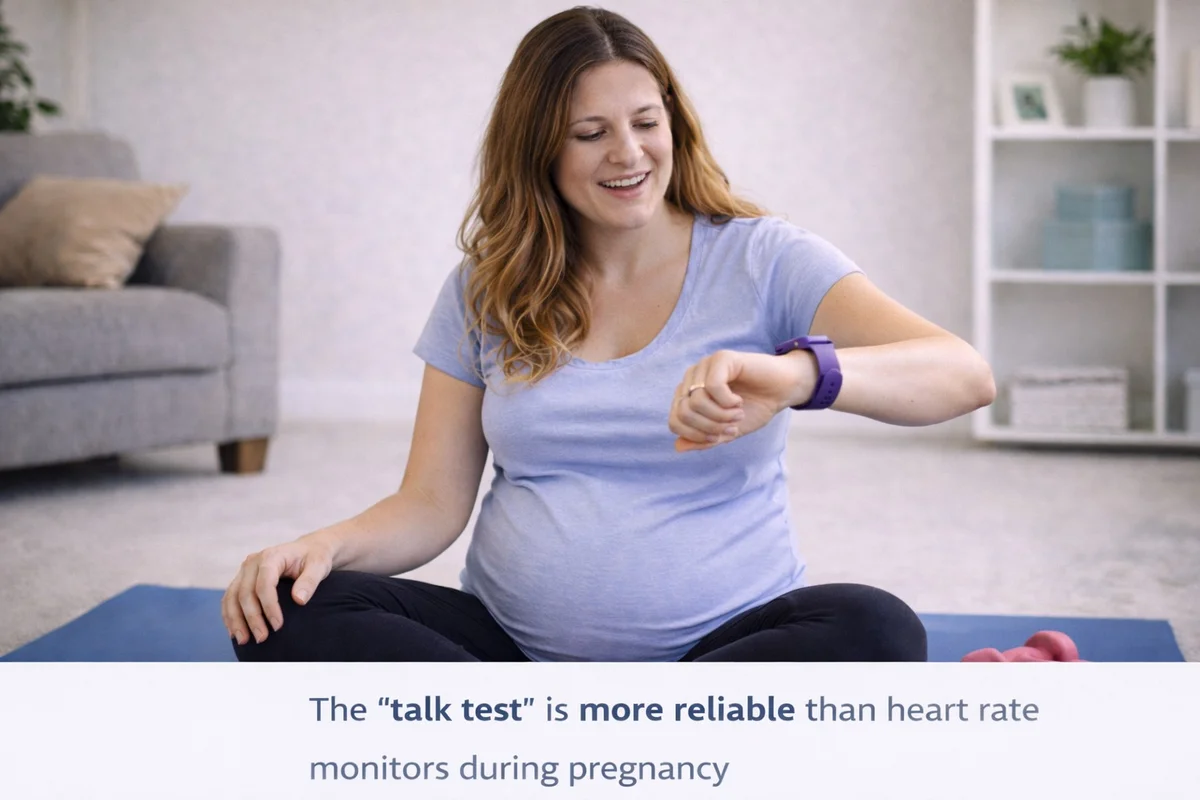
Current NHS guidance and ACOG guidelines recommend using the "talk test" or perceived exertion instead of heart rate:
The Talk Test: You should be able to hold a conversation whilst exercising. If you're too breathless to talk, you're working too hard.
Perceived Exertion: On a scale of 1-10, aim for 6-8 ("somewhat hard"). On the traditional Borg scale (6-20), aim for 12-14.
My Experience
During my first pregnancy (the COVID one), I wore a heart rate monitor out of curiosity once lockdown lifted. Walking up a flight of stairs put me at 150 bpm. A gentle jog took me to 165 bpm. If I'd stuck to the 140 bpm rule, I'd have been limited to standing still.
And here's the kicker: I'd been running around my house doing makeshift workouts for six weeks before I even knew I was pregnant, heart rate undoubtedly soaring past 140. My baby? Perfectly healthy.
Using the talk test instead of heart rate? I could comfortably chat whilst jogging at 165 bpm. That's how I knew I was fine.
Myth #2: "Ab Exercises Will Give You Diastasis Recti"
The Myth: Doing crunches, planks, or any ab work during pregnancy will cause or worsen diastasis recti (abdominal separation).
The Reality: Properly performed core exercises can actually prevent and treat diastasis recti.
What Is Diastasis Recti?
Diastasis recti abdominis (DRA) is when your abdominal muscles separate along the midline as your belly expands. It affects up to 60-70% of pregnant women and is a natural response to carrying a baby.
The Science on Ab Exercises
This is where it gets interesting. Research published in 2024 found that a 12-week abdominal and pelvic floor exercise programme during pregnancy did NOT increase diastasis recti. In fact, targeted ab work can help prevent it.
Studies show that:
- Crunches (curl-ups) performed correctly can close the gap
- Drawing your belly in (the "hollowing" technique) can actually widen the gap
- Core strengthening exercises are safe and beneficial during pregnancy
What You Should Actually Avoid
Not all ab exercises are created equal. Here's what to watch for:
❌ Exercises that cause "doming" - if your belly forms a cone or bread-loaf shape when you do an exercise, stop
❌ Exercises that increase downward pressure on your pelvic floor
❌ Lying flat on your back after 16 weeks (can reduce blood flow)
✅ Safe ab exercises include:
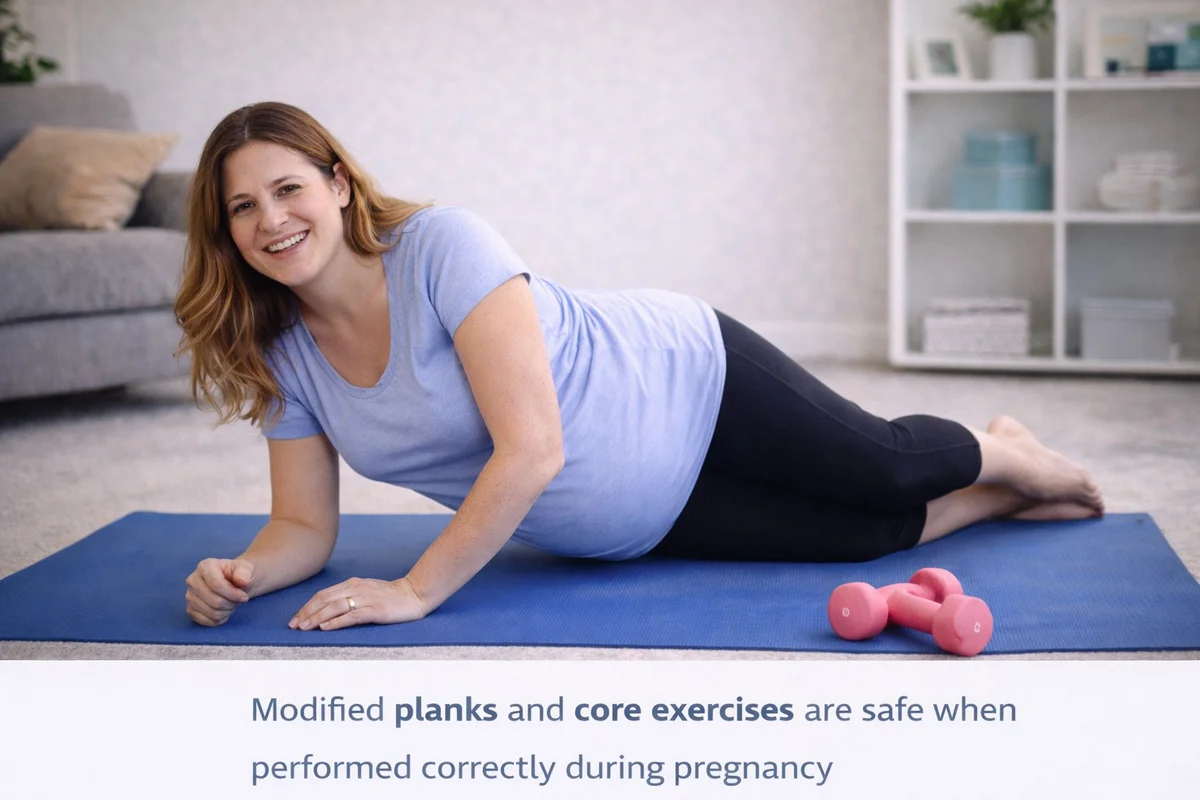
- Modified planks (on knees or incline)
- Pelvic tilts
- Cat-cow stretches
- Side planks
- Heel slides
- Dead bugs (modified)
The key is how you do them, not whether you do them. Research confirms that pregnant women can safely exercise both abdominal and pelvic floor muscles.
Myth #3: "Exercise Will Harm Your Baby"
The Myth: Exercise during pregnancy increases risk of miscarriage, premature birth, or low birth weight.
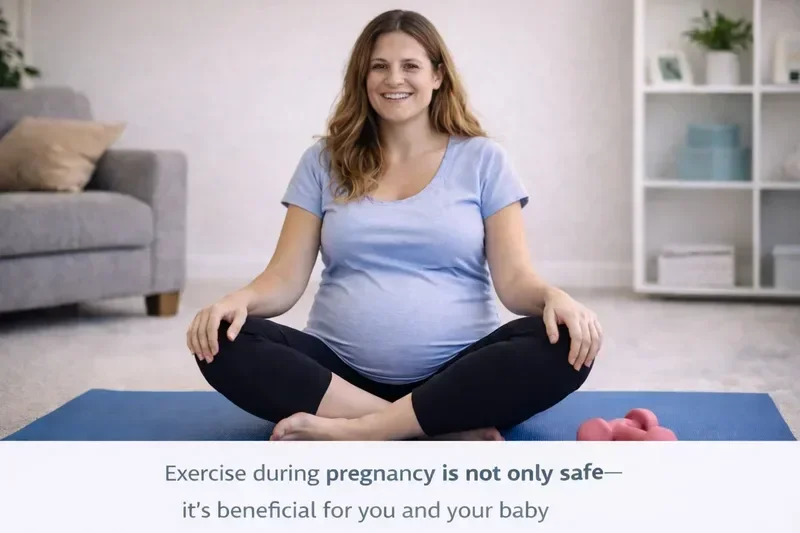
The Reality: Exercise is not only safe—it's actively beneficial for both you and your baby.
What the Research Actually Shows
The NHS states clearly: "Exercise is not dangerous for your baby. There is evidence that active women are less likely to experience problems in later pregnancy and labour."
ACOG's comprehensive review found that exercise during pregnancy:
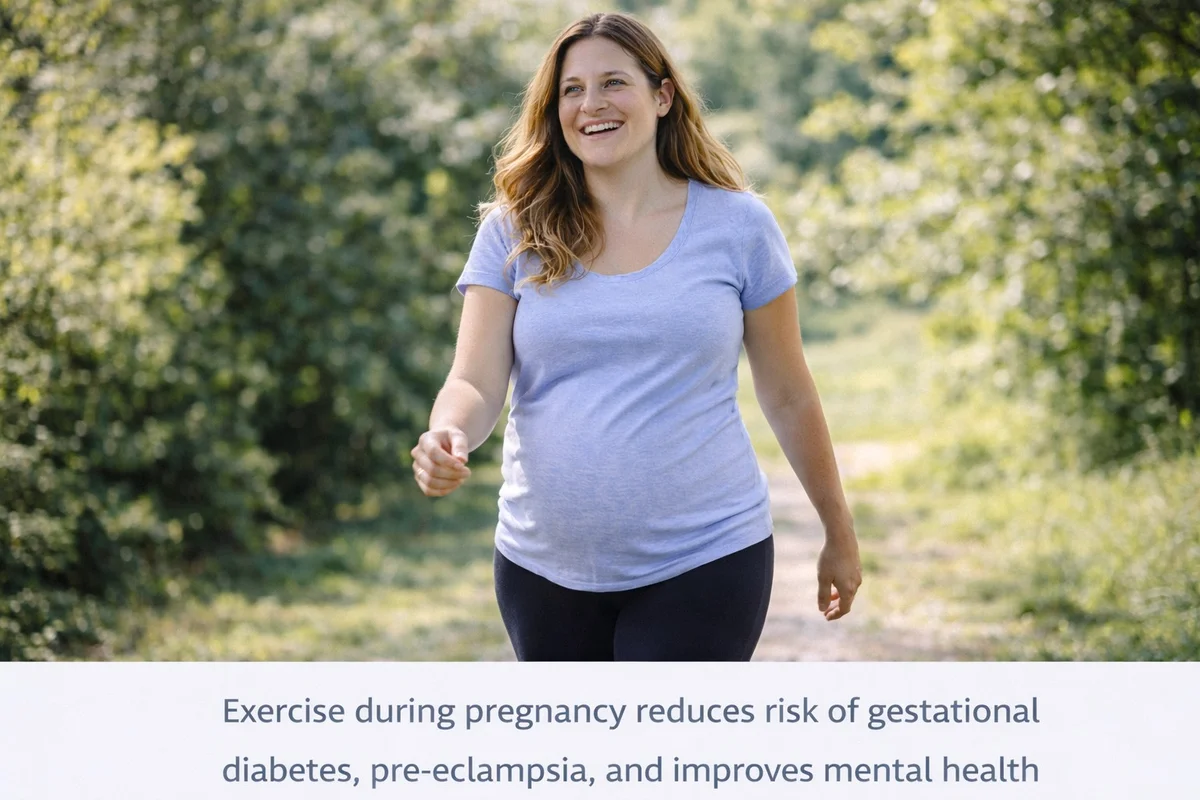
Reduces risk of:
- Gestational diabetes (by 30-50%)
- Pre-eclampsia
- Excessive weight gain
- Caesarean delivery
- Back pain and pelvic pain
Improves:
- Cardiovascular fitness
- Mental health (reduces depression and anxiety)
- Sleep quality
- Labour outcomes
- Postpartum recovery
Does NOT increase risk of:
- Miscarriage
- Low birth weight
- Premature delivery
A major 2018 study of 1,293 pregnant runners found no evidence of negative effects on babies, even in women who ran into their third trimester.
My Experience
Remember how I was running around my house during COVID lockdown, thinking I was getting fat? I was actually six weeks pregnant and had no idea. I'd been doing burpees, running laps around the living room, and probably getting my heart rate well above the mythical 140 bpm.
When I found out I was pregnant, I panicked. Had I harmed the baby?
Nope. My midwife laughed when I told her. "If exercise in early pregnancy caused miscarriages, the human race would have died out millennia ago," she said.
I exercised throughout both pregnancies—running, strength training, yoga. Both boys were born healthy, at term, with excellent Apgar scores. My midwife said my fitness definitely helped during labour. Second stage with my first baby? Twenty minutes. I credit squats and lunges.
Myth #4: "You Shouldn't Start New Exercise When Pregnant"
The Myth: If you weren't exercising before pregnancy, you shouldn't start now.
The Reality: You can absolutely start exercising during pregnancy—you just need to start gently.
What the NHS Says
NHS guidance is clear: "If you were not active before you got pregnant, do not suddenly take up strenuous exercise. If you start an exercise programme, tell the teacher that you're pregnant."
Notice it says don't start strenuous exercise. Starting gentle exercise? Absolutely fine.
Recommended approach for beginners:
- Start with 10-15 minutes of gentle activity
- Gradually build up to 30 minutes
- Aim for 150 minutes of moderate activity per week
- Walking is ideal—it's free, safe, and effective
Research shows that even previously sedentary women benefit enormously from starting gentle exercise during pregnancy.
Safe Activities for Beginners
Excellent choices if you're new to exercise:
- Walking - the gold standard for pregnancy exercise
- Swimming - water supports your weight, gentle on joints
- Pregnancy yoga - flexibility, breathing, and relaxation
- Stationary cycling - no risk of falling
- Pregnancy pilates - core strength without high impact
What to avoid as a beginner:
- High-impact activities (running, jumping)
- Contact sports
- Activities with fall risk (skiing, horse riding)
- Hot yoga or exercise in extreme heat
Myth #5: "You Shouldn't Run When Pregnant"
The Myth: Running is too high-impact and dangerous during pregnancy.
The Reality: If you were a runner before pregnancy, you can usually continue safely.
The Evidence on Running
The largest-ever study of pregnancy and running examined 1,293 women who participated in parkrun. Key findings:
- No increased risk of premature birth
- No reduced birth weight
- 70% of regular runners continued during pregnancy
- 31% ran into their third trimester
- No adverse outcomes reported
Tommy's research concluded: "Running in pregnancy is safe. Women can continue accustomed exercise during pregnancy."
Important Caveats
You CAN continue running if:
✅ You were already a regular runner pre-pregnancy
✅ You have an uncomplicated, low-risk pregnancy
✅ Your midwife/GP has cleared you for exercise
✅ You listen to your body and modify as needed
You should STOP running if you experience:
❌ Vaginal bleeding
❌ Pelvic pain or pressure
❌ Dizziness or breathlessness beyond normal
❌ Contractions or cramping
❌ Fluid leaking
Modifications for Pregnant Runners
As pregnancy progresses, most runners naturally:
- Reduce pace (often to 50% of pre-pregnancy speed)
- Shorten distance
- Run on flat, even surfaces (avoid trails/uneven ground)
- Wear supportive trainers and possibly a belly support band
- Stop in second or third trimester when it becomes uncomfortable
My Running Experience
The irony? I was running around my house during COVID lockdown—doing laps around the living room, burpees in the hallway—for six weeks before I knew I was pregnant. When I found out, I was terrified I'd harmed the baby. Spoiler: I hadn't.
I continued running (outdoors, once lockdown lifted) until 20 weeks with my first pregnancy, and 16 weeks with my second. Not because of any arbitrary rule, but because it simply stopped feeling comfortable. My bump was getting in the way, my balance felt off, and my pelvic floor was saying "enough." I switched to brisk walking and felt great.
The lesson? If you're already a runner, you can continue. If running around your living room in lockdown didn't harm my baby in the vulnerable first trimester, your regular jog in the park certainly won't harm yours.
Myth #6: "Don't Lift Anything Heavy"
The Myth: Pregnant women shouldn't lift weights or anything heavy.
The Reality: Strength training is safe and beneficial during pregnancy.
What's Actually Recommended
The NHS advises that strength exercises are excellent during pregnancy. They strengthen muscles to carry the extra weight and prepare your body for labour.
Research shows that moderate-intensity strength training 2-3 times per week is safe and effective.
Guidelines for lifting:
- Use weights you can comfortably control
- Avoid holding your breath (Valsalva manoeuvre)
- Avoid exercises lying flat on your back after 16 weeks
- Don't lift extremely heavy weights (maximal lifts)
- Focus on moderate weights, higher repetitions
Safe strength exercises:
- Squats (brilliant for labour prep!)
- Lunges
- Modified press-ups (on knees or incline)
- Rows
- Shoulder presses
- Bicep curls
- Leg exercises
What About Heavy Shopping/Toddlers?
Many women worry about lifting shopping bags or picking up their toddler. NHS guidance doesn't forbid lifting—it's about technique:
Safe lifting technique:
- Bend at the knees, not the waist
- Keep your back straight
- Hold items close to your body
- Don't twist whilst lifting
- Ask for help with very heavy items
If you're already lifting a 15kg toddler, you don't suddenly need to stop. Just use proper form.
What Exercises Should You Actually Avoid?
The NHS provides clear guidance on activities to avoid:
Definitely Avoid
❌ Contact sports - rugby, boxing, martial arts, hockey
❌ High fall-risk activities - skiing, horse riding, gymnastics, ice skating
❌ Scuba diving - baby has no protection from decompression sickness
❌ High-altitude exercise - above 2,500m until acclimatised
❌ Lying flat on your back for extended periods after 16 weeks
❌ Hot yoga or Bikram - overheating risk ❌ Trampolining - fall risk and pelvic floor stress
Approach With Caution
⚠️ Cycling - balance changes, consider stationary bike
⚠️ Heavy lifting - avoid maximal lifts
⚠️ High-intensity interval training - tone it down
⚠️ Inversions (headstands, etc.) - if experienced, may continue with caution
How Much Exercise Should You Do?
NHS recommendations are clear:
Target: At least 150 minutes of moderate-intensity activity per week
This breaks down to:
- 30 minutes, 5 days a week
- Or 10-minute chunks throughout the day
- Any activity is better than none
What counts as moderate intensity?
- You can talk but not sing
- Your heart rate is elevated
- You're slightly breathless but not gasping
- You feel warm and may sweat lightly
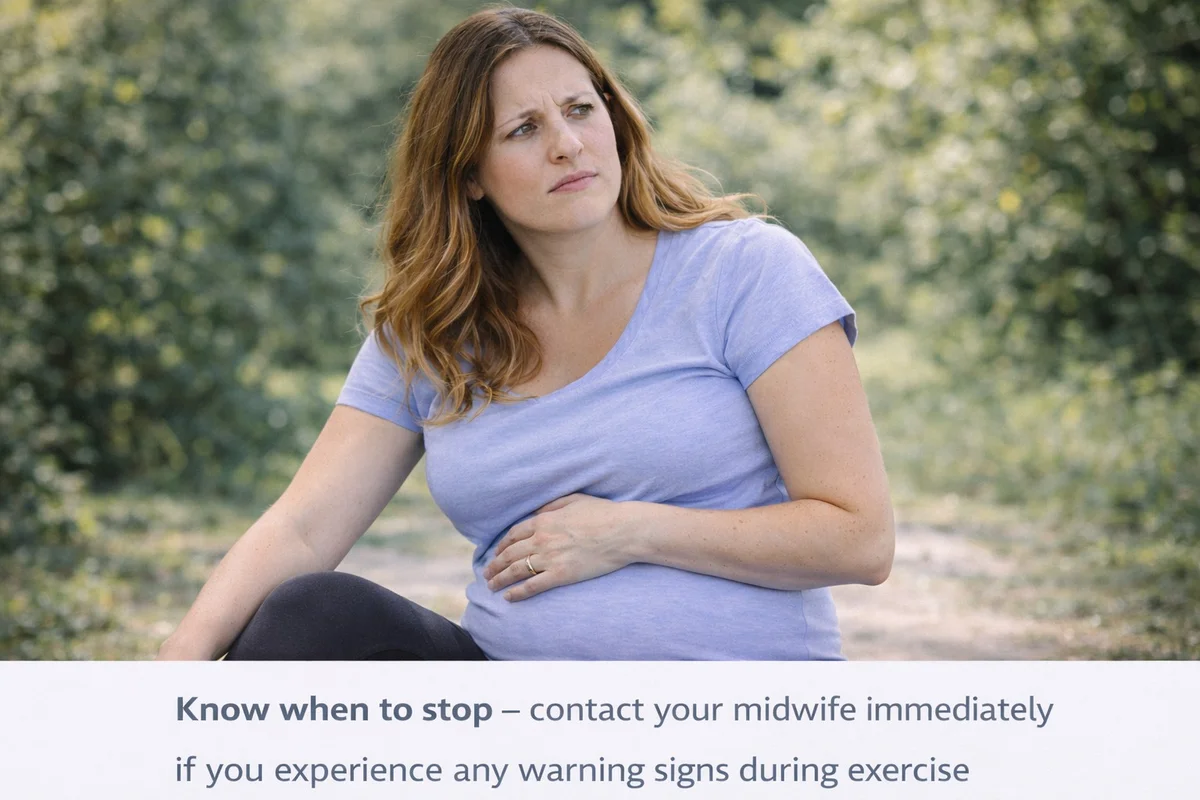
Warning Signs to Stop Exercise Immediately
The NHS lists specific warning signs that mean you should stop exercising and contact your midwife or GP:
🚨 Stop immediately if you experience:
- Vaginal bleeding
- Regular, painful contractions
- Amniotic fluid leaking
- Dizziness or feeling faint
- Severe breathlessness
- Chest pain
- Severe headache
- Calf pain or swelling
- Muscle weakness affecting balance
The Benefits Are Real (And Significant)
Let's talk about why this actually matters. Research consistently shows that exercise during pregnancy:
Physical benefits:
- Easier labour and delivery
- Faster postpartum recovery
- Less back pain and pelvic pain
- Reduced swelling
- Better sleep
- More energy
- Healthier weight gain
- Lower risk of gestational diabetes (30-50% reduction!)
- Lower risk of pre-eclampsia
- Reduced risk of caesarean delivery
Mental health benefits:
- Reduced anxiety and depression
- Better mood regulation
- Improved self-esteem
- Stress reduction
- Better sleep quality
Baby benefits:
- Supports healthy growth and development
- May improve cardiovascular health
- Some evidence of improved neurodevelopment
My Real Pregnancy Exercise Journey
First Pregnancy (COVID Lockdown, 2020):
- Weeks 1-6: Didn't know I was pregnant! Was running around the house thinking I was gaining lockdown weight
- Week 6: Positive pregnancy test, panic about all the exercise I'd done
- Weeks 6-12: Felt dreadful with nausea, could only manage gentle walking
- Weeks 12-20: Back to running 3x week (outdoors once lockdown lifted), strength training 2x week
- Weeks 20-30: Running became uncomfortable, switched to brisk walking, pregnancy yoga, swimming
- Weeks 30-40: Daily walks, gentle yoga, pelvic floor exercises religiously
- Labour: 20-minute second stage, midwife credited my fitness
Second Pregnancy:
- Weeks 1-16: Already knew I could handle it—running, strength training (modified as needed)
- Weeks 16-30: Brisk walking replaced running, added swimming and pregnancy pilates
- Weeks 30-40: Walking, gentle stretching, birth prep exercises
- Labour: Even easier than the first time
What I learned: Every pregnancy is different. What worked at 12 weeks didn't work at 30 weeks. What worked with baby #1 didn't work with baby #2. And exercise in early pregnancy (even unknowing exercise!) doesn't harm your baby. Listen to your body, modify as needed, and ignore anyone who quotes the 140 bpm rule at you.
The Bottom Line
Exercise myths debunked:
❌ Heart rate shouldn't exceed 140 bpm → Use the talk test instead
❌ Ab exercises cause diastasis recti → Proper core work can prevent it
❌ Exercise harms the baby → Exercise is safe and beneficial
❌ Don't start exercise when pregnant → Gentle starts are fine
❌ Running is dangerous → Safe if you're already a runner
❌ Don't lift anything heavy → Moderate strength training is beneficial
What's actually true:
✅ Exercise during pregnancy is safe for most women
✅ Aim for 150 minutes of moderate activity per week
✅ Listen to your body and modify as needed
✅ Use the talk test instead of heart rate
✅ Get your midwife's approval, especially if you have complications
✅ Stop if you experience warning signs
✅ The benefits far outweigh the risks
The most important thing? Ignore outdated 1985 medical advice that's been circulating for 40 years. Trust current NHS guidance, trust your healthcare providers, and trust your body.
I literally ran around my house thinking I was getting fat, when I was actually six weeks pregnant. My baby was fine. Your baby will be fine. Exercise is safe.
And when someone tells you that you can't do burpees because your heart rate might spike? Smile politely and carry on. (Or swap them for something more comfortable—pregnancy isn't the time to be a hero.)
Quick Reference: Pregnancy Exercise Safety
Safe Activities:
- Walking
- Swimming
- Stationary cycling
- Pregnancy yoga/pilates
- Strength training (moderate weights)
- Running (if already a runner)
- Dancing
- Low-impact aerobics
Avoid:
- Contact sports
- Activities with high fall risk
- Scuba diving
- Hot yoga
- Lying flat on back after 16 weeks
- Exercising to exhaustion
When to Stop & Call Midwife:
- Vaginal bleeding
- Severe breathlessness
- Dizziness/fainting
- Chest pain
- Regular contractions
- Fluid leaking
NHS Resources:
This article is based on current NHS guidelines and published research. For personalised advice about exercise during your pregnancy, always consult your GP or midwife, especially if you have any medical conditions or pregnancy complications.