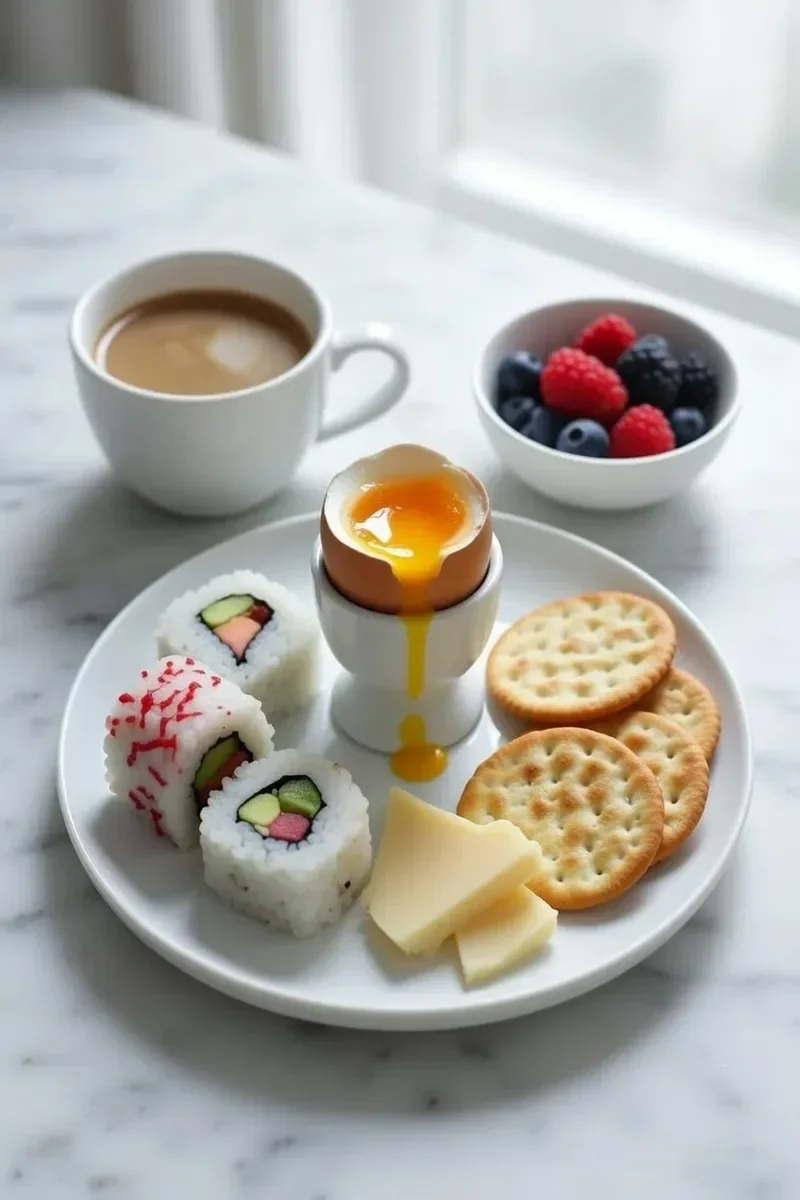
The moment you see that positive test, it feels like half your favourite foods are suddenly off the menu. No wine? Fine. But no cheese, no sushi, and no runny eggs? That's a harder pill to swallow.
The problem is that advice changes constantly. What your mum was told to avoid in the 90s might be perfectly safe today. Food safety standards have improved dramatically, and regulations in the UK differ significantly from other countries (particularly the US, where much of the conflicting online advice originates).
To help you navigate the supermarket aisles without panic, we've looked at the current NHS guidelines and the scientific facts behind the most common "forbidden foods."
1. The "Runny Egg" Fear
MYTH: You must boil eggs until the yolk is solid to avoid Salmonella.
FACT: In the UK, this is FALSE (with one condition!).
The Details: For years, pregnant women were told to avoid raw or runny eggs completely. However, safety standards have improved dramatically since the salmonella outbreaks of the 1980s and 90s.
The NHS confirms that you can eat raw or runny eggs—hello, dippy eggs and soldiers!—as long as they have the British Lion Code stamp (the red lion logo) on the shell. This mark means the hens have been vaccinated against Salmonella, and the eggs have been produced under strict hygiene standards. The Food Standards Agency reports that Salmonella levels in UK eggs have dropped by over 90% since the Lion scheme was introduced in 1998.
This means you can safely enjoy:
- Soft-boiled eggs with runny yolks
- Poached eggs
- Home-made mayonnaise (if using Lion eggs)
- Mousse or ice cream made with raw eggs (Lion eggs only)
The Exception: If the eggs are not Lion stamped—such as imported eggs, or eggs from non-hen birds like ducks, quail, or geese—you should cook them thoroughly until both the white and yolk are solid.
2. The Cheese Ban
MYTH: All soft, mould-ripened cheeses like Brie and Camembert are dangerous and must be avoided.
FACT: This is FALSE—you just have to cook them!
The Details: It's true that you should avoid eating uncooked mould-ripened soft cheeses (like Brie, Camembert, Chèvre, or any cheese with a white rind) because their moist environment can allow Listeria bacteria to grow. Listeria is particularly concerning during pregnancy as it can cross the placenta and potentially cause miscarriage or stillbirth.
However, heat kills Listeria. If you bake that wheel of Camembert until it's piping hot and steaming all the way through, it's perfectly safe to eat. The same goes for Brie on a burger or melted goat's cheese on a pizza—as long as it's cooked until properly hot throughout, you're good to go.
Cheeses that are ALWAYS safe to eat:
- Hard cheeses: Cheddar, Parmesan, Red Leicester, Edam, Stilton (yes, even blue cheese if it's hard)
- Soft processed cheeses: Philadelphia, cottage cheese, cream cheese, ricotta, mascarpone, mozzarella
- Halloumi and paneer
What to avoid: Soft blue cheeses (Roquefort, Gorgonzola, Danish Blue) and any unpasteurized cheese unless thoroughly cooked.
3. The Sushi Rule
MYTH: You cannot eat any sushi while pregnant.
FACT: This is largely FALSE in the UK.
The Details: This is where UK advice differs significantly from the United States. In the UK and EU, food safety regulations require that raw fish used for sushi must be frozen to -20°C for at least 24 hours before being served. This freezing process kills parasitic worms (like anisakis) that can be present in raw fish.
This means that sushi made with raw salmon, tuna, or other fish is generally considered safe to eat in the UK, provided it's from a reputable restaurant or supermarket that follows proper food safety protocols. Most major UK supermarkets (Tesco, Sainsbury's, Waitrose) confirm their sushi meets these standards.
What you CAN eat:
- Sushi from reputable UK restaurants and supermarkets
- Smoked salmon (it's been cured)
- Cooked sushi (California rolls, prawn tempura rolls)
The Exceptions:
- Avoid raw shellfish (oysters, clams, raw prawns) as they carry a higher risk of food poisoning from bacteria and viruses that freezing doesn't kill
- Limit tuna intake to no more than 2 tuna steaks per week (or 4 medium cans) due to mercury levels, which can affect baby's developing nervous system
- Avoid high-mercury fish entirely: shark, swordfish, and marlin
- Be cautious with homemade sushi unless you're certain the fish has been properly frozen first
If you're uncertain about a particular restaurant's practices, stick to cooked options or ask about their freezing procedures.
4. The Coffee Conundrum
The Myth: "Skip your morning coffee entirely—caffeine is dangerous during pregnancy."
The Truth: The NHS confirms you can have up to 200mg of caffeine per day—that's roughly two mugs of instant coffee or two cups of tea.
Here's what that looks like in practice:
- 100mg in a mug of instant coffee
- 140mg in a mug of filter coffee
- 75mg in a mug of tea (green tea has similar amounts)
- 40mg in a can of cola
- 80mg in a 250ml energy drink
- Less than 25mg in a 50g bar of dark chocolate
- Less than 10mg in a 50g bar of milk chocolate
So yes, you can still have your morning latte! Just keep an eye on hidden sources like energy drinks, fizzy drinks, and that afternoon chocolate bar. Regularly drinking more than 200mg per day can increase your risk of pregnancy complications, such as low birthweight and miscarriage.
5. "Pâté is Fine if it's Vegetable"
MYTH: You only need to avoid meat pâté; vegetable pâté is safe.
FACT: This is FALSE.
The Details: Most people know to avoid liver pâté because it contains very high levels of Vitamin A (retinol), which can harm your baby's development. However, the NHS advises avoiding all types of pâté, including vegetable varieties.
Why? All pâté—meat, fish, or vegetable—has a higher risk of containing Listeria bacteria due to the way it's processed and stored. The smooth texture and moisture content create an ideal environment for bacterial growth.
It's best to skip the pâté plate entirely until after your baby arrives. If you're desperate for something similar, hummus or other bean-based dips are safe alternatives.
6. Peanuts and Allergies
MYTH: "Eating peanuts during pregnancy will make your baby allergic to nuts."
FACT: This is FALSE.
The Details: This is older advice that has been completely reversed. Guidance used to recommend that pregnant women with a family history of allergies should avoid peanuts entirely. The NHS changed this advice after research found no clear evidence that eating or avoiding peanuts during pregnancy affects your baby's chances of developing a nut allergy.
Modern research actually suggests that early exposure (including during pregnancy) might help prevent allergies. A 2014 study published in JAMA Pediatrics followed 8,205 children and found that among non-allergic mothers, those who consumed peanuts five or more times per month during pregnancy had a 69% lower risk of their child developing a peanut allergy compared to mothers who rarely ate peanuts. The study's lead author, from Boston Children's Hospital, concluded: "Assuming she isn't allergic to peanuts, there's no reason for a woman to avoid peanuts during pregnancy."
Similarly, a large Danish study of over 61,000 mother-child pairs found that maternal consumption of peanuts and tree nuts during pregnancy was associated with a 20-25% reduced risk of childhood asthma.
Current NHS guidance: Unless you're allergic to peanuts yourself or a health professional advises you otherwise, nuts are a brilliant source of protein, healthy fats, and essential nutrients like folate and vitamin E for your growing baby.
Enjoy them guilt-free!
7. Deli Meats and Cold Cuts
MYTH: All deli meats and pre-packaged sliced meat are unsafe.
FACT: This is MOSTLY FALSE in the UK.
The Details: In the US, pregnant women are advised to avoid all deli meats unless heated to steaming hot. However, UK food safety standards are different.
The NHS states that pre-packaged sliced meats from UK supermarkets (ham, turkey, chicken) are generally safe to eat cold, as they're produced under strict hygiene standards. The main concern is Listeria, but the risk from properly packaged, refrigerated deli meat in the UK is considered very low.
What's safe:
- Pre-packaged sliced ham, turkey, chicken from UK supermarkets
- Freshly cooked and sliced meat from the deli counter (eaten soon after purchase)
What to be cautious with:
- Deli counter meats that have been sitting out
- Meat sliced days ago that's been in your fridge
- Cured meats like salami, chorizo, pepperoni (see below)
When in doubt: Heat it until steaming hot, which kills any potential bacteria.
8. Cured and Fermented Meats
MYTH: Prosciutto, salami, and chorizo are completely off-limits.
FACT: This is PARTIALLY FALSE.
The Details: Cured meats like Parma ham, salami, pepperoni, and chorizo carry a small risk of toxoplasmosis—a parasitic infection that can harm your baby. Unlike Listeria, freezing doesn't kill toxoplasmosis.
However, the NHS states that the risk is very low, and you can eat these meats if you:
- Freeze them at home for 4 days at -18°C or colder before eating, OR
- Cook them thoroughly (like chorizo in a pasta dish or pepperoni on a pizza)
Many women choose to avoid them entirely to be extra cautious, while others enjoy them occasionally. It's ultimately your risk assessment.
Why Has the Advice Changed?
If your mum is telling you she couldn't eat runny eggs or Brie during her pregnancy, she's not wrong—she couldn't, based on the guidelines at the time. So what changed?
- Vaccination programs: The British Lion Code scheme (introduced in 1998) vaccinates hens against Salmonella
- Improved food safety regulations: EU and UK regulations now require raw fish to be frozen, killing parasites
- Better understanding of risks: We now know that cooking soft cheese makes it safe, rather than avoiding it entirely
- Enhanced production standards: Modern food processing has significantly reduced bacterial contamination
The result? Many foods that were genuinely risky 20-30 years ago are now safe, provided you follow the current guidelines.
This is why online advice can be confusing—American websites still recommend avoiding many foods that are considered safe in the UK due to different food safety standards.
Quick Reference: UK Pregnancy Food Safety
✅ SAFE TO EAT:
- Lion-stamped eggs (runny or raw)
- Cooked soft cheese (Brie, Camembert, goat's cheese)
- All hard cheese (Cheddar, Parmesan, even Stilton)
- Soft processed cheese (Philadelphia, cottage cheese, mozzarella)
- Shop-bought sushi from reputable sources (not raw shellfish)
- Smoked salmon
- Coffee (up to 200mg caffeine daily)
- Peanuts and other nuts (unless allergic)
- Pre-packaged deli meats from UK supermarkets
- Honey
❌ AVOID ENTIRELY:
- Raw or undercooked eggs without Lion stamp
- Uncooked soft cheese with white rind
- All pâté (meat, fish, or vegetable)
- Raw shellfish (oysters, clams)
- High-mercury fish (shark, swordfish, marlin)
- Unpasteurized milk or cheese
- Alcohol
⚠️ SAFE IF COOKED/FROZEN:
- Soft cheese (cook until steaming hot)
- Cured meats (freeze 4 days at home OR cook thoroughly)
- Non-Lion eggs (cook until solid)
The Verdict?
Pregnancy nutrition isn't about blanket restriction; it's about understanding the actual risks and the specific guidelines that apply in the UK. The food safety landscape has changed dramatically, and many foods that were once forbidden are now perfectly safe when handled properly.
Enjoy your baked Brie, your dippy Lion-stamped eggs, and your Pret sushi guilt-free. And if someone at a family gathering tells you that you "shouldn't be eating that," you can now politely explain why the advice has changed!
Want more pregnancy myth-busting? Read about which gender prediction myths actually have science behind them, or browse all our pregnancy myths & facts articles.
Disclaimer: This guide is for information purposes only and reflects current NHS guidance. Always consult your midwife or GP if you're unsure about your specific diet or have additional risk factors.