Medical Disclaimer: This article provides evidence-based information about prenatal vitamins and preconception nutrition based on NHS guidance and peer-reviewed research. It is not a substitute for professional medical advice, diagnosis, or treatment. Always consult your GP, midwife, or a registered dietitian before starting any new supplements, especially if you have underlying health conditions or take medications. Dosage recommendations are based on UK NHS guidelines for women with no known deficiencies or complications.
When you're trying to conceive (TTC), the supplement aisle can feel overwhelming. Walk into any Boots or Holland & Barrett and you'll find dozens of "prenatal vitamins," "fertility supplements," and "preconception formulas" making bold claims about boosting your chances of pregnancy.
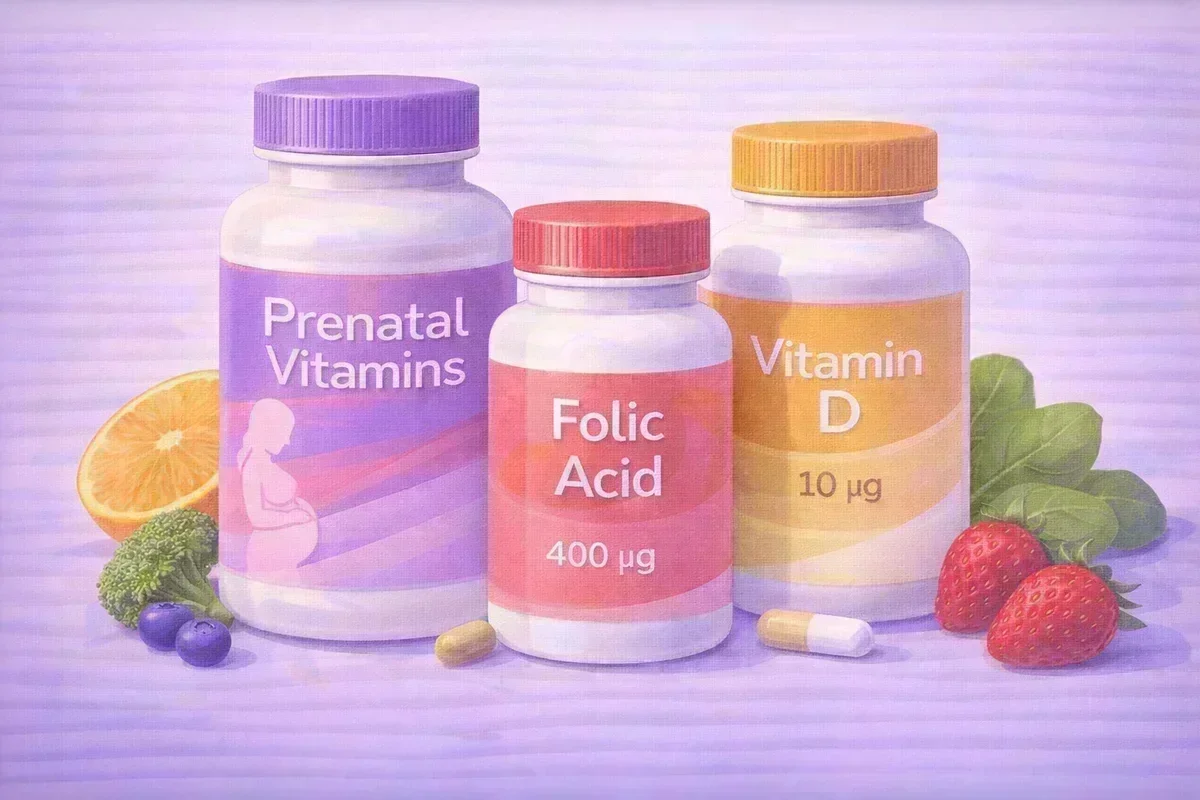
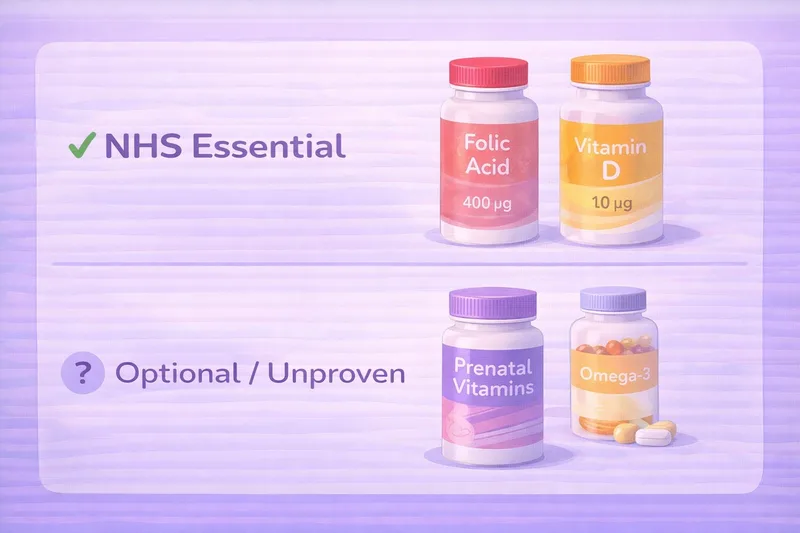
But here's what you actually need to know: only two supplements have strong NHS backing for preconception health—folic acid and vitamin D. Everything else falls into a spectrum from "probably helpful" to "expensive marketing."
This guide separates evidence-based recommendations from supplement industry hype, explaining exactly what the NHS advises, what peer-reviewed research supports, and where you can save money without compromising your health.
What the NHS Says You MUST Take
The NHS has clear, evidence-based recommendations for two supplements that every woman trying to conceive should take.
1. Folic Acid (Vitamin B9): 400 micrograms daily
NHS Recommendation: Start taking 400 micrograms (mcg) of folic acid daily as soon as you stop using contraception, or at least one month before you start trying to conceive. Continue until you're 12 weeks pregnant.
Why it matters:
Folic acid significantly reduces the risk of neural tube defects (NTDs) like spina bifida. A landmark Medical Research Council study published in The Lancet in 1991 found that folic acid supplementation reduced NTD risk by 72% when taken before conception and during early pregnancy.
The protective effect only works if you start before pregnancy because the neural tube develops in the first 4 weeks of pregnancy—often before you even know you're pregnant.
The evidence:
Multiple systematic reviews and meta-analyses confirm folic acid's effectiveness. A 2015 Cochrane review analysing data from over 6,000 women found that folic acid supplementation before conception and in early pregnancy significantly reduced neural tube defects. This is one of the most robust findings in preconception health.
UK-specific guidance:
- Standard dose: 400 mcg daily for most women
- Higher dose (5 mg daily): Required if you have diabetes, BMI over 30, family history of NTDs, or take anti-epilepsy medication. Your GP must prescribe this higher dose.
- When to start: Ideally 3 months before conception, minimum 1 month before
- How long: Until the end of your first trimester (12 weeks pregnant)
Cost:
£2-4 for a 3-month supply at supermarkets and pharmacies. One of the cheapest, most effective interventions in preconception health.
Food sources (not sufficient alone):
While folate occurs naturally in leafy greens, beans, and fortified cereals, it's difficult to get adequate amounts through diet alone. The NHS explicitly recommends supplementation even if you eat a folate-rich diet.
2. Vitamin D: 10 micrograms (400 IU) daily
NHS Recommendation: All adults, including women trying to conceive, should take 10 micrograms (400 IU) of vitamin D daily, especially between October and March when UK sunlight isn't strong enough to produce vitamin D naturally.
Why it matters:
Vitamin D is crucial for bone health, immune function, and fertility. Research published in Human Reproduction (2012) found that vitamin D deficiency was associated with reduced fertility in women undergoing IVF. A 2018 systematic review in Human Reproduction found that women with adequate vitamin D levels had higher pregnancy rates.
The evidence:
While the link between vitamin D and natural conception is still being studied, there's strong evidence for its role in overall reproductive health. The NHS recommends supplementation for all adults in the UK due to limited sun exposure, regardless of pregnancy plans.
UK-specific challenges:
The UK is located at a latitude where sunlight between October and March isn't strong enough to produce vitamin D through skin exposure. Even in summer, concerns about skin cancer mean many people avoid unprotected sun exposure. This makes supplementation essential for most UK residents.
Cost:
£3-6 for a year's supply. Widely available at supermarkets and pharmacies.
Food sources (not sufficient alone):
Fatty fish, egg yolks, and fortified foods contain vitamin D, but dietary intake alone rarely meets requirements in the UK.
Safety note:
Don't exceed 100 micrograms (4,000 IU) daily unless under medical supervision. Very high doses can cause hypercalcemia (too much calcium in blood).
What the NHS Says Is "Recommended" (Evidence-Based but Not Essential)
Beyond folic acid and vitamin D, the NHS mentions other nutrients that support preconception health but doesn't mandate supplementation for women with balanced diets.
Iron
NHS guidance: Women who menstruate need adequate iron to prevent anaemia, which can affect fertility and pregnancy outcomes.
The evidence:
A large study published in Obstetrics & Gynecology (2006) found that women taking iron supplements had a lower risk of ovulatory infertility. However, this was primarily in women with low iron stores.
Do you need to supplement?
Only if you're iron deficient. The NHS recommends eating iron-rich foods (red meat, beans, fortified cereals, dark leafy greens). If you have heavy periods, fatigue, or previous anaemia, ask your GP for an iron blood test before supplementing.
UK-specific note:
Self-prescribing iron can mask underlying conditions and cause constipation. Always test first.
Cost if needed:
£4-8 for a month's supply of ferrous sulfate or ferrous fumarate.
Vitamin B12
NHS guidance: Important for women following vegan or vegetarian diets, as B12 is primarily found in animal products.
The evidence:
B12 deficiency can cause anaemia and neurological problems. A 2015 study in the American Journal of Clinical Nutrition found associations between low B12 levels and reduced fertility in women undergoing assisted reproduction, though causation isn't fully established.
Do you need to supplement?
Yes, if you're vegan or vegetarian. Otherwise, dietary intake from meat, fish, eggs, and dairy is usually sufficient.
Cost:
£3-6 for a 3-month supply of B12 tablets (cyanocobalamin).
Omega-3 Fatty Acids (EPA and DHA)
NHS guidance: Eating fish is recommended, but supplementation isn't explicitly advised for preconception.
The evidence:
Omega-3s support hormone production and egg quality. A study in Human Reproduction (2018) found that women with higher omega-3 blood levels had better embryo quality during IVF. However, evidence for natural conception is less robust.
Do you need to supplement?
Not if you eat oily fish (salmon, mackerel, sardines) twice weekly as the NHS recommends. If you don't eat fish, a supplement may be beneficial.
UK-specific advice:
Choose supplements derived from algae or fish oil. Avoid cod liver oil during pregnancy/preconception as it contains high levels of vitamin A, which can harm the developing baby.
Cost:
£8-15 for a month's supply of quality omega-3 supplements.
What's Marketed But Not Proven: Fertility Supplements
Walk through the "fertility" section of any UK pharmacy and you'll see supplements claiming to boost fertility, regulate cycles, or improve egg quality. Here's what the evidence actually says.
Coenzyme Q10 (CoQ10)
Marketing claim: Improves egg quality and fertility, especially in older women.
The evidence:
Some small studies suggest CoQ10 may improve outcomes in IVF patients, particularly women with poor ovarian response. A 2020 meta-analysis found that CoQ10 supplementation increased clinical pregnancy rates in women undergoing IVF. However, evidence for natural conception is weak, and the NHS doesn't recommend it.
The reality:
Possibly helpful for IVF patients over 35, but not established for natural conception. Expensive (£20-40/month) for uncertain benefit.
Inositol (Myo-inositol and D-chiro-inositol)
Marketing claim: Improves fertility in women with PCOS by regulating insulin and hormones.
The evidence:
Some promising research. A 2018 Cochrane review found that inositol may improve ovulation rates in women with PCOS. However, results are mixed, and more research is needed.
The reality:
May be worth trying if you have PCOS and your doctor agrees. Not recommended for women without PCOS. Cost: £15-30/month.
DHEA (Dehydroepiandrosterone)
Marketing claim: Improves egg quality in women with diminished ovarian reserve.
The evidence:
Some IVF clinics use DHEA for women with poor ovarian response. A 2011 systematic review in Reproductive Biology and Endocrinology found possible benefits in this specific population. However, evidence is inconsistent, and long-term safety isn't established.
The reality:
Only use under medical supervision for diagnosed conditions. Not appropriate for general preconception use. The NHS doesn't recommend it.
Vitex (Chasteberry)
Marketing claim: Regulates cycles and boosts fertility.
The evidence:
Weak. A small 2014 study suggested possible benefits for luteal phase defects, but larger, high-quality studies are lacking. Not recommended by the NHS or major fertility organizations.
The reality:
Probably not worth it. May interfere with fertility treatments if you progress to that stage.
Preconception Multivitamins: Do You Need Them?
Many companies sell "preconception" or "prenatal" multivitamins at £10-30+ per month. Are they worth it?
What they typically contain:
- Folic acid ✅ (you need this)
- Vitamin D ✅ (you need this)
- Iron (only if deficient)
- B vitamins (useful if vegan/vegetarian)
- Vitamin C, E (no strong evidence of benefit for fertility)
- Calcium, magnesium (can get from diet)
- Sometimes omega-3s, CoQ10, inositol (unproven benefit)
The verdict:
If a preconception multivitamin contains 400 mcg folic acid and 10 mcg vitamin D, and costs similar to buying those separately, it's fine. But you don't need the other ingredients.
Cost comparison:
- Folic acid alone: £2-4 for 3 months
- Vitamin D alone: £3-6 for 12 months
- Total: £5-10 for a year
- Preconception multivitamin: £10-30 per month = £120-360 per year
Our recommendation:
For most women with balanced diets, buy folic acid and vitamin D separately and save £100+ per year. Use that money for other aspects of preconception health (healthy food, stress reduction, etc.).
Exception: If you're vegan, vegetarian, have restricted diet, or diagnosed deficiencies, a multivitamin may be more convenient.
UK-Specific Preconception Vitamin Brands
If you do want a preconception multivitamin, here are UK options with appropriate formulations:
Budget Options (£5-10/month)
- Tesco Pregnancy Care – Contains 400 mcg folic acid, 10 mcg vitamin D, basic multivitamin
- Boots Pregnancy Care – Similar formulation to Tesco
- Pregnacare Original – £8-10/month, widely available
Mid-Range Options (£10-20/month)
- Pregnacare Conception – Includes inositol, CoQ10 (unproven extras)
- Seven Seas Trying for a Baby – Standard preconception formula
- Vitabiotics Pregnacare Plus – Adds omega-3 capsules
Premium Options (£20-40/month)
- Proceive – Marketed for fertility, includes CoQ10, inositol (expensive for unproven benefit)
- Zita West Vitafem – Popular with IVF patients, but very expensive
Our honest take:
The budget options (Tesco, Boots, basic Pregnacare) contain everything the NHS recommends. Premium brands add ingredients without strong evidence. Unless your GP recommends specific supplements for diagnosed deficiencies, save your money.
When You Need Higher Doses: Special Circumstances
Some women need higher doses of certain vitamins. This MUST be discussed with your GP.
Higher-Dose Folic Acid (5 mg daily)
You need the prescription 5 mg dose if you:
- Have diabetes (type 1 or 2)
- Have a BMI over 30
- Have a family history of neural tube defects
- Previously had a pregnancy affected by NTDs
- Take anti-epilepsy medication
- Have sickle cell disease or thalassaemia
- Have coeliac disease
Why: These conditions increase NTD risk or reduce folate absorption. The standard 400 mcg dose isn't enough.
How to get it: Your GP must prescribe 5 mg folic acid tablets. Don't buy high-dose folic acid over the counter without medical advice.
Vitamin D Deficiency
You may need higher doses if you:
- Have dark skin (reduced vitamin D production from sunlight)
- Cover skin for religious or cultural reasons
- Rarely go outdoors
- Have been diagnosed with vitamin D deficiency
How to check: Ask your GP for a blood test if you think you're deficient. Treatment doses (20-40 mcg daily or higher) should only be taken under medical supervision.
What About Male Fertility Supplements?
While this article focuses on women, your partner's nutrition matters too. The NHS recommends:
For men trying to conceive:
- Eat a balanced diet with plenty of fruits, vegetables, whole grains
- Maintain a healthy weight
- Limit alcohol
- Don't smoke
Supplements marketed for male fertility (zinc, selenium, CoQ10, L-carnitine):
Evidence is mixed. A 2019 Cochrane review found insufficient evidence to recommend antioxidant supplements for male fertility. The NHS doesn't recommend routine supplementation for men without diagnosed deficiencies.
If your partner has low sperm count or poor sperm quality:
Your GP or fertility clinic may recommend specific supplements. Don't self-prescribe high doses of vitamins or minerals without medical advice.
Foods That Support Preconception Health
Before you buy expensive supplements, focus on diet. The NHS emphasises that most nutrients should come from food.
Folic acid (folate) food sources:
- Dark leafy greens (spinach, kale)
- Beans and lentils
- Fortified breakfast cereals
- Citrus fruits
- Broccoli
Note: Folate from food is less well absorbed than folic acid supplements. You still need the supplement.
Vitamin D food sources:
- Oily fish (salmon, mackerel, sardines)
- Egg yolks
- Fortified cereals and spreads
- Red meat
Note: It's very difficult to get enough vitamin D from UK diet alone. Supplementation is advised.
Iron food sources:
- Red meat
- Beans and lentils
- Fortified cereals
- Dark leafy greens
- Dried fruit
Tip: Pair iron-rich foods with vitamin C (orange juice, tomatoes) to improve absorption.
Omega-3 food sources:
- Oily fish (salmon, mackerel, sardines, fresh tuna)
- Walnuts
- Chia seeds and flaxseeds
General preconception diet advice (NHS):
- Eat at least 5 portions of fruit and vegetables daily
- Base meals on starchy carbohydrates (wholegrain where possible)
- Include protein sources (beans, fish, eggs, meat)
- Choose unsaturated oils and spreads
- Limit sugar, salt, and saturated fat
- Stay hydrated
What to Avoid When Trying to Conceive
Some supplements and high doses can be harmful during preconception and pregnancy.
Avoid:
Vitamin A (retinol) supplements:
High doses can harm the developing baby. The NHS advises against vitamin A supplements and liver (high in vitamin A) when trying to conceive and during pregnancy. Beta-carotene (plant-based vitamin A) is safe.
Avoid cod liver oil: Contains high levels of vitamin A.
High-dose vitamin supplements:
More isn't always better. Fat-soluble vitamins (A, D, E, K) can build up to toxic levels. Always follow dosage guidelines.
Herbal supplements without medical advice:
Many herbal supplements aren't tested for safety in pregnancy. Avoid unless specifically recommended by your GP or a qualified herbalist familiar with preconception care.
Cost-Effective Preconception Supplement Strategy
For most women trying to conceive:
Essential (backed by NHS and strong evidence):
- Folic acid 400 mcg – £2-4 for 3 months (Tesco, Boots, Asda)
- Vitamin D 10 mcg – £3-6 for 12 months (supermarket own-brands)
Total cost: ~£8-12 per year
If vegan/vegetarian, add: 3. Vitamin B12 supplement – £3-6 for 3 months
If you don't eat fish, add: 4. Omega-3 (algae-based) – £8-15 per month
If diagnosed deficient (check with GP first), add: 5. Iron or other specific supplements as prescribed
What you DON'T need to spend money on:
- Expensive "fertility" supplements with unproven ingredients
- Premium preconception multivitamins (unless more convenient for you)
- Supplements promising to "boost" fertility without evidence
When to See Your GP
Speak with your GP before taking supplements if you:
- Have underlying health conditions (diabetes, epilepsy, coeliac disease, etc.)
- Take regular medications (some interact with supplements)
- Have had previous pregnancy complications
- Have been diagnosed with nutrient deficiencies
- Have a BMI over 30 or under 18.5
- Have been trying to conceive for 6+ months (if over 35) or 12+ months (if under 35)
Your GP can:
- Check for nutrient deficiencies (iron, vitamin D, B12)
- Prescribe high-dose folic acid if needed
- Review medications for interactions
- Refer you to a dietitian if you have specific dietary concerns
- Discuss fertility testing if you've been trying unsuccessfully
Summary: What You Actually Need
The evidence-based minimum:
- ✅ Folic acid 400 mcg daily (or 5 mg if high-risk)
- ✅ Vitamin D 10 mcg daily
- ✅ Healthy, balanced diet
- ✅ Healthy lifestyle (healthy weight, no smoking, limited alcohol)
Everything else is optional, often unproven, and frequently expensive marketing.
The supplement industry profits from anxiety about fertility. Don't let marketing convince you that you need dozens of expensive pills to conceive. The NHS recommendations are based on decades of solid research. Follow those, eat well, and save your money for other aspects of preparing for a baby.
Related Articles
- How to Track Ovulation When Trying to Conceive: Complete UK Guide
- Best Ovulation Tests UK 2026: Reviews for Trying to Conceive
- Understanding Your Menstrual Cycle When Trying to Conceive: UK Guide
Note on Research Citations: All medical studies and research referenced in this article are linked directly in the text. Click any study reference to read the original research. Citations include studies from The Lancet, Human Reproduction, Fertility and Sterility, Cochrane Reviews, and other peer-reviewed medical journals.