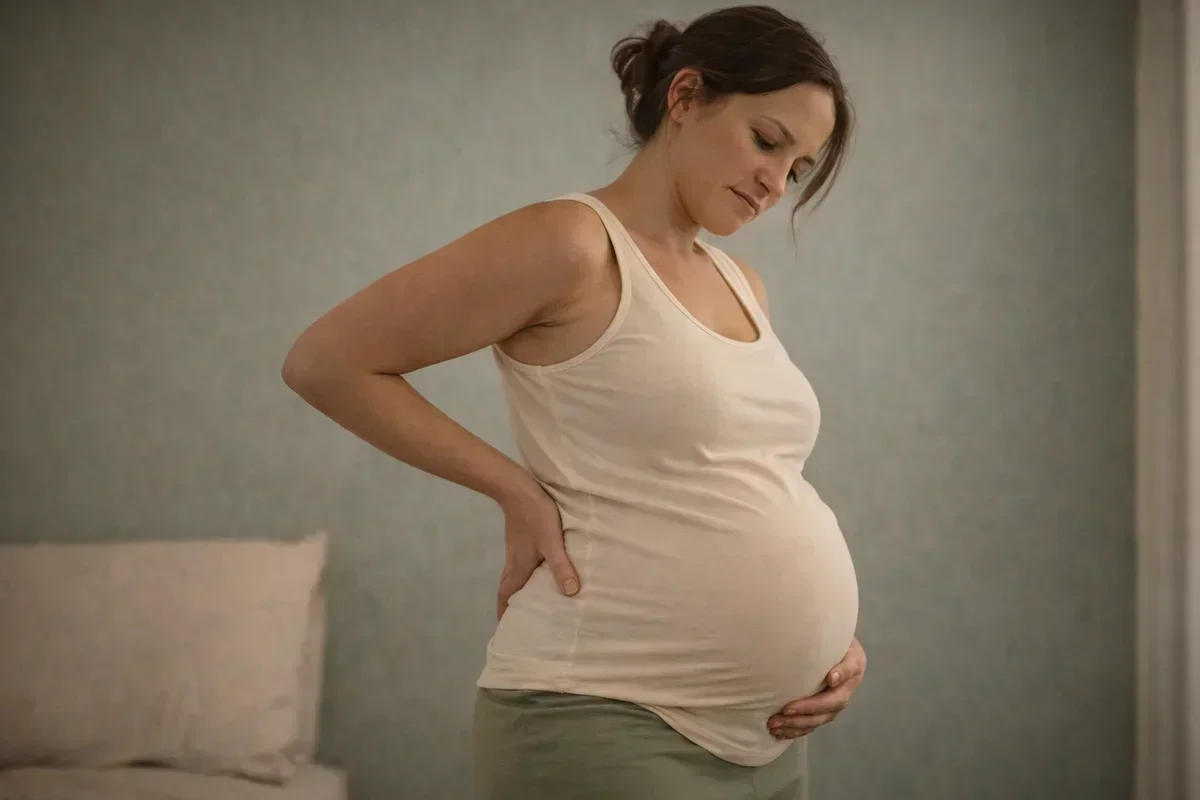
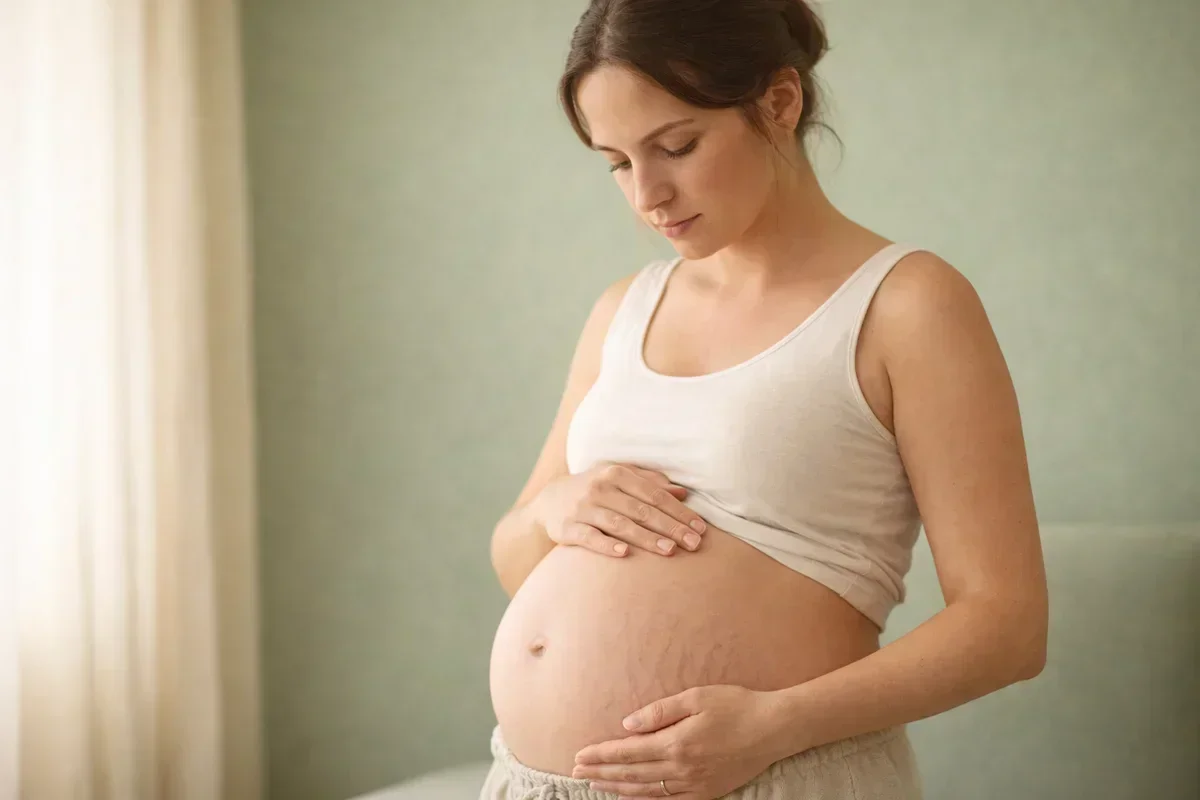
Your bump has just gone rock hard. It lasts for maybe 30 seconds, then everything relaxes again. Ten minutes later, it happens again. Is this it? Is this labour?
I remember grabbing my partner's arm at about 34 weeks, wide-eyed, saying "I think I'm having contractions." I wasn't. It was Braxton Hicks — but nobody had explained to me what they would feel like, so I had no way of knowing the difference. We nearly drove to the hospital.
If you've had that moment — or you're dreading it — this guide will help you understand what Braxton Hicks are, how they differ from real labour contractions, and exactly when you should pick up the phone and call your midwife.
Quick answer: Braxton Hicks are practice contractions that are usually irregular, don't get stronger over time, and often ease if you change position. Real labour contractions become longer, stronger, and more frequent, and do not go away with rest or movement. If you are unsure, call your midwife.
What Are Braxton Hicks?
Braxton Hicks contractions — sometimes called practice contractions or false labour — are the tightening and relaxing of the muscles of your womb. According to Tommy's, they are one of the ways your body prepares for labour, but having them does not mean your labour has started.
Not every woman notices Braxton Hicks, so there is no need to worry if you do not experience them. If you do, they are often felt from the middle of pregnancy onwards, especially later in pregnancy. According to the NHS, Braxton Hicks contractions may feel uncomfortable but are usually painless, do not last very long, do not happen very frequently, and do not build up over time.
Many women describe Braxton Hicks as a tightening across the stomach that comes and goes, mild menstrual-like cramping, or a sensation of the bump going rock hard for a minute or two before relaxing again. Tommy's notes that they do not cause the cervix to open (dilate), which is the key difference from true labour contractions. As your due date gets closer, Braxton Hicks can sometimes feel stronger or happen more often, which is why they can be confusing.
What Do Real Labour Contractions Feel Like?
Real labour contractions are different — and most women say that once they experience them, the difference becomes clear. According to the NHS, when you have a contraction your womb tightens and then relaxes, and for some people contractions may feel like extreme period pains.
As labour progresses, your contractions tend to become longer, stronger, and more frequent. If you put your hand on your abdomen during a contraction, you will feel it getting harder. When the muscles relax, the pain fades and the hardness eases. Unlike Braxton Hicks, Real labour contractions usually keep coming and tend to get longer, stronger and more regular, even if you rest, change position, or try a warm bath.
Many women describe real contractions as pain that builds in a wave — rising, peaking, and then fading — with a rest period in between. You may feel them in your lower abdomen, your back, or both. As they intensify, you may find that you cannot talk through them and need to stop and concentrate.
The Key Differences
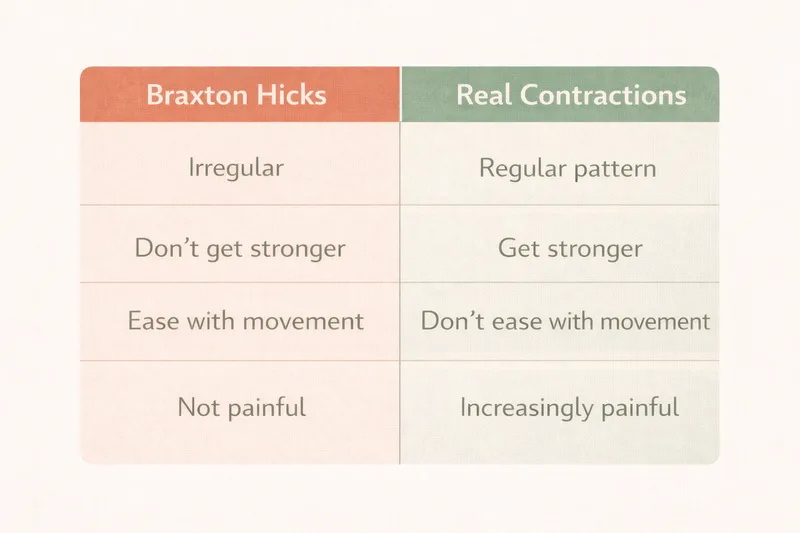
The simplest way to tell the difference is to watch for a pattern:
Braxton Hicks tend to be irregular — they may come a few times in an hour, then stop for hours or even days. They do not get progressively stronger. They may ease or stop entirely if you change position, go for a walk, rest, or have a warm bath. They are usually uncomfortable but not painful. They do not follow a regular rhythm.
Real contractions follow a pattern. They come at regular intervals that get closer together over time. Each contraction tends to last longer and feel stronger than the last. They keep coming even if you change position, rest, or have a bath. The pain typically builds over time rather than staying the same.
The NHS describes Braxton Hicks as contractions that "generally do not last that long, do not happen very frequently and do not build up." Real labour contractions, by contrast, become "longer, stronger and more frequent" as labour progresses.
A useful test: if you are not sure whether what you are feeling is Braxton Hicks or the real thing, try changing position, having a warm drink, or taking a bath. If the tightenings ease off or stop, they are most likely Braxton Hicks. If they keep coming and getting stronger regardless of what you do, it may be the start of labour.
What Can Trigger Braxton Hicks?
Tommy's notes that while we do not fully understand what causes Braxton Hicks, they can be triggered by being very active or on your feet for a long time, dehydration, a full bladder, sex, or your baby moving.
If you find Braxton Hicks uncomfortable, some things that may help include changing position, going for a gentle walk if you have been sitting, resting if you have been active, having a warm bath or shower, or drinking a glass of water — especially if you may be slightly dehydrated.
The Stop-Start Pattern of Early Labour
One thing that can make this even more confusing is that early labour itself can stop and start. According to the NHS, the early part of labour — called the latent phase — can take hours or even days, and contractions during this phase may come and go.
You might have a few hours of regular-feeling contractions that then stop, only to start again the next day. This stop-start pattern is normal and common, especially with a first baby. It does not mean something is wrong — your body is simply working through the early stages at its own pace.
Your midwife will usually advise you to stay at home during this phase, rest when you can, eat light meals, and stay hydrated. If your contractions stop, it is a good time to rest — they will start again when your body is ready.
Other Signs That Labour May Be Starting
Contractions are not the only sign. The NHS lists several other signs that labour may be beginning:
A show. During pregnancy, a plug of mucus sits in the cervix. As the cervix begins to open, this plug may come away. It usually looks like a sticky, jelly-like substance that may be clear or pink-tinged. A show can happen days or even weeks before labour starts, so it does not mean contractions are imminent.
Your waters breaking. This may feel like a slow trickle or a sudden gush of fluid. If your waters break, contact your midwife — even if you are not yet having contractions. The NHS advises using a pad (not a tampon) so your midwife can check the colour of the fluid.
Backache or a heavy aching feeling. Some women experience persistent lower back pain as labour approaches, caused by the baby's head pressing against the spine.
When to Call Your Midwife
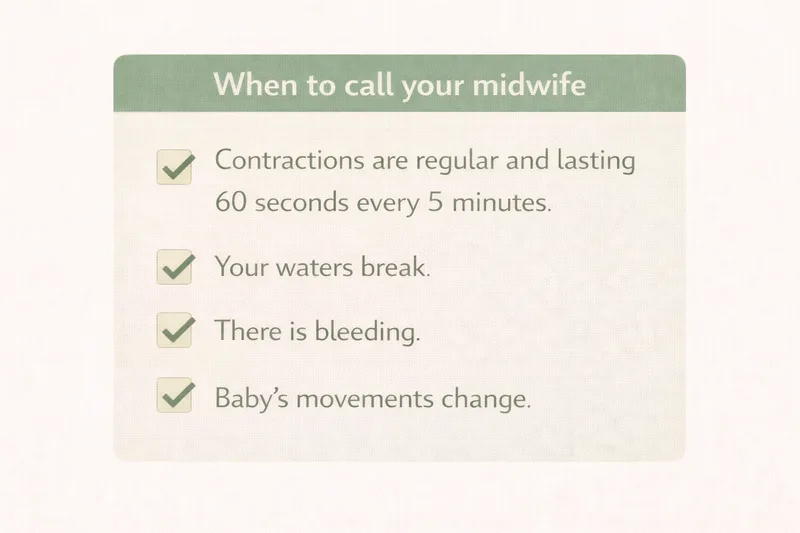
The NHS advises contacting your midwife or maternity unit when your contractions have a regular pattern, last at least 60 seconds, and are coming every 5 minutes — or sooner if you think you are in labour, are unsure, or are worried.
You should also contact your midwife or maternity unit immediately if your waters break, you have any vaginal bleeding, your baby's movements are reduced or have changed, your contractions start before 37 weeks, or you feel that something is not right.
You will never be wasting anyone's time by calling. Midwives would rather hear from you and help you assess the situation than have you sitting at home unsure. If you call and they advise you to stay home, that is not a dismissal — it is a clinical assessment that you are not yet in active labour, and it is usually the safest place for you to be during the early stages.
The Bottom Line
Braxton Hicks are your body's way of practising for labour. They can feel convincing — especially the first time — but they are not the real thing. The key difference is pattern: Braxton Hicks are irregular and do not build up. Real contractions are rhythmic, get stronger, and do not go away.
If you are ever unsure, the simplest thing to do is call your midwife. That is what they are there for.
And if it does turn out to be Braxton Hicks? You will not be the first person to have called, and you certainly will not be the last. Consider it a dress rehearsal.
This article is for general information only and does not replace advice from your midwife, GP, or maternity unit. If you think you may be in labour or are unsure about what you are feeling, contact your midwife or maternity unit.
This article was written in April 2026. We regularly review our content against the latest NHS and NICE guidelines to help ensure accuracy. This article references NHS: Signs That Labour Has Begun and Tommy's: Braxton Hicks Contractions. If you think you may be in labour or are unsure about what you are feeling, please contact your midwife or maternity unit.