Every pregnancy blog on the internet has a hospital bag checklist. Most of them are 47 items long, include things like a diffuser and a "positive affirmation cards" set, and leave you feeling like you need a suitcase for a weekend away rather than a bag for having a baby.
Here is the realistic version. Based on what the NHS actually recommends, what hospital midwives commonly suggest, and what we learned from going through it ourselves — this is what you actually need, what is genuinely useful, and what you can leave at home.
The NHS advises having your bag packed at least three weeks before your due date. Babies do things on their own schedule, and only about 1 in 20 arrive on their due date — so having the bag ready early takes one thing off the list.
Quick answer: Pack your maternity notes, loose comfortable clothes, toiletries, maternity pads, snacks, a phone charger, and a going-home outfit for you. For baby: newborn nappies, cotton wool or wipes, vests, sleepsuits, a hat, a blanket, and a car seat for the journey home.
For You: During Labour
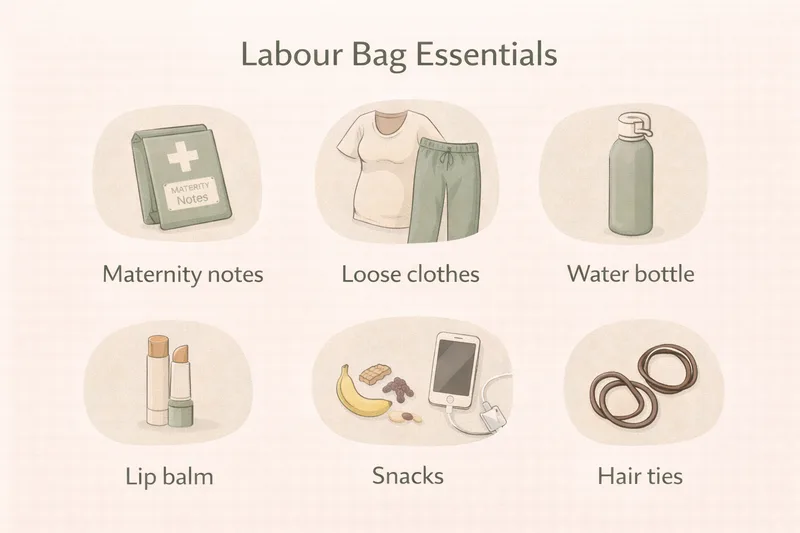
These are the things you will actually use during labour. Keep them in a separate bag or at the top of your main bag so they are easy to reach.
Your maternity notes. If your hospital uses digital notes, make sure you can access them on your phone. If you have paper notes, bring them. This is the single most important thing in the bag.
Your birth plan. If you have written one, bring a copy. Your midwife will read it — it helps them understand your preferences without you having to explain everything during contractions.
Loose, comfortable clothing for labour. An old oversized t-shirt or a nightdress you do not mind getting messy is ideal. Avoid anything restrictive. You want to be able to move freely.
Dressing gown and slippers or flip-flops. For walking to the bathroom or shower. Flip-flops are useful for hospital showers — you will want something on your feet.
Water bottle with a sports cap or straw. You will need to drink during labour, and a screw-top bottle is fiddly when you are mid-contraction. A sports cap or straw means someone can hold it to your mouth without spilling.
Lip balm. This sounds minor, but if you use gas and air, your lips will get very dry. Almost every midwife mentions this.
Snacks. Labour can be long. The NHS does not always provide food outside of meal times. Cereal bars, dried fruit, crackers, and bananas are good options — easy to eat, not too heavy.
Phone and charger. For timing contractions, contacting family, and the first photos. Bring a long charging cable — hospital plugs are not always close to the bed.
Hair ties. If your hair is long enough to get in the way, tie it back. You will not care what it looks like.
A small towel or flannel. Useful for cooling your face during labour. Some women find a cold flannel on the forehead or back of the neck helps.
For You: After the Birth
You may stay in hospital for a few hours or a couple of days. These are the things you will want for the postnatal ward.
Maternity pads. You will bleed after birth — this is normal and called lochia. You will need thick, absorbent maternity pads. Pack at least two packs. Do not use regular sanitary towels — maternity pads are larger, softer, and designed for postnatal bleeding. Do not use tampons.
Comfortable knickers. Big, high-waisted, cotton knickers that you do not mind ruining. Some women prefer disposable ones. If you have a caesarean, knickers that sit above the scar line are more comfortable. Pack five or six pairs.
Nightwear. Front-opening or loose-fitting tops are easier for breastfeeding and for skin-to-skin contact. Pack two or three options.
Comfortable bras. Including nursing bras if you are planning to breastfeed. Your breasts will be larger than usual — the NHS recommends two or three comfortable and supportive bras.
Breast pads. Even if you are not breastfeeding, you may leak colostrum in the early days.
Toiletries. Toothbrush, toothpaste, deodorant, hairbrush, soap or shower gel (unscented is gentler), and anything else you use daily. Pack a small bag so you can grab it easily.
An eye mask and earplugs. Postnatal wards can be bright and noisy. These two items can make the difference between some rest and no rest at all.
A going-home outfit. Something loose and comfortable. Your bump will not have gone down — pack something you were wearing at around six or seven months pregnant.
Socks. Hospital floors are cold. Pack a few pairs.
For Your Baby
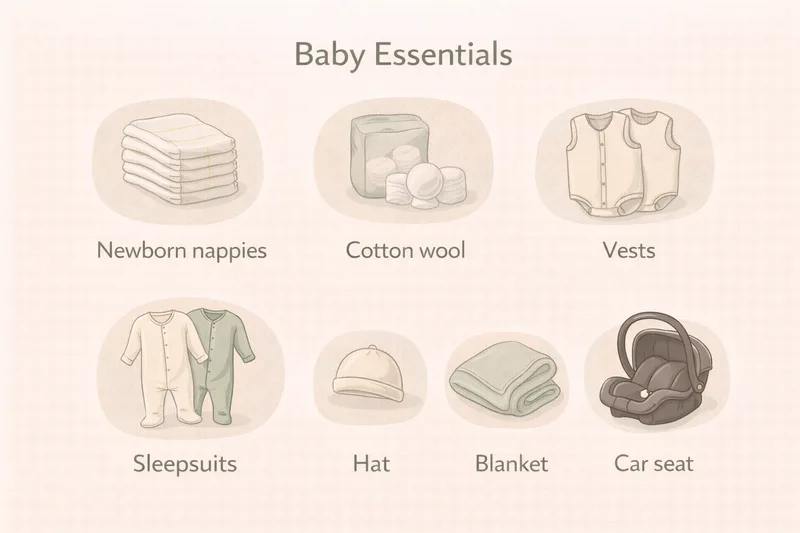
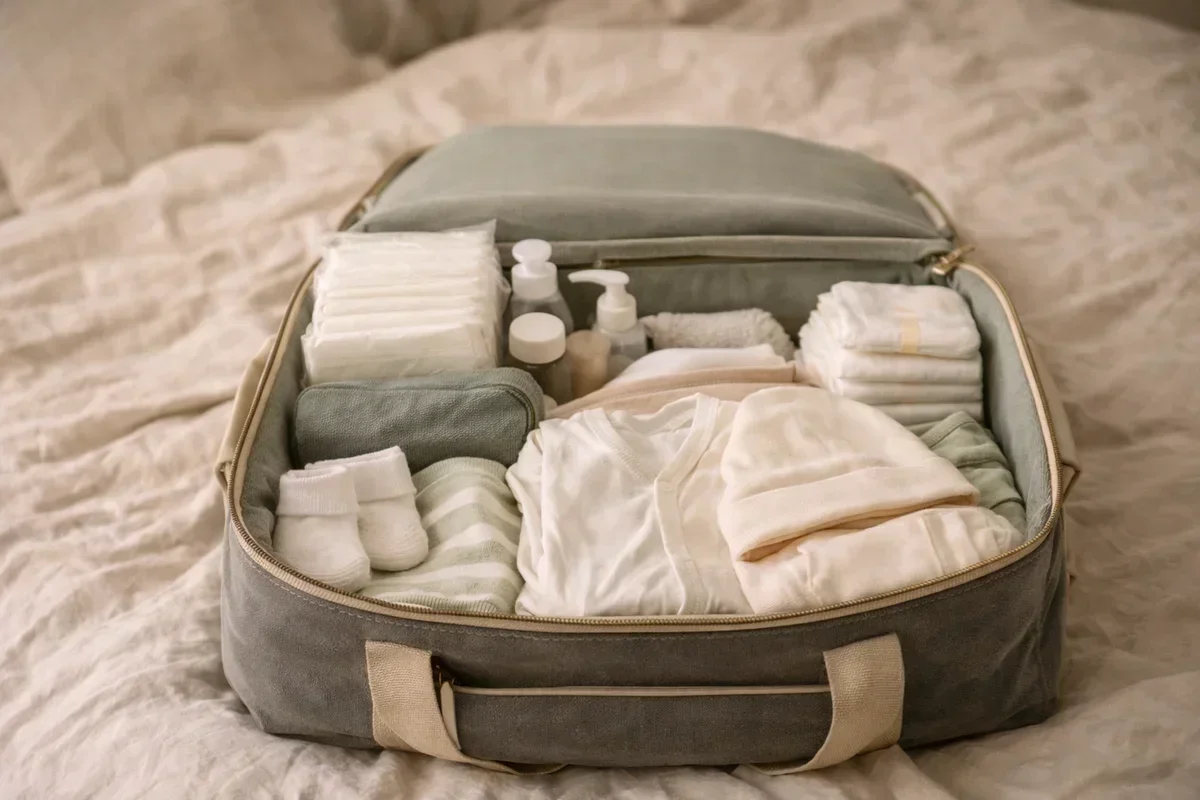
Babies need surprisingly little in their first hours. Here is what the NHS recommends.
Newborn nappies. Pack around six to eight. Newborn-size nappies are very small — check you have the right size.
Cotton wool or fragrance-free wipes. For cleaning during nappy changes. Some hospitals prefer cotton wool and water for newborns.
Vests (bodysuits). Pack two or three newborn-size vests. These go under sleepsuits and help keep baby warm.
Sleepsuits (babygrows). Pack two or three. Go for ones with easy poppers rather than fiddly buttons — you will be doing this while exhausted.
A hat. Newborns lose heat through their heads. A small, soft hat is useful, especially if the hospital or your journey home is cool.
A blanket or shawl. For wrapping baby up when you leave hospital. In colder weather, a snowsuit or warm outer layer may be needed.
A car seat. If you are driving home, you will need an infant car seat. The hospital will not let you leave with a newborn in someone's arms. Practise fitting it in the car before the due date — you do not want to be reading the manual in the hospital car park.
Muslin cloths. Pack two or three. Useful for burping, mopping up, and general newborn mess.
For Your Birth Partner
Your birth partner may be at the hospital for a long time. They need their own supplies.
Snacks and drinks. They will not have access to your meals. Pack enough for a long day — or longer.
A phone charger. Separate from yours, in case they need to update family.
A change of clothes. If labour is long, a fresh t-shirt makes a difference.
Something to pass the time. A book, podcast, or downloaded content for the early stages when there may be a lot of waiting.
Change or a card for parking. Hospital parking can be expensive. Check whether your hospital has a parking app and download it in advance.
Things You Probably Do Not Need
A birthing ball. Most hospitals have these. Check with your unit rather than bringing your own.
A TENS machine. Useful for early labour at home, but if you are hiring one, arrange it in advance rather than trying to pack it last-minute.
Candles or diffusers. Most hospitals do not allow open flames, and strong scents can bother other patients on the ward.
A full-size pillow. Tempting, but space on the ward is limited. A pillowcase from home on a hospital pillow can provide the comfort of something familiar without the bulk.
Dozens of outfits for baby. Newborns wear one outfit at a time. Pack two or three sleepsuits and you are covered.
Packing Tips
Pack two bags if you can. One smaller bag with everything you need for labour itself, and a larger bag with everything for after the birth. Your birth partner can bring the second bag in later.
Tell your partner where everything is. They may need to find things for you while you are busy having a baby. A quick walk-through of the bag contents saves time and frustration.
Keep the bag by the front door from about 36 weeks. You do not want to be searching for it at 3am.
Check your hospital's specific guidance. Some hospitals have their own lists, and requirements can vary — particularly around formula feeding, where some units ask you to bring ready-made starter packs rather than powder.
The Bottom Line
Packing a hospital bag does not need to be complicated. The essentials are simple: your notes, comfortable clothes, maternity pads, toiletries, snacks, and a few things for baby. Everything else is optional.
The most useful thing in the bag is rarely a product — it is knowing that you are prepared. Having the bag packed and ready gives you one less thing to think about when the time comes.
Pack it early. Keep it simple. And do not forget the lip balm.
This article is for general information only. Hospital requirements may vary — check with your maternity unit if you are unsure what to bring.
This article was written in April 2026. This article references NHS: Pack Your Bag for Labour and NHS Start for Life: Hospital Bag Checklist. Requirements may vary between hospitals — check with your maternity unit if you are unsure what to bring.