

The bag is packed. The nursery is ready. And you are lying awake at 2am, heart pounding, running through every worst-case scenario your brain can generate.
What if something goes wrong during labour. What if the pain is too much. What if you cannot cope. What if something happens to the baby. What if you are not ready.
This is third trimester anxiety — and it is far more common than most people realise. The closer you get to your due date, the more real everything feels, and for many women the final weeks of pregnancy are dominated not by excitement but by fear.
I had been fine through most of my pregnancy, but somewhere around 32 weeks a switch flipped. I stopped sleeping. I started avoiding conversations about the birth. I did not want to pack the hospital bag because somehow that made it all too real. I was not being dramatic — I was genuinely frightened, and nobody had told me that was normal.
Quick answer: Anxiety in late pregnancy is common, and for some women it becomes focused on labour and birth. Support is available through your midwife, GP, NHS talking therapies, and specialist perinatal mental health services. If fear of birth feels overwhelming, tokophobia may be involved and it is worth asking for help.
How Common Is It?
According to NHS England, perinatal mental illness affects up to 27% of new and expectant mothers. A NICE-referenced NHS source notes that around 13% of women experience anxiety specifically during pregnancy — which may be higher than rates for perinatal depression.
Third trimester anxiety specifically tends to intensify because the thing you are anxious about — labour and birth — is no longer abstract. It is imminent. The countdown is on, and there is no way to avoid it.
What Drives Third Trimester Anxiety?
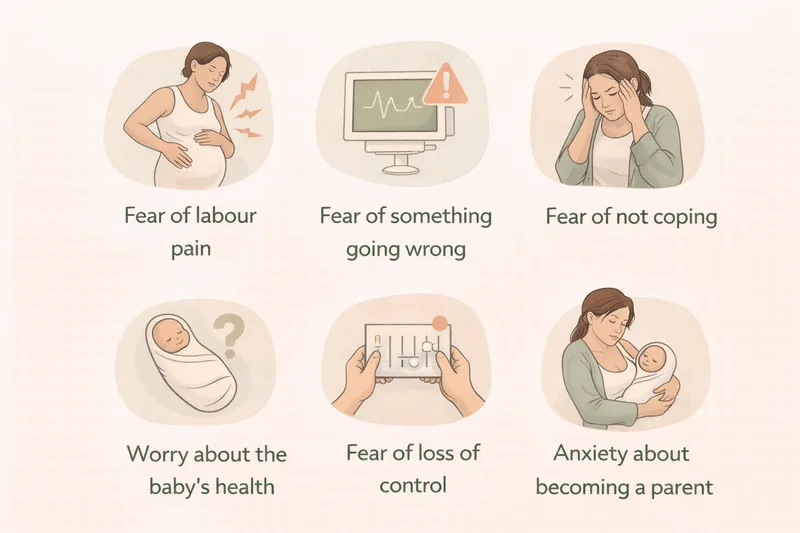
The sources of anxiety in the third trimester are often different from earlier in pregnancy. In the first and second trimesters, worry tends to focus on whether the pregnancy will survive and whether the baby is healthy. By the third trimester, the fear shifts.
Fear of labour pain. This is one of the most common anxieties. Not knowing what contractions will feel like, how intense the pain will be, or whether you will be able to manage it can feel overwhelming — especially for first-time mothers. Worry about pain relief decisions — whether to have an epidural, whether it will work, whether asking for one means you have failed — can compound this.
Fear of something going wrong. Worry about complications during birth, emergency interventions such as forceps or an emergency caesarean, or harm to the baby can be persistent and difficult to set aside, particularly if you have read or heard about difficult birth experiences.
Fear of not coping. Many women worry about whether they will be able to handle labour — physically, emotionally, or both. This can be compounded by pressure to have a "natural" birth or to avoid pain relief.
Fear of loss of control. Labour is unpredictable. For women who feel more secure when they can plan and control their environment, the uncertainty of birth can be a significant source of anxiety. Worries about not getting to the hospital in time, or about things happening too quickly to process, are common.
Worry about becoming a parent. As the due date approaches, the reality of becoming responsible for a newborn can feel overwhelming. Doubts about your ability to be a good parent are extremely common and do not mean you will not be one.
Previous difficult experiences. If you have had a traumatic birth before, experienced pregnancy loss, or had a long and stressful fertility journey, the anxiety of approaching birth can be compounded by memories and fears from the past. Hearing other people's negative birth stories — even well-meaning ones — can also trigger or intensify fear.
When Does Anxiety Become Something More?
Everyone experiences some level of worry as their due date approaches. A certain amount of nervousness about labour and birth is entirely normal. But there is a difference between manageable worry and anxiety that takes over your daily life.
According to Mind, perinatal anxiety may involve persistent worry that feels impossible to control, physical symptoms such as a racing heart, tight chest, or difficulty breathing, avoidance of things related to birth — such as antenatal classes, birth planning, or conversations about labour, difficulty sleeping because your mind will not switch off, intrusive thoughts about something bad happening, or feeling disconnected from yourself or the world around you.
If you recognise several of these symptoms, it does not mean you are failing. It means you may benefit from support — and that support is available.
What Is Tokophobia?
Tokophobia is a severe fear of childbirth. According to Tommy's, it is a mental health condition that needs treatment and support, and it can happen in any pregnancy. More severe fear of childbirth may affect up to 14% of women.
There are two types. Primary tokophobia is a longstanding fear that may start in adolescence or early adulthood, even before a first pregnancy. Secondary tokophobia develops after a previous traumatic birth experience and is considered a form of post-traumatic stress disorder (PTSD).
If you feel that your fear of birth goes beyond normal anxiety — if it is causing you to avoid preparing for birth, if you are having nightmares or panic attacks about labour, or if you feel you would do anything to avoid giving birth — speak to your midwife. According to Tommy's, you should be offered an appointment with a specialist mental health midwife or obstetrician, and support is available including talking therapies such as CBT and EMDR.
Having tokophobia does not automatically mean you need a caesarean section. But if fear of childbirth remains severe, you can discuss your options for birth with your maternity team, including how your mental health should be taken into account.
What Can Help?
Talk to your midwife. Mental health should be part of routine antenatal care. NICE says women should be asked about their emotional wellbeing at routine antenatal and postnatal contacts, and your midwife can help you get support if you need it. If you find it hard to bring up, you could write it down beforehand or ask your partner to raise it on your behalf.
Antenatal classes. Understanding what happens during labour can reduce fear of the unknown. NHS antenatal classes cover the stages of labour, pain relief options, and what to expect — and knowing what is ahead can make it feel less frightening.
Birth planning as a tool for anxiety. Writing a birth plan is not about controlling labour — it is about communicating your preferences and feeling more prepared. Include things that matter to you: who you want with you, what pain relief you would like to try, and what would make you feel safer. Your midwife can help you write a plan that is realistic and flexible.
Visit the labour ward. Some hospitals offer familiarisation visits so you can see the environment beforehand. This can help reduce anxiety about the unknown, particularly if the hospital setting itself feels frightening.
NHS talking therapies. You can self-refer for NHS talking therapies without needing a GP referral. CBT is commonly offered for anxiety and is recommended by NICE during pregnancy. You can find your local service at nhs.uk/talk.
Specialist perinatal mental health services. According to NHS England, all areas in England now have access to specialist perinatal mental health services. If your anxiety is severe or complex, your midwife or GP can refer you.
Talk to someone who has been through it. Hearing positive birth stories — not horror stories — from friends, family, or peer support groups can help balance the narrative. Many women find that reality is very different from what they feared.
What Your Partner Can Do
If you are reading this as a partner, your role matters more than you might think. You cannot fix the anxiety, but you can be present in it.
Listen without dismissing. Do not say "there's nothing to worry about" — she knows that rationally, but anxiety does not respond to logic. Instead, ask what would help. Offer to come to appointments. Help with the birth plan. Be the person who raises mental health with the midwife if she finds it too difficult.
And if you are feeling anxious too — that is also normal. Fear of something happening to your partner or your baby during birth is a real experience for partners, and you are allowed to acknowledge it.
Where to Get Help
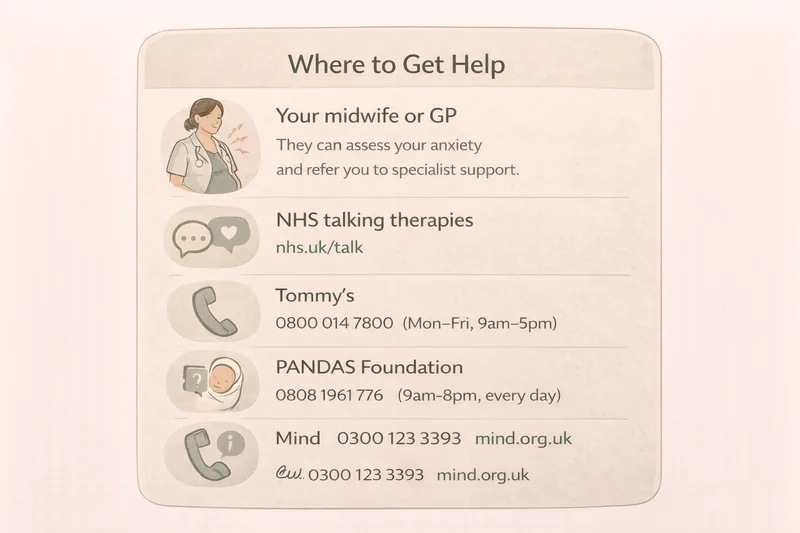
Your midwife or GP — they can assess your anxiety and refer you to specialist support.
NHS talking therapies — self-refer at nhs.uk/talk or ask your GP.
Tommy's — pregnancy helpline staffed by midwives: 0800 014 7800 (Mon–Fri, 9am–5pm). Tommy's also has dedicated information on tokophobia.
PANDAS Foundation — free helpline for anyone experiencing perinatal mental illness. Check the website for current hours and contact details.
Mind — information and support for perinatal anxiety. Visit the website for current helpline details.
Maternal Mental Health Alliance — information on perinatal mental health conditions and where to find help.
If you are in crisis or feel you cannot keep yourself safe, contact your GP urgently, call 111, go to your nearest A&E, or call the Samaritans on 116 123 (free, 24 hours, every day).
The Bottom Line
Third trimester anxiety is not a sign that you are not ready to be a parent. It is not weakness. It is not ingratitude. It is an extremely common response to one of the most significant events of your life approaching at speed.
If normal worry has tipped into something that is affecting your sleep, your daily life, or your ability to prepare for birth — that is when it is time to speak to your midwife. Support exists. Treatment works. And you do not have to spend the last weeks of your pregnancy trapped in fear.
The birth will happen. You will get through it. And in a few months' time, the thing that terrified you will be behind you — and something far more important will be in your arms.
This article is for general information only and does not replace advice from your midwife, GP, or mental health professional. If anxiety is significantly affecting your daily life or your ability to prepare for birth, please speak to your maternity team — support is available.
This article was written in April 2026. We regularly review our content against the latest NHS and NICE guidelines to help ensure accuracy. This article references NICE guideline CG192: Antenatal and Postnatal Mental Health (published December 2014, last updated February 2020), NHS England: Perinatal Mental Health, Tommy's: Tokophobia — Fear of Giving Birth, Mind: Perinatal Anxiety, PANDAS Foundation, and Maternal Mental Health Alliance. If anxiety is significantly affecting your daily life, please speak to your midwife, GP, or contact one of the support services listed above.