

Your midwife has booked you in for a glucose tolerance test and you have no idea what to expect. Maybe nobody has explained why, or what it actually involves — just that you need to fast overnight and turn up at the hospital in the morning.
I remember coming home from my midwife appointment with the GTT booked and immediately googling "glucose tolerance test pregnancy" at the kitchen table. The main thing I wanted to know was whether the sugary drink was as bad as everyone says. (The honest answer: it's not great, but it's manageable.)
This guide will walk you through what the test is for, who gets offered it, exactly what happens on the day, and what the results mean — so you can go into the appointment knowing what to expect.
Quick answer: The glucose tolerance test (GTT or OGTT) is used to check for gestational diabetes. In the UK, it is usually offered at 24 to 28 weeks if you have risk factors, or earlier as well if you had gestational diabetes in a previous pregnancy. It usually involves fasting overnight, a blood test, a glucose drink, then a second blood test 2 hours later.
What Is Gestational Diabetes?
Gestational diabetes is a type of diabetes that can develop during pregnancy. It happens when your body cannot produce enough insulin to meet the extra demands of pregnancy, causing blood sugar levels to rise higher than normal.
According to the NHS, gestational diabetes can happen at any stage of pregnancy but is more common in the second or third trimester. It usually goes away after giving birth, although women who have had gestational diabetes have an increased risk of developing type 2 diabetes later in life.
NICE guideline NG3 provides the current UK clinical framework for managing diabetes in pregnancy, including the screening and diagnostic criteria for gestational diabetes.
Gestational diabetes does not mean you have done anything wrong. It is a physiological response to the hormonal changes of pregnancy, and with proper management the risks to you and your baby can be significantly reduced.
Who Is Offered the Test?
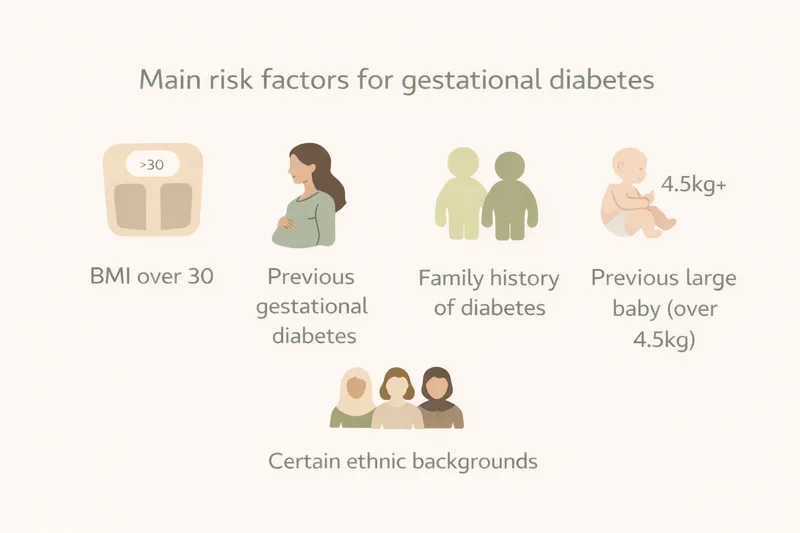
Not every pregnant woman is offered the GTT. The test is typically recommended for women who have one or more risk factors for developing gestational diabetes. According to the NHS, you may be offered screening if:
Your body mass index (BMI) is above 30. You have had gestational diabetes in a previous pregnancy. You previously had a baby who weighed 4.5kg (10lb) or more at birth. You have a first-degree relative (parent or sibling) with diabetes. Your family origin is South Asian, Black African, African Caribbean, or Middle Eastern.
NICE also notes that women with a history of polycystic ovary syndrome (PCOS) may be considered for screening. Additionally, if signs suggestive of gestational diabetes appear later in pregnancy — such as glucose in urine samples, excess amniotic fluid, or a baby measuring larger than expected on ultrasound — your midwife or doctor may recommend the test at that point.
If you have had gestational diabetes before, NICE recommends that you should be offered a GTT as soon as possible after your booking appointment, and again at 24 to 28 weeks if the first test is normal.
What Happens Step by Step
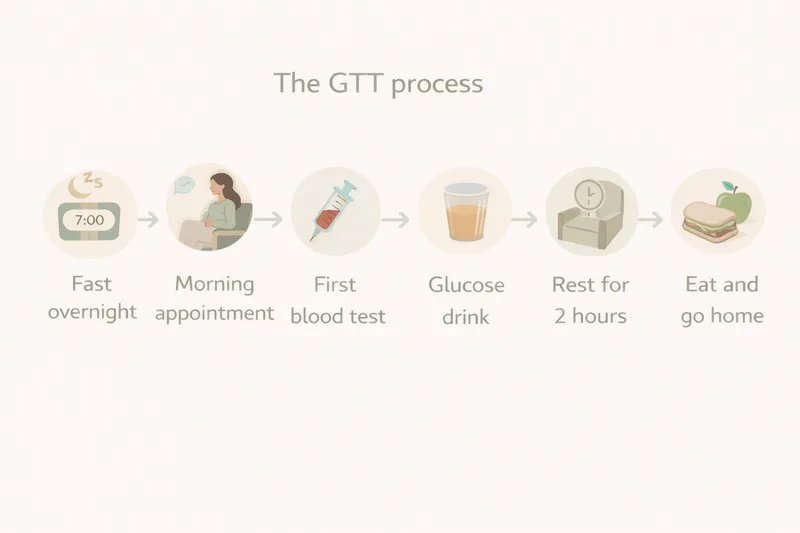
The GTT is straightforward, but it does take time. Here is what to expect.
The night before: Follow your hospital's instructions carefully. In most cases, the test is done in the morning after an overnight fast, and you can usually drink plain water. Tea, coffee, and fizzy drinks (including sugar-free ones) should be avoided during the fasting period as they can affect the results. Have a normal evening meal beforehand.
Arriving at the hospital: The test is usually done as a morning appointment at your local hospital or maternity unit. It is worth arriving on time, as the test runs on a fixed schedule. Bring something to keep yourself occupied — a book, your phone, a podcast — as you will be there for around two to three hours in total.
First blood test: Shortly after you arrive, a blood sample will be taken. This measures your fasting blood glucose level — how your body handles sugar after an overnight fast.
The glucose drink: You will then be given a glucose solution to drink. This is a measured 75g glucose drink, and most women describe it as very sweet — similar to flat Lucozade or undiluted squash. Some women find it unpleasant but manageable; others feel a little nauseous after drinking it. If you struggle to finish it, let the staff know.
The wait: After drinking the glucose solution, you will be asked to rest in the waiting area for two hours. You should avoid walking around too much during this time, as physical activity can affect the results. This is the boring part — hence the book recommendation.
Second blood test: Two hours after drinking the glucose solution, a second blood sample is taken. This measures how your body has processed the glucose over that period.
Going home: After the second blood test, you are free to go. Bring snacks and a drink for after the test — you will have been fasting for a long time by this point and will likely be hungry.
What Do the Results Mean?
According to NICE guideline NG3, you may be diagnosed with gestational diabetes if your blood glucose levels meet either of the following thresholds:
A fasting plasma glucose level of 5.6 mmol/litre or above, or a 2-hour plasma glucose level of 7.8 mmol/litre or above.
If your results are normal: How and when you are told varies by hospital. Some units confirm the result at your next routine appointment, while others may contact you by text, letter, or phone. Your antenatal care will continue as planned.
If your results indicate gestational diabetes: You will typically be contacted within a few days and offered an appointment with the diabetes team — usually a joint diabetes and antenatal clinic. NICE recommends that this review should happen within one week of diagnosis.
What Happens If You Are Diagnosed?
Being diagnosed with gestational diabetes can feel overwhelming, but it is important to know that it is a manageable condition. The NHS explains that most women with gestational diabetes have otherwise normal pregnancies with healthy babies, as long as the condition is detected and well managed.
Management typically follows a stepped approach:
Diet and lifestyle changes come first. You will be given advice on adjusting your diet to help control your blood sugar levels. This usually involves eating regular meals, choosing foods that release energy slowly (lower glycaemic index), and staying active where possible. You will also be taught how to monitor your blood sugar at home using a testing kit.
Medication if needed. According to NICE, if blood sugar targets are not met through diet and exercise changes within one to two weeks, metformin may be offered. If metformin alone is not sufficient, or if fasting glucose is 7.0 mmol/litre or above at diagnosis, insulin may be recommended.
Additional monitoring. You will likely have extra growth scans to monitor your baby's size, and your pregnancy may be managed more closely by a specialist team. The NHS notes that if you have gestational diabetes, it is generally best to give birth before 41 weeks, and induction of labour or caesarean section may be recommended if labour does not start naturally by that time.
It's Not Your Fault
One of the most common reactions to a gestational diabetes diagnosis is guilt — a feeling that you have done something wrong, eaten the wrong things, or somehow caused it. This is not the case.
Gestational diabetes occurs because of the hormonal changes of pregnancy. Your body may simply not produce enough insulin to keep up with the increased demand. It can happen to anyone, regardless of diet or lifestyle, although certain risk factors do make it more likely.
NICE specifically states that when discussing gestational diabetes with patients, healthcare professionals should explain that good blood glucose control throughout pregnancy will reduce the risks — not that the condition could have been prevented.
After the Baby Is Born
Gestational diabetes usually goes away after birth. However, the NHS notes that women who have had gestational diabetes are more likely to develop type 2 diabetes later in life, and to have gestational diabetes again in future pregnancies.
NICE recommends a fasting plasma glucose test 6 to 13 weeks after birth to check that your blood sugar levels have returned to normal — this is often done at the 6-week postnatal check. After that, women who had gestational diabetes are usually offered annual HbA1c testing. You may also be referred to the NHS Diabetes Prevention Programme if eligible.
This is not something to panic about, but it is worth being aware of. Maintaining a healthy diet and staying active after pregnancy can help reduce the long-term risk.
Practical Tips for the Day
Eat a good evening meal the night before — you will be fasting for a while, and going in on an empty stomach can make the glucose drink harder to tolerate.
Bring water — you can drink plain water throughout the fasting period and during the test.
Wear a top with easy-access sleeves — you will have two blood tests, so a short-sleeved or loose top makes things simpler.
Bring entertainment — you will be sitting in a waiting room for two hours. A book, phone, headphones, or downloaded podcast will make the time pass more easily.
Bring snacks for afterwards — you will be hungry after fasting, and the hospital canteen may not be nearby.
Don't worry about the glucose drink — it is very sweet and not particularly pleasant, but most women manage it without problems. If you do feel nauseous, let the staff know.
The Bottom Line
The glucose tolerance test is a routine screening tool that helps identify gestational diabetes so it can be managed effectively. The test itself is straightforward — a morning at the hospital, two blood tests, and a sugary drink in between.
Most results come back normal, and most women who are diagnosed with gestational diabetes go on to have healthy pregnancies and healthy babies with appropriate management and support.
If you have been booked in for a GTT, try not to worry. Go prepared, bring a book, and know that whatever the result, there is a clear pathway of care to support you.
Your midwife has booked you in for a glucose tolerance test and you have no idea what to expect. Maybe nobody has explained why, or what it actually involves — just that you need to fast overnight and turn up at the hospital in the morning.
This article is for general information only and does not replace advice from your midwife, GP, or healthcare provider. If you have any concerns about gestational diabetes or the glucose tolerance test, always speak to your maternity team.
This article was written in April 2026. We regularly review our content against the latest NHS and NICE guidelines to help ensure accuracy. This article references NHS: Gestational Diabetes, NICE guideline NG3: Diabetes in Pregnancy (published February 2015, last updated December 2020), NICE information for the public: Checking for Gestational Diabetes, and Diabetes UK. If you have any concerns about gestational diabetes or the glucose tolerance test, please speak to your midwife, GP, or maternity team.