

Everyone on the forums felt their baby at 16 weeks. Your friend says she was sure she felt a kick at 14 weeks. You're 20 weeks and you've felt nothing — or at least nothing you can confidently say wasn't just gas.
I remember this stage so well. I would lie still at night, hands on my belly, willing something to happen. I had read that by 18 weeks most women feel their baby move, and I was past that with nothing. It turned out I had an anterior placenta — something nobody had mentioned — and it was another few weeks before I felt those first definite flutters.
If you're in that anxious waiting phase, this guide is for you. We'll look at when movement typically starts, what it may feel like, the common reasons you might not feel it yet, and the clear point at which you should speak to your midwife.
Quick answer: Not feeling your baby move at 20 weeks is often still normal, especially in a first pregnancy or with an anterior placenta. The NHS says movements are usually felt between 16 and 24 weeks. If you have not felt any movement by 24 weeks, contact your midwife.
When Do Most Women Feel Baby Move?
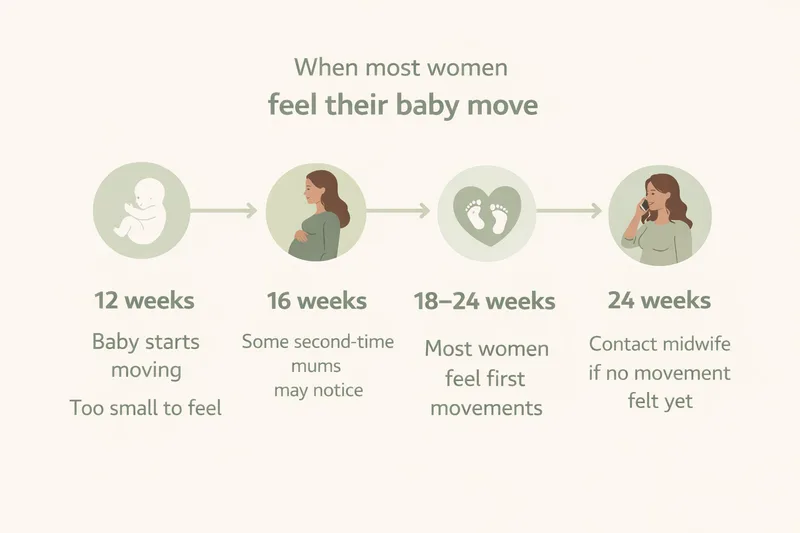
Your baby is moving before you can feel it — it just takes time for those movements to become strong enough, and familiar enough, for you to notice. According to the RCOG, most women first become aware of their baby's movements between 18 and 20 weeks of pregnancy. However, this varies — and for first-time mothers, it may not happen until after 20 weeks.
The NHS advises that you should start to feel your baby move between 16 and 24 weeks. If this is your first baby, you might not feel movements until after 20 weeks. If you have been pregnant before, you may notice movements earlier — sometimes from around 16 weeks — because you are more familiar with the sensation.
The key takeaway is that there is a wide normal range. Feeling your baby at 16 weeks and not feeling it until 22 weeks can both be completely normal. Comparing yourself to other women — especially those in online forums — is one of the fastest ways to create unnecessary anxiety.
What Do First Movements Feel Like?
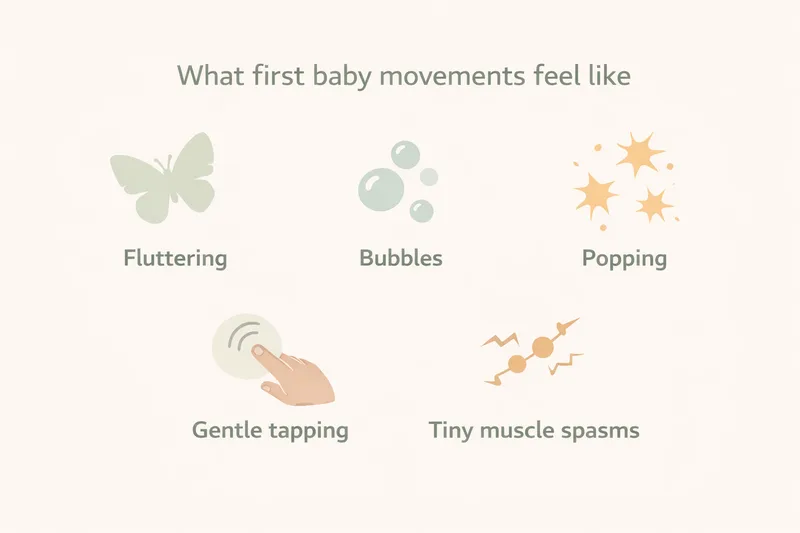
First movements rarely feel like the obvious kicks you see in films. In the early stages, they tend to be much more subtle. The RCOG describes fetal movements as a kick, flutter, swish, or roll. Many women initially describe the feeling as fluttering like a butterfly, tiny bubbles popping, gentle tapping or twitching, light muscle spasms, or a soft rolling sensation.
It's very common to feel something and not be sure whether it was your baby or just digestion. This uncertainty is normal, especially in a first pregnancy. Over time, the movements typically become stronger and more distinct, and you will get better at recognising your baby's particular pattern.
The NHS notes that the movements may feel like a gentle swirling or fluttering at first, and as your pregnancy progresses, you may feel kicks and jerky movements.
Why Might You Not Feel Movement Yet?
There are several common reasons why you may not feel your baby move by 20 weeks. In most cases, these are normal and not a cause for concern.
It's your first pregnancy. If you have not been pregnant before, you are less likely to recognise the early, subtle movements. According to the RCOG, first-time mothers may not become aware of movements until after 20 weeks. Women who have had previous pregnancies tend to recognise the sensation earlier because they know what to look for.
You have an anterior placenta. This is one of the most common reasons for feeling movement later. An anterior placenta means the placenta is attached to the front wall of your uterus — between your baby and your abdomen. According to Tommy's, this can make it harder to feel your baby's movements because the placenta acts like a cushion between the baby's kicks and the front of your bump. You may find you feel movements more at the sides or lower down, rather than at the front. Importantly, Tommy's advises that you should never assume an anterior placenta is the reason you cannot feel your baby move — if you are concerned, always contact your maternity unit.
Your baby is still small. At 20 weeks, your baby is still relatively tiny. The movements are there, but they may simply not be strong enough for you to feel through the uterine wall, abdominal muscles, and any tissue between you and your baby.
You've been busy or distracted. According to the RCOG, you are less likely to be aware of your baby's movements when you are active or busy. Some women find that they notice movements more in the evening when they are resting and able to focus on what they are feeling.
When Should You Be Concerned?
The NHS is clear on this point: if you have not felt your baby move by 24 weeks, tell your midwife. They will check your baby's heartbeat and movements, and may arrange further assessment.
The RCOG advises that if by 24 weeks you have never felt your baby move, you should contact your midwife or local maternity unit. They will check your baby's heartbeat, and an ultrasound scan may be arranged. In some cases, you may be referred to a specialist fetal medicine centre.
Before 24 weeks, if you have not felt any movement at all, the NHS advises that you should tell your midwife by 24 weeks so they can check your baby's heartbeat and movements. Once you have started feeling movements, get help straight away if they become reduced, stop, or change from your baby's usual pattern — regardless of what stage of pregnancy you are at.
After You Start Feeling Movement: What to Know
Once you are regularly feeling your baby move, the NHS advises that the important thing is to get to know your baby's usual pattern of movements from day to day. There is no set number of movements that is considered normal — every baby is different.
The RCOG notes that the number of movements tends to increase until around 32 weeks of pregnancy, then stays about the same — although the type of movement may change as your baby grows and has less room to move. Afternoon and evening periods are often when babies are most active, and your baby will have regular sleep periods lasting between 20 and 40 minutes, rarely longer than 90 minutes.
If at any point after you have started feeling movement you notice that your baby is moving less than usual, or that the pattern has changed, the RCOG advises that you should seek professional help immediately. Do not wait until the next day. Do not go to sleep ignoring a reduction in your baby's movements.
What You Should Not Do
There are two important things to avoid:
Do not use a home doppler to try to check your baby's heartbeat yourself. The NHS explicitly advises against this. A home doppler is not a reliable way to check your baby's health. Even if you hear a heartbeat, this does not mean your baby is well. If your baby is not well, they may still have a detectable heartbeat but be less active than usual. Home dopplers can provide false reassurance and may delay you from seeking the professional assessment you need.
Do not compare your experience to others. Every pregnancy is different. The timing of first movements varies widely, and comparing your experience to friends, family, or — worst of all — strangers on the internet can create anxiety that is not warranted by your actual situation.
The Bottom Line
Not feeling your baby move at 20 weeks can still be completely normal, especially in a first pregnancy or if you have an anterior placenta. Movement is typically felt between 16 and 24 weeks, with first-time mothers often at the later end of that range.
The 24-week point is the clear marker: if you have not felt any movement by 24 weeks, contact your midwife. Before that, if something worries you, it's always appropriate to ask — your midwife would rather hear from you than have you lying awake at night wondering.
And when those first flutters do arrive — whether they feel like bubbles, butterflies, or just something that definitely wasn't gas — you'll know. It's one of those pregnancy moments that genuinely takes your breath away.
This article is for general information only and does not replace advice from your midwife, GP, or healthcare provider. If you are concerned about your baby's movements at any stage of pregnancy, always contact your maternity team promptly.
This article was written in April 2026. We regularly review our content against the latest NHS and NICE guidelines to help ensure accuracy. This article references RCOG: Your Baby's Movements in Pregnancy (based on RCOG Green-top Guideline No. 57), NHS: Your Baby's Movements, and Tommy's: Anterior Placenta (reviewed March 2026). For further support and information on baby movements, see Kicks Count. If you have any concerns about your baby's movements, please contact your midwife or maternity unit immediately — do not wait.